
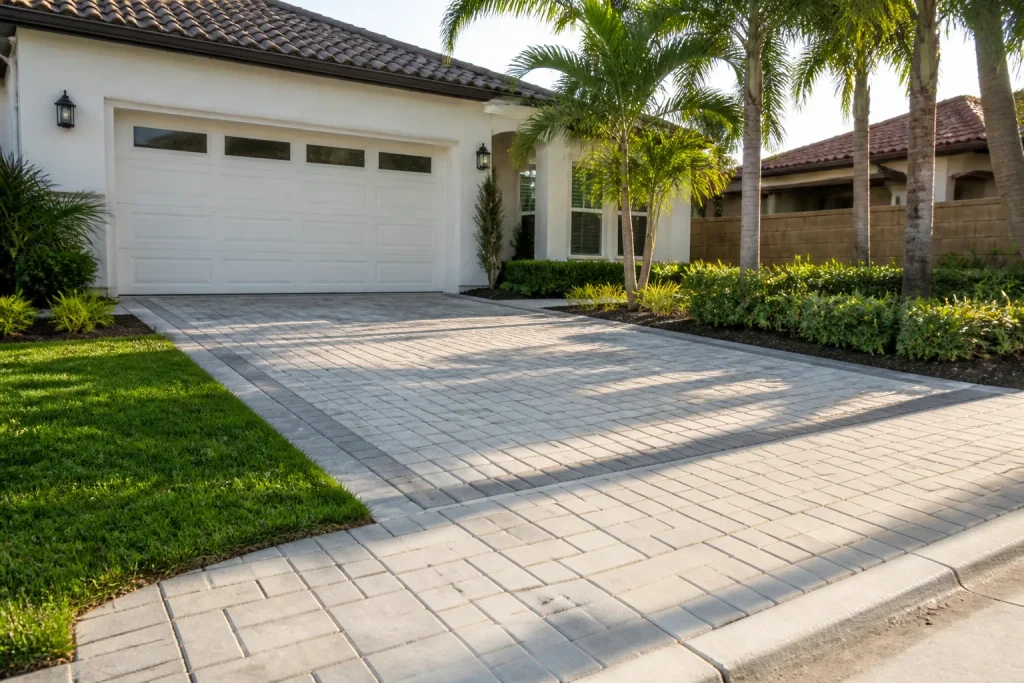
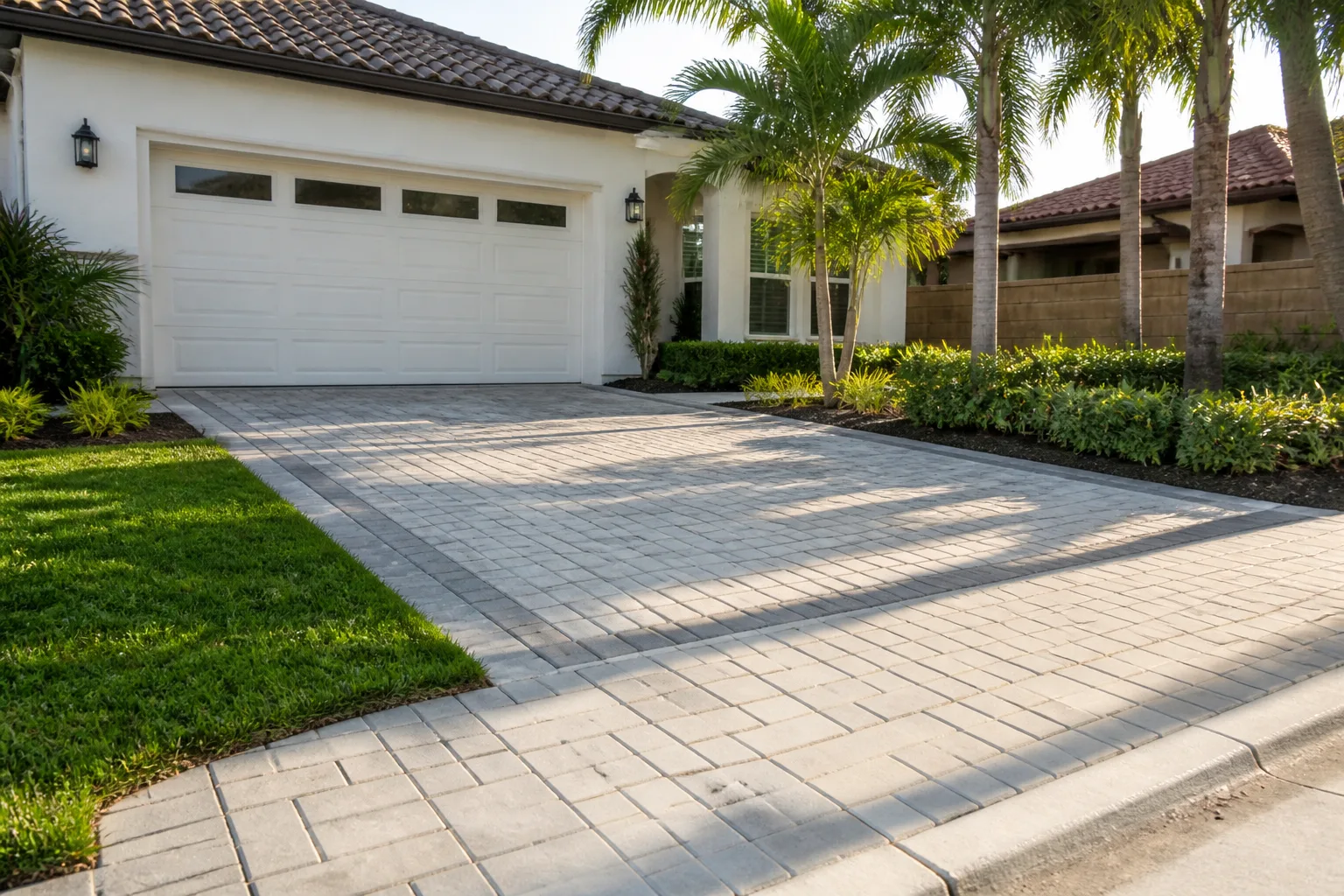
Blanco Driveway & Pavers in Garden Grove: A Homeowner’s Guide
A paver that earns five stars on a San Diego coastal install can heave and shift in Garden Grove’s expansive clay soil. Same Blanco product, completely different outcome, and the reason comes down to what’s underneath it. Blanco pavers are dense, color-fast, and genuinely well-made. But in Garden Grove, the base you set them on matters more than the brand stamped on the box. Get the base wrong and you’ll be re-leveling a beautiful driveway inside three years. Get it right and you’ll get two decades out of it.
If you’d rather not gamble on compaction depth and drainage, call (833) 703-5196 and we’ll take a look. Free estimates, and we put the scope in writing before anything gets moved.
Why Blanco Pavers Behave Differently in Garden Grove Than on the Coast
The coastal install that gets five stars sits on sandy, well-draining ground where water falls through fast. Garden Grove sits on clay-heavy soil that holds water like a shallow bowl after a winter rain. That difference is everything. When water can’t drain down, it pushes sideways, and a paver base that isn’t built to shed it will start to move.
Blanco pavers themselves aren’t the problem. The product is solid and the color holds. But a paver is only as stable as the layer of compacted aggregate holding it, and in Garden Grove that layer has to be deeper, wider, and graded away from the house more deliberately than it does near the beach. We’ve watched a driveway in Garden Grove that was spec’d off a coastal installation guide lift a full quarter inch in one season because the base was too shallow for clay. The pavers were fine. The base wasn’t.
What actually changes in Garden Grove’s clay:
- Deeper compacted base. Clay needs more aggregate depth and tighter compaction to spread load, because the soil underneath flexes when it gets wet.
- Real drainage grading. Water has to leave the driveway footprint, not pool at the edge. On sand, gravity handles it. On clay, you build the slope on purpose.
- A geotextile separation layer. It keeps clay fines from migrating up into the base and turning it soft over time.
- Edge restraint done right. Without it, pavers creep outward in clay and the pattern opens up at the borders.
Same Blanco product, two different installs. The brand is the easy part. The ground in Garden Grove is the hard part.
Which Blanco Lines Hold Color Under Inland Sun
Garden Grove gets more sustained inland sun than a coastal address a few miles west, and that matters for how a paver’s color ages. Coastal installs get marine layer and softer exposure. Inland, a driveway faces hard direct light through long summer afternoons, and any pigment that fades under UV will fade faster here. Blanco’s denser, higher-density lines with through-mix pigment hold color well in this climate. Lighter, surface-treated finishes can chalk or lighten over the years under prolonged inland exposure.
What we tell Garden Grove homeowners when they’re choosing a Blanco product line:
- Favor through-color pavers. The pigment runs through the body of the paver, not just the surface, so sun can’t wear through to a paler face.
- Go a shade darker than you think. Light colors show dirt and footprints; a mid-tone reads cleaner across a Garden Grove summer.
- Ask about the paver’s UV rating, not just the warranty. Ten-year color warranties usually cover failure, not gradual fading. There’s a difference.
- Consider a shaded or coastal install as the wrong benchmark. A paver the internet swears by from a Pacific Beach driveway may behave differently under Garden Grove sun.
The best color choice is the one that still looks right after four inland summers, not the one that photographs best in a showroom. If you want to talk through a specific Blanco line before you commit, that’s a good reason to call. We’ll tell you what we’ve actually seen hold up here.
Base Compaction Depth Matters More Than the Paver Brand
Here’s the part most homeowners don’t hear until something goes wrong: in Orange County clay, the base under your Blanco pavers matters more than the brand on top of them. A poorly based premium paver fails. A properly based mid-grade paver lasts. The brand is the finish; the base is the job. If a contractor leads the conversation with pavers and never mentions compaction depth, drainage grade, or edge restraint, that’s the tell. What to confirm before anyone breaks ground in Garden Grove:
- Excavation depth. Ask how deep they’re digging. In clay, the base aggregate needs to go deeper than a sandy-soil spec.
- Compaction, in lifts. The aggregate gets compacted in layers with a plate compactor, not dumped and smoothed once. A single pass over a thick base leaves soft spots.
- Slope and drainage plan. Ask where the water goes. If the answer is vague, so is the base.
- Geotextile fabric. It separates clay from base and keeps the base from turning to mush over a few winters.
- Edge restraint. The pavers need a locked border to stop movement in expansive soil.
The permit inspector works for you here, not for the contractor. On eligible jobs we pull permits and get inspections signed, because a second set of eyes on base and drainage is exactly what a clay-soil driveway needs. If a quote doesn’t mention permits for a job this size in Garden Grove, ask why before you sign.
A Blanco-Authorized Installer vs. Someone Who Just Sourced the Product
There’s a real difference between an installer who is authorized for Blanco products and one who simply buys Blanco products off a truck and shows up. Both can hand you a receipt for pavers. Only one has been trained on the manufacturer’s base and installation standards and stays accountable to them afterward. In Garden Grove clay, that training is where the difference lives.
What to ask when you’re comparing installers:
- Are you authorized by Blanco? Not just “we carry Blanco.” Authorized means manufacturer-trained on base and installation method.
- Who does the base work? If the base gets subbed to a crew the person quoting you has never met, ask who’s accountable when it moves.
- Is the scope written down? Base depth, drainage, restraint, and materials should all be on paper. An allowance that isn’t on paper is a surprise waiting for a date.
- What happens if it moves in the first year? Get the answer before you sign, not after.
We’re a Belgard and Techo-Bloc hardscape crew and we treat Blanco the same way: the scope goes in writing, price changes arrive as a written change order before a single paver moves, and every completed job backs on the written 90-Day Done Right Promise. If something isn’t right, one call brings us back. On a Garden Grove driveway over clay, that’s the kind of accountability you actually want on record. A cheaper bid from someone who sourced the product but skipped the base conversation isn’t cheaper for long.
Related services in Garden Grove: if your driveway project touches the fence line or you’re adding a hardscape path to the front door, our Fence Installation in Garden Grove crew regularly coordinates with the paver job so the two meet cleanly.
The 90-Day Post-Install Inspection: What to Check on Blanco in Clay
The first 90 days tell you more about a Blanco installation in Garden Grove than the first week does. Clay soil moves slowly. A driveway that looks perfect on day three can start to telegraph its problems by week ten. That’s why we walk every hardscape job once the 90-Day window is up, and why you should know what to look for whether you hire us or anyone else.
What a 90-day inspection should actually check on a Blanco driveway in clay:
- Heaving or lippage at the edges. Run a straightedge across the surface. Any paver sitting proud of its neighbor is a sign the base moved below it.
- Loose or shifting border pavers. In clay, the edges move first. An edge restraint that’s failed shows up here.
- Standing water after a rain. Walk the driveway after Garden Grove’s first real winter rain or two. Water that pools instead of draining is a grading problem.
- Sand joint washout. Joint sand migrating out means water is moving through when it shouldn’t.
- Color consistency across the sun-facing span. Compare a shaded edge to the full-sun middle. Uneven fading early is a material or sealing signal.
- Efflorescence. That white powdery bloom is common in clay installs when moisture traps under the pavers. It often clears, but heavy bloom is worth a look.
The whole point of the 90-day walk is to catch movement while it’s still a phone call, not a re-lift. If you’re in Garden Grove and already have a Blanco driveway that’s starting to move, don’t wait for the next rain to confirm it.
When to call a pro
If you’re seeing lippage, water pooling against the house, or border pavers that rock underfoot, that’s past the point of raking in a little sand. Clay-soil movement doesn’t fix itself, and it compounds. That’s a call worth making.
The Bottom Line
Blanco pavers are a strong product, and in Garden Grove they can last for decades, but only if the base underneath them is built for clay, not copied from a coastal install. Here’s what to hold onto:
- Garden Grove’s clay-heavy soil needs a deeper, tightly compacted base and deliberate drainage. Sand-country specs don’t transfer.
- Favor Blanco lines with through-color pigment and ask about UV aging, not just warranties.
- Base compaction depth beats brand every time in Orange County clay.
- An authorized Blanco installer knows the base standards; someone who just sourced the product may not.
- The 90-day inspection is where you find out if the job was done right. Check for heaving, edge movement, and pooling.
If you’re in Garden Grove and want a driveway that still looks right after the first four inland summers, Barrett & Sons Construction Garden Grove offers free estimates. We put the scope in writing, pull the permits, and back the job with the written 90-Day Done Right Promise. Call (833) 703-5196 and let’s take a look at your site.
For the full picture on materials, pricing, and what goes into a hardscape job here, our Driveway & Pavers in Garden Grove page goes deeper. If your project grows into a bigger outdoor build, see Home Additions & ADU in Garden Grove, and start at the Barrett & Sons Construction Garden Grove home for everything else we do.
Frequently Asked Questions
Are Blanco pavers good for Garden Grove’s clay soil?
Yes, Blanco pavers work well in Garden Grove, but only when the base is built for clay. The paver brand is less important than base depth, compaction, drainage grading, and edge restraint. Get those right and Blanco holds up for decades; get them wrong and even premium pavers heave within a few years.
How long should I wait before inspecting a new Blanco driveway in Garden Grove?
Check it thoroughly at the 90-day mark, after the first rain or two if you can. Clay soil moves slowly, so problems like lippage, edge movement, and pooling usually show up within that window. Look for border pavers that rock, joint sand washing out, and water that doesn’t drain away from the house.
Do Blanco pavers fade under inland sun?
Denser Blanco lines with through-color pigment resist UV fading well in Garden Grove’s inland sun. Lighter, surface-treated finishes are more likely to chalk or lighten over years of direct summer exposure. Ask about a paver’s UV aging separately from its color warranty, since warranties typically cover failure, not gradual fading.
Does a Blanco driveway need a permit in Garden Grove?
Some driveway and hardscape jobs require permits depending on scope, drainage impact, and how the work ties into the property. Ask before you sign. On eligible jobs we pull permits and get inspections signed, and a second look at base and drainage is a benefit on clay soil. Call (833) 703-5196 for an exact answer on your project. Estimates are free.
Written by the team at Barrett & Sons Construction Garden Grove.
Need Construction Help?
Call Barrett & Sons Construction Garden Grove - licensed & insured, here with fast after-hours help in Garden Grove.
(833) 703-5196