Last updated November 18, 2026



Free written scope consultation - allowances, timeline, and change-order rules on paper before a single trade is scheduled
How to Hire a Construction Contractor in Garden Grove: A Step-by-Step Guide
Most construction complaints filed with the California Contractors State License Board each year involve contractors who held a valid license. Read that again. The license check that every “how to hire a contractor” article tells you to do first is not the protection you think it is. A license proves a contractor passed a test and paid a fee. It says nothing about whether they’ll pull your permits, write down what they promise, or answer the phone three months after the last check clears. This guide covers the five questions that actually separate a contractor who stands behind the work from one who disappears, written from Garden Grove, where we’ve watched all of it happen on block after block.
Quick Answer
To hire a construction contractor in Garden Grove, verify that the license class covers your specific scope of work, request the actual insurance certificate (not a verbal “we’re covered”), confirm they pull their own permits, demand a written change-order policy, and structure payments so you always hold leverage. Do those five things and you’ve screened out the great majority of the ways homeowners in Garden Grove get burned.
Styles & brands we work with
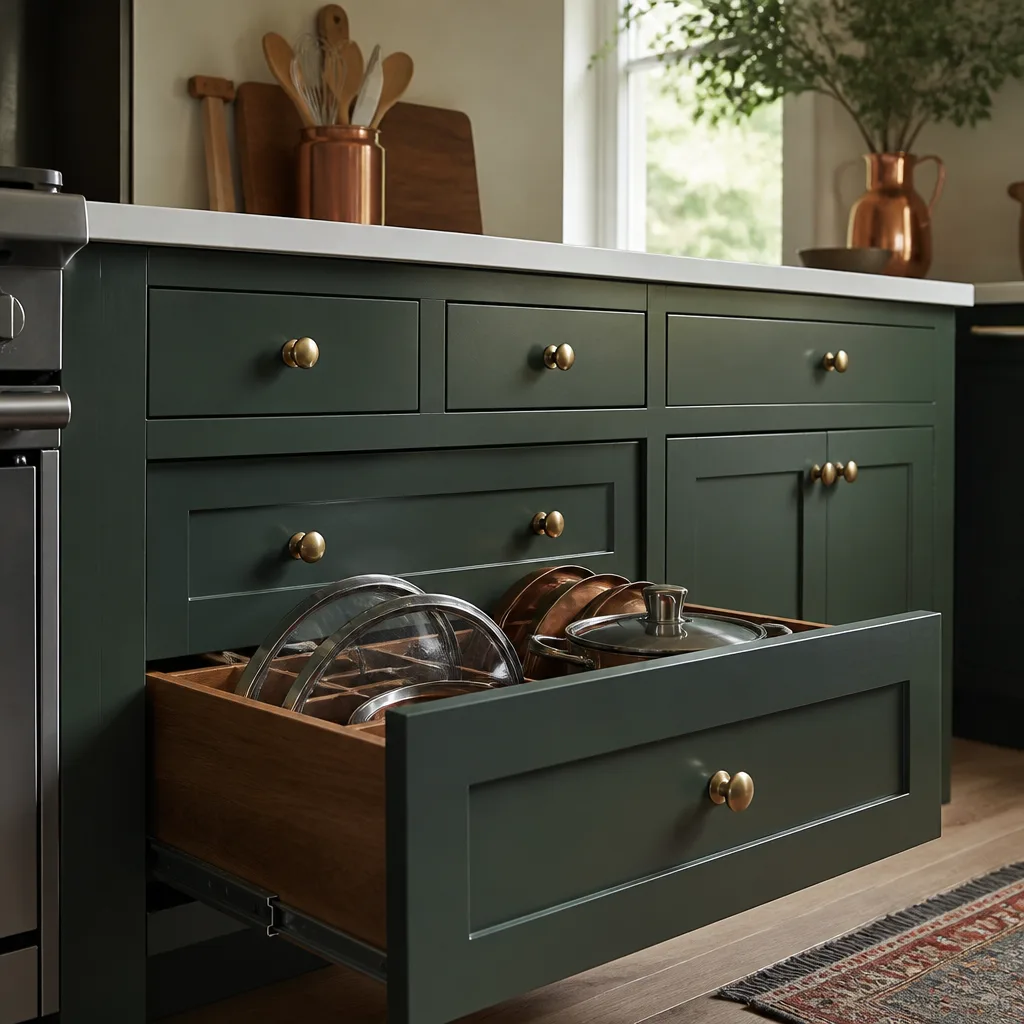
- Kitchen remodeling
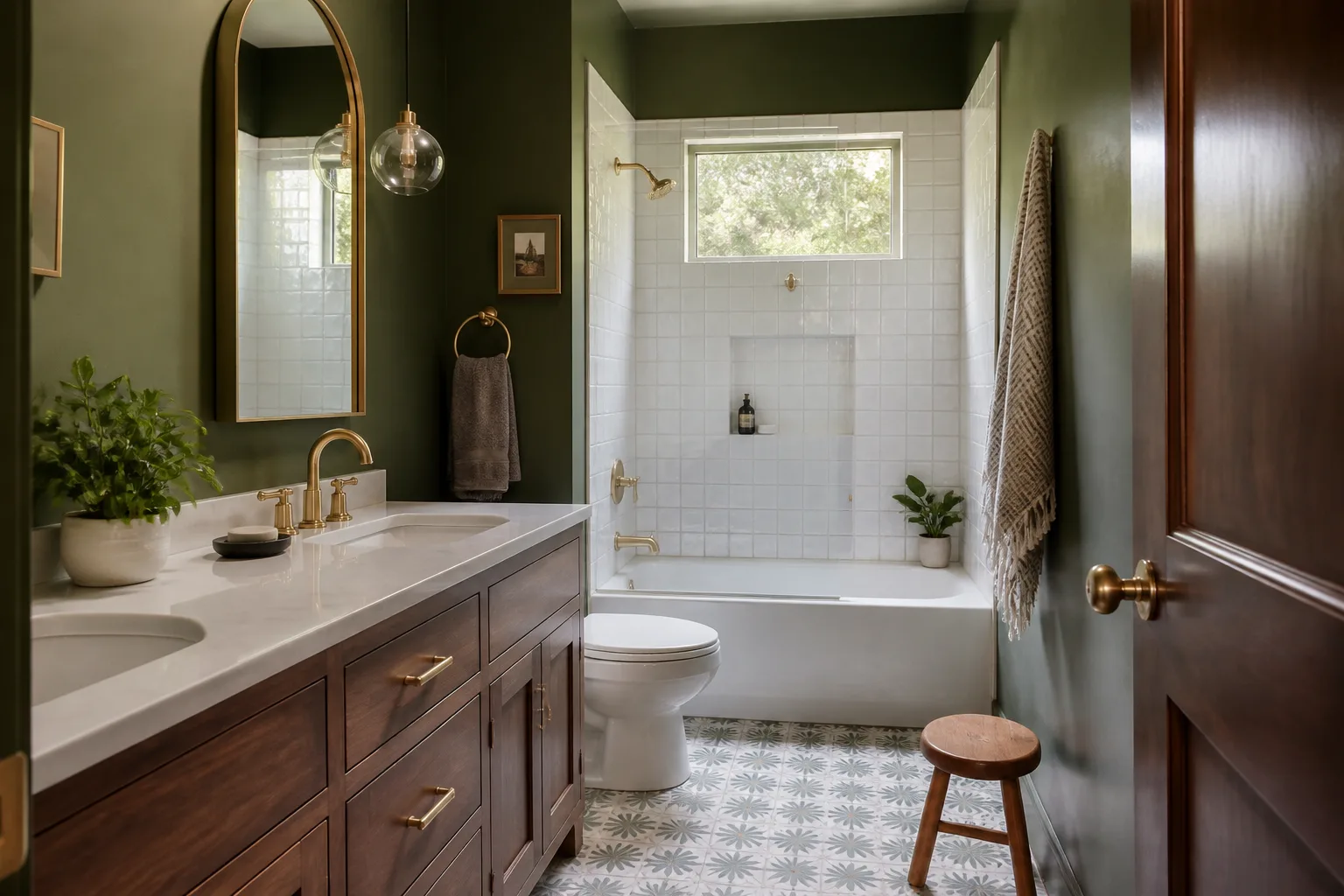
- Bathroom remodeling
- Home additions & ADU
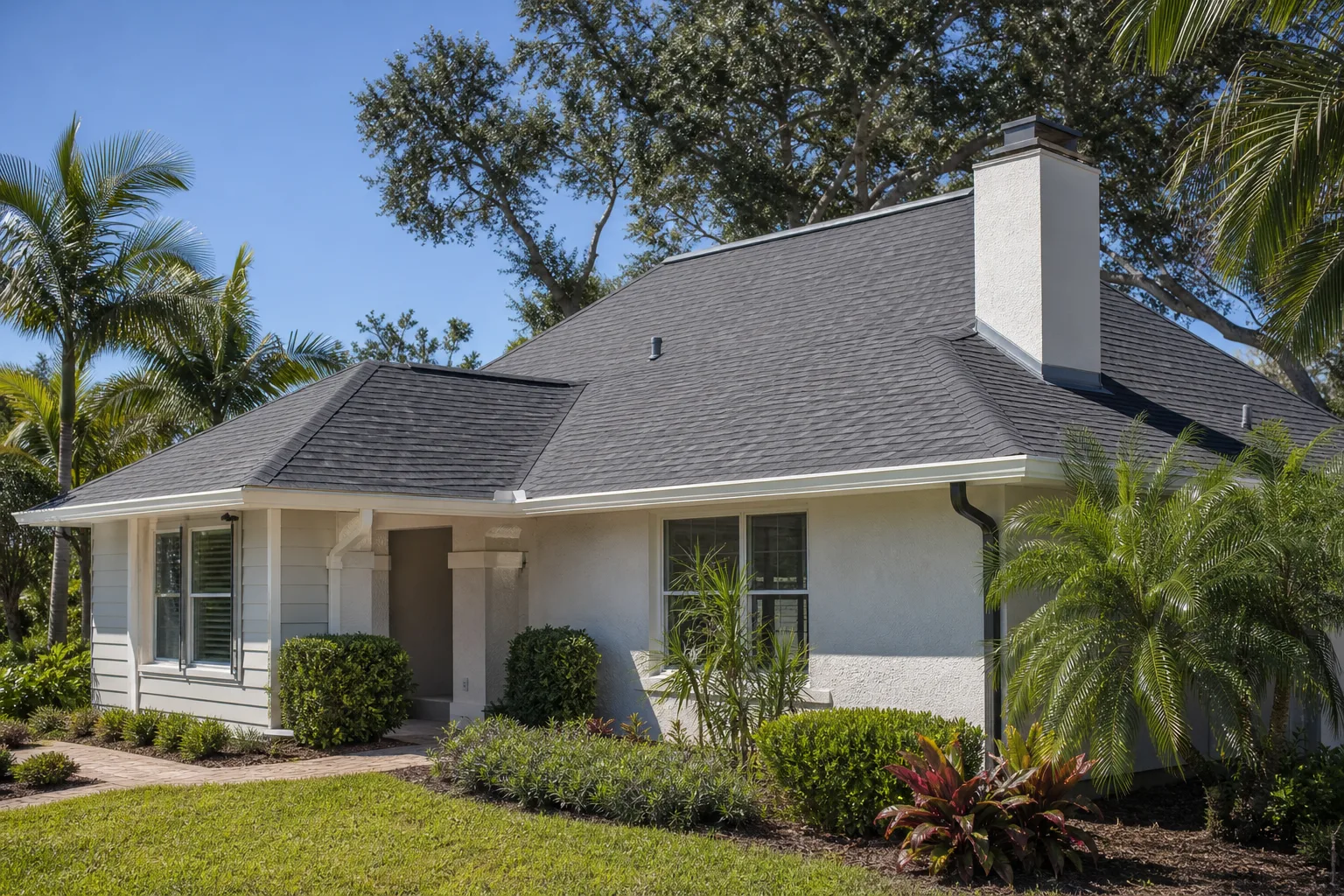
- Roofing
- Windows & doors
- Driveway & pavers
- Fence
Table of Contents
- Step 1: Verify the License Class, Not Just the License
- Step 2: Ask for the Insurance Certificate and the Coverage Gap
- Step 3: Confirm They Pull Their Own Permits
- Step 4: Read the Change-Order Policy Before You Sign
- Step 5: Structure a Payment Schedule That Protects You
- The Five Questions That Separate a Real Contractor
- What’s Different About Hiring in Garden Grove
- Common Mistakes to Avoid
Step 1: Verify the License Class, Not Just the License
A Garden Grove contractor can carry a valid license and still be unqualified for the work you’re hiring them for. That’s the detail almost nobody checks.
California licenses come by class. A Class B (General Building) license lets a contractor take on projects that involve more than two unrelated trades, like a kitchen remodel that touches framing, electrical, and drywall. A Class C-39 covers roofing only. A Class C-27 is landscaping. If you’re hiring someone for a room addition in Garden Grove and their license is C-36 (sheet metal), the classification doesn’t cover the scope, and the CSLB considers that unlicensed contracting for that job.
Here’s how to check properly:
- Go to the CSLB website and search by license number, not by business name. Names get reused; numbers don’t.
- Confirm the license status is “Active” and check the expiration date.
- Read the classification codes listed. Match each trade in your project to a class. If the scope involves multiple trades, you want B or the specific C-classes that cover every piece.
- Look for a “workers’ compensation” flag on the record. If it says “Uninsured,” the contractor’s employees aren’t covered, and that can become your problem.
- Check the bond amount. Residential contractors should carry a contractor’s bond; confirm it’s current.
For a home addition in Garden Grove, a kitchen remodel, or a bathroom remodel that relocates plumbing, a B license is usually the minimum you want. A fence installation or paver driveway may fall under a specialty class or the general license depending on scope; a contractor who answers “what class is your license?” without hesitation is one who checks. Tom Barrett publishes his name, address, and license number and tells every customer to look it up before they sign anything. That’s what accountability looks like in a state where the license check is only as good as the class behind it.
Step 2: Ask for the Insurance Certificate and the Coverage Gap
Every contractor will tell you they’re “fully insured.” Almost none will volunteer the certificate, and the one thing most Garden Grove homeowners never ask about is workers’ compensation coverage for the crew on their property.
Here’s why that gap matters. General liability insurance covers damage to your home and property. Workers’ compensation covers the crew if someone gets hurt on your job. If a contractor carries liability but not workers’ comp, and a worker falls off a ladder in your backyard, that injury can land on your homeowner’s policy or turn into a claim against you. The contractor’s liability coverage won’t pay it.
Request two things in writing, before the contract:
- A certificate of general liability insurance showing the policy is current and the coverage limit. Ask whether it’s $1 million per occurrence or more. For a remodel or addition, confirm the certificate lists the coverage amount and the insurer.
- A certificate of workers’ compensation insurance covering every crew member who will set foot on your property. If the contractor says they don’t need it because “everyone’s a subcontractor,” ask for the subcontractors’ certificates too. An uninsured subcontractor is still a risk on your lot.
Call the insurer listed on the certificate to confirm it’s live. Certificates get faked and policies lapse. Barrett & Sons crew members are background-checked and carry the name on every visit, and every crew member is covered. When you ask for the certificate, watch the reaction. A contractor with real coverage hands it over in minutes. A contractor without it starts explaining.
Step 3: Confirm They Pull Their Own Permits
A contractor who pulls their own permits is telling you they’ll stand in front of the city inspector with their name on the application. That’s a signal worth more than any reference.
In Garden Grove, permits are handled through the city’s building division, and the requirements depend on scope. A roof replacement, an addition, an ADU conversion, a kitchen remodel that moves walls or runs new electrical, and many fence or paver projects will require a permit. Small cosmetic work sometimes won’t. The point isn’t whether every job needs one. The point is whether the contractor knows, tells you plainly, and pulls it themselves.
Here’s how to confirm they’re doing it:
- Ask, in the first meeting, “Will you pull the permit, and whose name goes on the application?” The answer should be theirs.
- Before work starts, ask for the permit number once it’s issued. A legitimate contractor has no trouble producing it.
- Ask when the inspections are scheduled. A contractor who plans the inspection schedule before the first day is one who expects to pass.
- At closeout, ask for the signed final inspection card. That’s your proof the work was reviewed by the city and signed off.
The last contractor most Garden Grove homeowners used told them permits were optional. They usually aren’t, and the code issues that surface at resale, or when you sell the house, or when a future contractor refuses to touch unpermitted work, land on the homeowner, not the contractor who skipped it. The permit inspector works for you, not for the contractor. That’s why pulling permits is a feature, not a chore. If you’re planning a home addition or ADU in Garden Grove, a permit pulled and signed is the difference between a legal square foot and a liability. Learn more about how that process works on our Home Additions & ADU in Garden Grove page.
Step 4: Read the Change-Order Policy Before You Sign
“We document everything” is not a change-order policy. It’s a sentence.
A real change-order policy is written, and it says three things: any change to scope, materials, or allowances gets a written change order with a dollar figure, no work starts on the change until you sign it, and the change order becomes part of the contract. If a contractor can’t hand you a sample change order at the bidding stage, they don’t have one.
Allowances are where the surprise bills hide. An allowance is a placeholder dollar amount for something not yet selected, like tile, fixtures, or a specific brand of window. If the allowance is $2,000 and the material you fall in love with costs $3,400, the difference should be a written change order, not a line item on the final invoice you see for the first time at the end. An allowance that isn’t on paper is a surprise waiting for a date.
Ask these questions before signing anything:
- “Show me a sample change order from a recent job.” If they can’t produce one, walk.
- “Which line items in this bid are allowances, and what’s the number on each?”
- “What happens if I want to upgrade the cabinets or windows after the contract starts?” The answer should involve a written change order before work proceeds, not a verbal “we’ll figure it out.”
- “Are there any conditions under which the price can move without my signature?” The correct answer is no.
This is how Barrett & Sons has always worked: every scope, every allowance, every price change arrives as a written change order before a single nail moves. No surprise invoices at the end. It’s the single most common complaint we hear from Garden Grove homeowners who came to us after a bad experience with someone else, and it’s the easiest problem to prevent if you ask before you sign. If your project touches the driveway too, the same discipline applies to Driveway & Pavers in Garden Grove.
Step 5: Structure a Payment Schedule That Protects You
The payment schedule is your leverage through every phase of the job. Once the money is gone, you’re a customer waiting for a callback, not a customer with a contractor’s attention.
Rule one: never pay more than 10% down, and never more than $1,000 as a deposit regardless of project size, both of which are California limits for home improvement contracts. Rule two: tie every payment to a completed milestone, not to a calendar date. Rule three: hold meaningful money back until the final inspection passes.
A payment schedule that keeps you protected through a Garden Grove remodel typically looks like this:
- Deposit: 10% or $1,000, whichever is less, at signing.
- Rough-in phase: a payment when framing, plumbing, and electrical rough-ins are complete and inspected.
- Mid-project: a payment when drywall is hung and finished, or another defined milestone.
- Substantial completion: a payment when finishes are installed and the job is usable.
- Final holdback: 10% released only after the final inspection passes and you’ve walked the job with a punch list in hand.
Never pay in cash. Never pay for materials up front unless it’s written into the contract as a specific allowance with a receipt. Never sign off on “substantial completion” if the punch list has twenty items on it, and never release the final payment before the inspection card is signed. A contractor who balks at a holdback is telling you how they plan to handle the punch list.
The Five Questions That Separate a Real Contractor
If you take nothing else from this guide, take these five questions into every meeting you have with a contractor in Garden Grove. The answers do more to protect you than a license check ever will.
- “What class is your license, and does it cover every trade in this scope?” A contractor who knows their classification won’t hesitate. One who doesn’t will say “I’m fully licensed” and change the subject.
- “Can I see your insurance certificate, including workers’ comp?” Request both, in writing, before you sign.
- “Will you pull the permit, and when can I see the number?” The answer is yes and quickly, or it’s a problem.
- “Show me a sample change order.” If they can’t hand you one from a recent job, their “we document everything” claim isn’t backed by a form.
- “What’s the payment schedule, and what holds the final payment?” The answer you want involves milestones, inspections, and a holdback.
Ask these five questions and you’ll have more information in twenty minutes than most homeowners collect in a week of phone calls. A contractor who answers all five cleanly is one who treats their business like a business. A contractor who dodges any one of them is showing you how the rest of the job will go.
What’s Different About Hiring in Garden Grove
Garden Grove has its own local flavor for construction, and a good contractor should know it. The city has a large stock of mid-century tract homes, many of which were built in the 1950s and 1960s. That means asbestos and lead paint are a real possibility in any remodel that touches walls or ceilings. A contractor who doesn’t mention testing on an older Garden Grove home is skipping a step that matters.
The climate matters too. Garden Grove sits close enough to the coast to get marine layer and the occasional Santa Ana wind event, and our spring roof failures usually trace back to a wind-lifted shingle or a flashing detail that wasn’t done correctly on the last installation. Roofing here should be done with brands like GAF or CertainTeed and installed to manufacturer spec, because the wind uplift requirement in this part of Orange County is real.
Fence work has its own local considerations. Garden Grove properties often share fence lines with neighbors, and fence height and property-line rules apply. Materials like Barrette, Master Halco, and Ameristar vinyl and ornamental steel hold up well in our sun and wind. If you’re fencing a yard here, our Fence Installation in Garden Grove page covers the local details. And if a driveway project is on your list, the same attention to base prep and drainage matters for pavers on Garden Grove’s clay-heavy soils.
Common Mistakes to Avoid
- Checking only that a license is valid, not that the class covers the work. A roofing contractor doing a kitchen remodel is unlicensed for that scope, and the CSLB treats it that way.
- Accepting “we’re fully insured” without the certificate. Ask for both liability and workers’ comp, then call the insurer to confirm the policy is live.
- Letting the contractor tell you a permit is optional. In Garden Grove, most meaningful work requires one, and skipping it becomes your resale problem.
- Signing a bid with allowances that aren’t itemized. An allowance that isn’t on paper is a surprise waiting for a date, and you’ll meet it at the final invoice.
- Paying more than 10% or $1,000 down. California caps both for home improvement contracts, and a contractor who asks for more is declaring how they handle risk.
- Releasing the final payment before the inspection passes. Your holdback is your leverage; keep it until the punch list is done and the card is signed.
- Choosing the lowest bid without reading what’s in it. The cheapest bid usually wins on paper by leaving out permits, insurance, or an honest allowance. Compare scope, not price tags.
See the difference
 Before
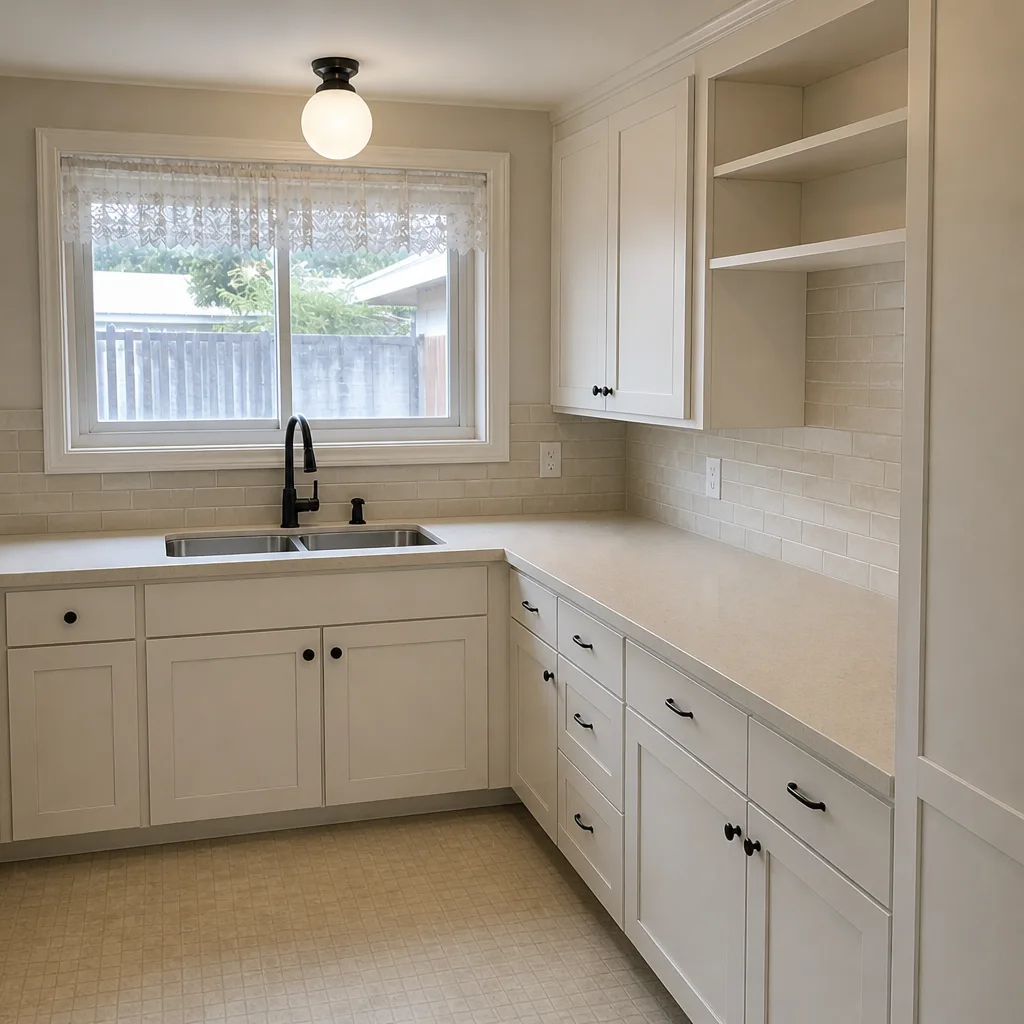 After
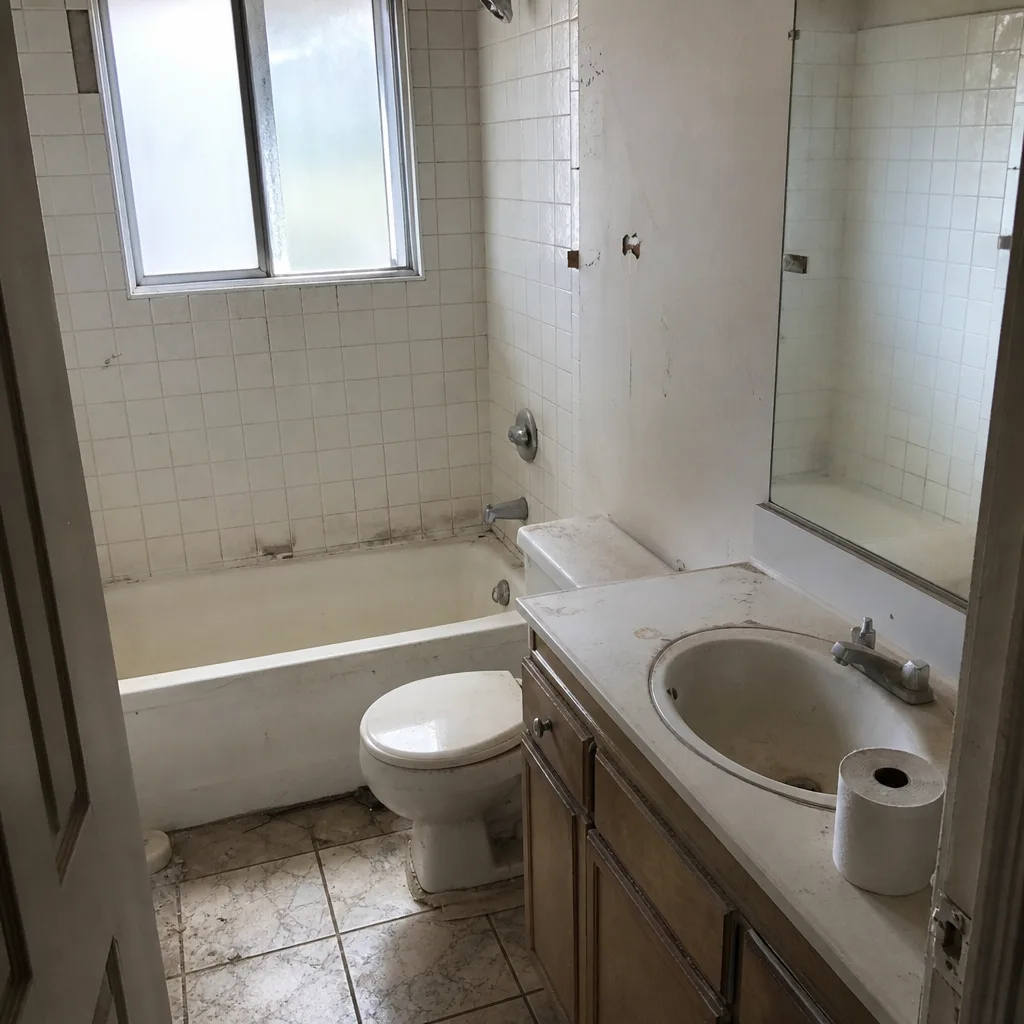 Before
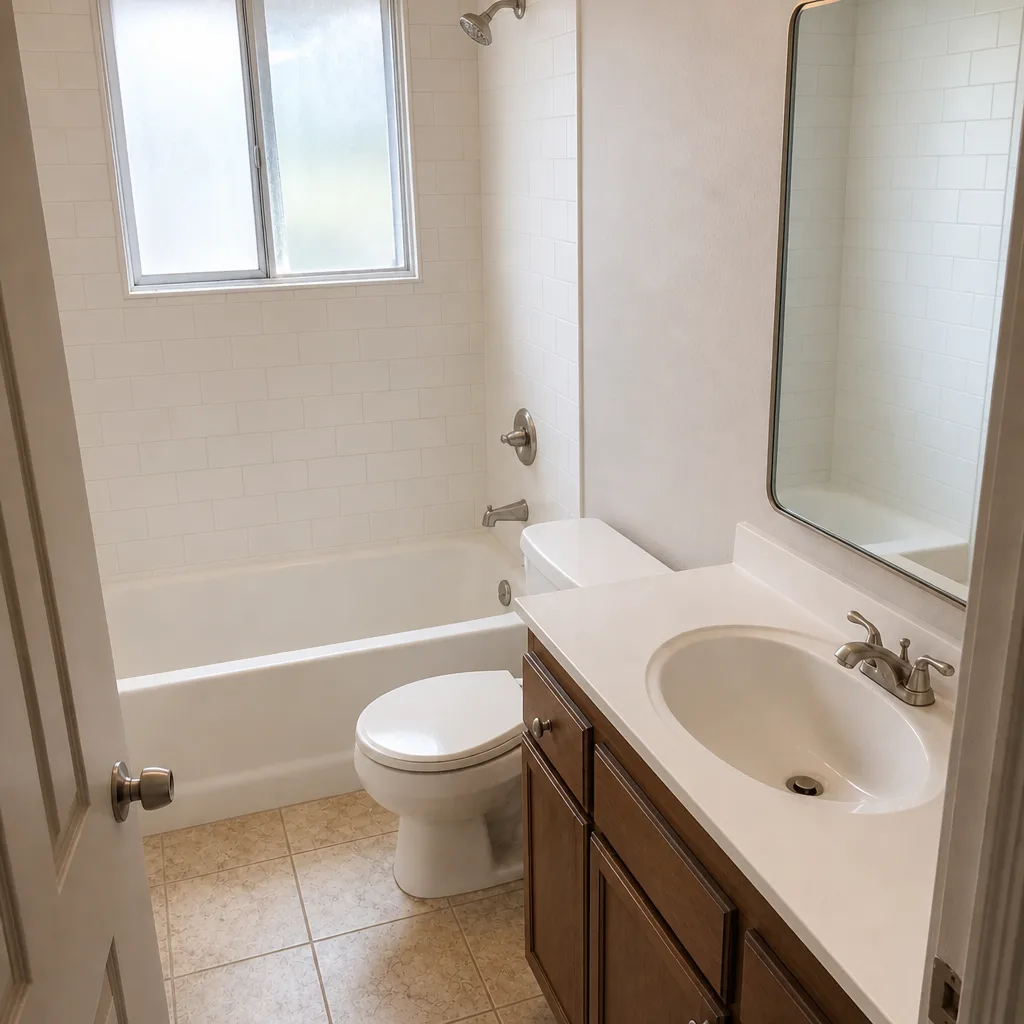 After
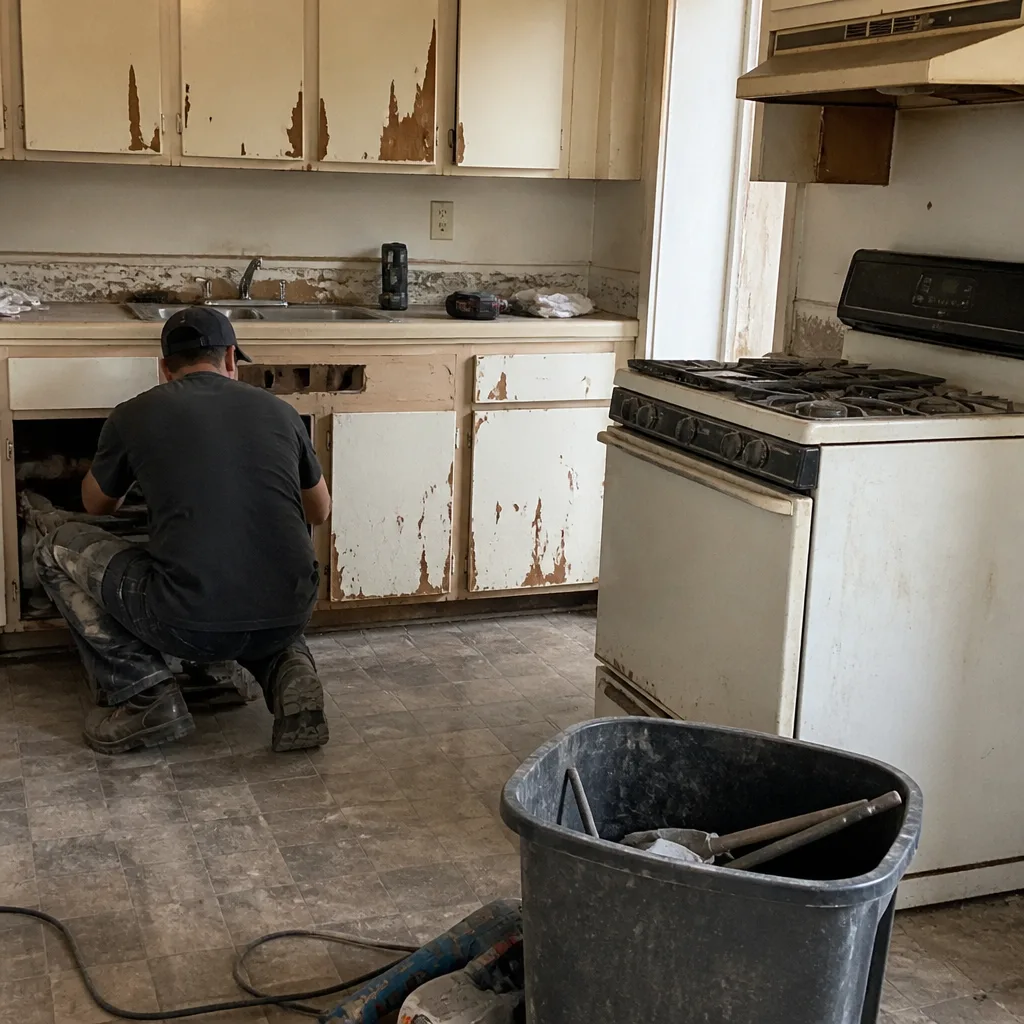 Before
 After
When to Call a Professional

Some work is worth a contractor call even if you’re handy. Anything that touches the electrical panel, gas lines, structural framing, or the roof is work for a licensed professional, full stop. The stakes aren’t a leaky faucet, they’re a fire, a gas leak, or a roof failure in the next Santa Ana wind. Even on a smaller job, if the scope involves a permit you don’t want to pull yourself, or a specialty trade like tile, roofing, or paver base prep that’s easy to do wrong and expensive to redo, call someone who does it every week.
If you’re in Garden Grove and weighing whether a project is worth a professional, that’s a free conversation. We offer free estimates and a free second opinion on any written estimate you already have, with no trip charge inside the county. Call (833) 703-5196 to schedule yours.
Frequently Asked Questions
Go to the California Contractors State License Board website and search by license number, not business name, then confirm the status is Active and that the license class covers every trade in your project. A Class B license covers multi-trade remodels and additions; specialty classes cover single trades. Search by number, read the classifications, and verify the workers’ comp flag on the record. If the class doesn’t match your scope, they’re not licensed for that work. Call (833) 703-5196 for a free estimate and we’ll walk you through what to verify before you sign anything.
Ask for a current certificate of general liability insurance and a separate certificate of workers’ compensation coverage, then call the insurer on the certificate to confirm the policy is live. Workers’ comp is the coverage gap most homeowners never ask about. Without it, an injury to a crew member on your property can become a claim against your homeowner’s policy. A contractor with real coverage produces both in minutes. Call us for a free estimate and we’ll send both certificates before we discuss anything else.
Most meaningful construction in Garden Grove requires a permit, including roof replacements, additions, ADU conversions, and kitchen or bathroom remodels that move walls or run new electrical or plumbing. To confirm, ask before work starts whose name goes on the permit application, request the permit number once it’s issued, and ask for the signed final inspection card at closeout. A contractor who pulls their own permits is one who plans to pass the inspection. Call (833) 703-5196 for a free estimate on a permitted job.
Price should only change when a written change order is signed by you, and that includes upgrades to allowances for materials like cabinets, tile, or windows. Ask to see a sample change order at the bidding stage; if a contractor can’t produce one from a recent job, they don’t have a real policy. Barrett & Sons issues written change orders before any scope change touches the job, which means no surprise invoices at the end. Call (833) 703-5196 for a free estimate with line items in writing.
California caps home improvement deposits at 10% of the contract price or $1,000, whichever is less, so no legitimate contractor should ask for more. Tie every payment after that to a completed milestone, and hold back 10% until the final inspection passes and the punch list is done. Pay by check or card, never cash, and get a receipt for each payment. Call (833) 703-5196 for a free estimate and we’ll show you the payment schedule in writing before you decide.
Ask what the written guarantee says and whether it’s on the contract, not in fine print. A contractor who stands behind the work will put a written promise in the contract with a specific call-back window and no conditions that let them off the hook. Ask to see the exact language at the bidding stage. Every Barrett & Sons job is backed by the 90-Day Done Right Promise, written on every contract: one call brings Tom back to make it right. Call (833) 703-5196 for a free estimate and we’ll show you the language up front.
The Bottom Line

Hiring a contractor in Garden Grove comes down to five questions: does the license class cover the scope, are the insurance certificates real and current, will they pull their own permits and show you the inspection card, do they have a written change-order policy you can see, and does the payment schedule keep you protected through the last phase. A license check alone won’t protect you. These five will. If you want a free estimate or a second opinion on a written estimate you already have, call (833) 703-5196. We’ll sit down with you, answer the five questions straight, and put the whole thing in writing before any work begins.
You can also start with our Barrett & Sons Construction Garden Grove home page to see the full range of what we do.
Written by the team at Barrett & Sons Construction Garden Grove.