Last updated November 18, 2026


Free written scope consultation - allowances, timeline, and change-order rules on paper before a single trade is scheduled
Home Additions & ADU Maintenance Schedule: What to Do and When
Most maintenance calendars you’ll find online were written for a Midwest climate with one freeze, one thaw, and a long winter to catch up. Garden Grove doesn’t work that way. Here we get two separate damage windows every year: the dry, gusting Santa Ana season that pulls moisture out of stucco and drives grit into window tracks, and the wet winter pattern that tests every drain, flashing point, and slab edge on the property. An addition or ADU sits through both with its own envelope, its own mechanical systems, and its own maintenance clock. Treat it like the main house and do whatever you do there, and you’ll be paying for preventable damage by year three. What follows is the schedule we’d hand a neighbor.
Quick Answer
Maintain an ADU or home addition on a monthly, seasonal, and annual cadence built around Southern California weather: inspect the exterior and clear gutters before Santa Ana season (roughly September through October), check drainage and roof-to-wall flashing after the last winter rain (March), service HVAC filters monthly and the refrigerant circuit each spring, and flush the tankless water heater annually. Budget $400 to $900 a year for routine upkeep on a typical Garden Grove ADU, plus a reserve for the five-year items like exterior repaint.
Styles & brands we work with
- Kitchen remodeling
- Bathroom remodeling
- Home additions & ADU
- Roofing
- Windows & doors
- Driveway & pavers
- Fence
Table of Contents
- Why an ADU Ages Differently Than Your Main House
- The Month-by-Month Calendar for Garden Grove Weather
- The Five Systems That Age Fastest in an ADU
- The Garage Conversion: When a Slab Becomes a Floor
- Tenant-Occupied ADUs: Who Maintains What in California
- Realistic Service Intervals and What They Cost
- What You Can Handle and What Needs a Licensed Pro
- The Annual Inspection Walkthrough, Step by Step
Why an ADU Ages Differently Than Your Main House
An addition or accessory dwelling unit is a second structure on your lot. It has its own roof plane, its own wall assemblies, its own water heater, its own HVAC, and often its own electrical subpanel. That means it has its own failure points, and they don’t fail on the same schedule as the house you’ve been maintaining for years.
A few things make ADUs age faster in Garden Grove specifically. Many ADUs are built tight: 400 to 1,000 square feet with one or two small windows and a single mini-split head. Small volume means humidity swings hit harder. A shower running for fifteen minutes in a 500-square-foot unit pushes indoor humidity up fast, and if the exhaust fan is undersized or the tenant never runs it, that moisture finds the coolest surface in the room. In Garden Grove’s mild climate that’s usually a north-facing wall or a window frame, not a ceiling, which is why condensation damage here often shows up low and gets missed.
Detached ADUs also sit closer to property lines and fences than the main house, so fence lines, side-yard drainage, and the gap between the structure and the neighbor’s block wall matter more. When we’re on an evaluation for an ADU project we look at that side-yard drainage before anything else, because it’s cheap to fix at build time and expensive to fix after a wet January. If you’re still in the planning stage and haven’t broken ground, the maintenance schedule starts with the layout, not the checklist. Our Home Additions & ADU in Garden Grove page covers how we plan those details up front.
One more difference: many ADUs are rented. Maintenance responsibilities get split between owner and tenant, and the split isn’t obvious. We’ll get to that in its own section below.
The Month-by-Month Calendar for Garden Grove Weather
Here’s the schedule we’d actually put on a refrigerator. It’s built around the two seasons that stress a structure here: the Santa Ana window (roughly September through November, when dry offshore winds peak) and the wet window (December through March).
September to October: Pre-Santa Ana Season Exterior Inspection
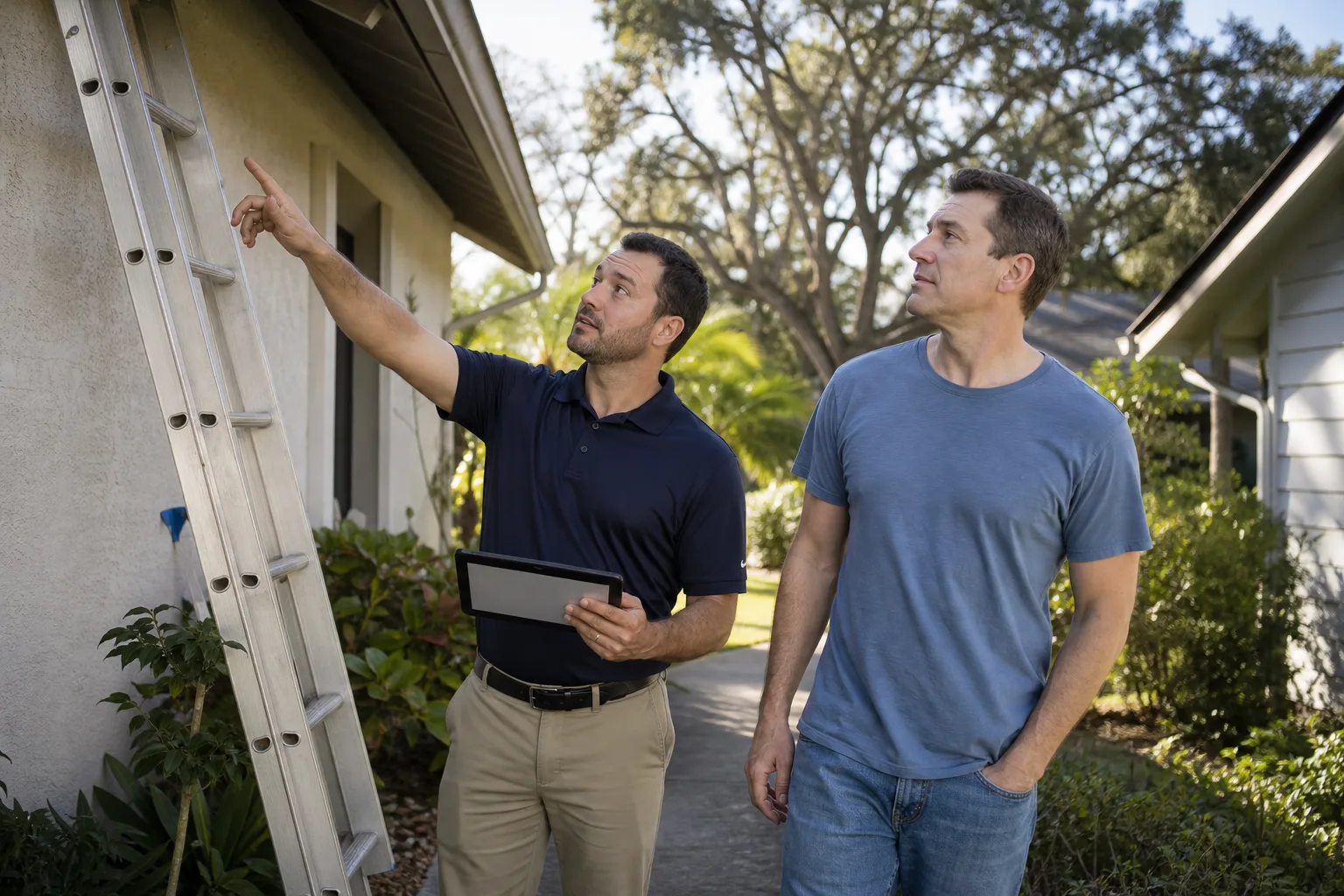
- Walk the exterior with a notepad. Check caulk joints at windows, doors, and the roof-to-wall connection. Santa Ana winds drive fine dust and grit into any open joint, and a hairline gap in October is a water intrusion point in January.
- Check window screens and weep holes. Weep holes at the bottom of window frames and stucco are drainage points. If they’re plugged with grit or paint, water has nowhere to go.
- Clear gutters and downspouts. In Garden Grove we get a lot of fine debris from street trees, and it accumulates through the dry months. Clear it before the first rain, not after.
- Test the mini-split in both modes. Run it in heat for ten minutes and cool for ten. Catching a failing capacitor in October beats finding out on a cold January night.
November to March: The Wet Season Watch
During the rainy months, the job is inspection, not prevention. Walk out after the heaviest rain of the month and look for standing water within 24 hours. Look at the base of the ADU walls for dark staining, check the roof-to-wall flashing line from the ground with binoculars, and note any ceiling stains inside before they spread. Southern California rain often arrives in short, intense bursts, and a bad drainage path that handles a drizzle will fail on a two-inch storm.
March to April: Post-Rainy Season Drainage Check
- Check grade and drainage paths. Soil shifts through the wet season. Confirm water still runs away from the structure, not toward it.
- Inspect the perimeter of any paver or hardscape apron. Settling at the edge of a walkway or patio next to the ADU is common after a wet winter. Small lifts can be reset; ignore them and they become trip hazards.
- Look at the roof-to-wall flashing again. This is the highest-risk joint on any addition, and we’ll cover why in the systems section.
May to August: HVAC and Water System Attention
Summer is when the cooling system earns its keep and when water heating demand peaks. Change mini-split filters monthly through the hot months (more on that below), check the condensate drain line for algae buildup, and listen to the water heater. Any rumbling, popping, or hard-water scale sound in a tankless unit means it’s due for a descaling flush.
If your ADU has a paver path, patio, or hardscape apron, the dry season is also the right time to reseal and re-sand. We install Belgard and Tremron pavers on a lot of Garden Grove properties, and both hold up well here, but polymeric joint sand needs a top-off every few years to stay in place.
The Five Systems That Age Fastest in an ADU
These are the five items we see fail first, in order, on ADUs and additions. They fail differently than they would in a main house because of how the unit is used, built, and serviced.
1. The Water Heater (Often a Tankless Unit on Its Own Circuit)
Many ADUs are built with a tankless water heater on a dedicated electrical circuit, which is efficient but demands an annual descaling. Garden Grove water runs moderately hard, and scale buildup inside a tankless heat exchanger cuts efficiency long before the unit gives out. A tankless flush every 12 months is the single highest-value maintenance item on the whole list. Skip it for three years and you’ll replace a heat exchanger instead of flushing it.
2. The Mini-Split HVAC System
Most ADUs run a ductless mini-split, and ductless systems live or die on filter cleanliness. In a small unit with the head mounted high, dust accumulates fast. Clean or replace the filter monthly during cooling season, and have the indoor coil and condensate drain line cleaned professionally once a year. Refrigerant circuits are sealed systems; if you’re adding refrigerant, you have a leak, and that’s a licensed-HVAC call, not a top-off.
3. The Secondary Electrical Panel
An ADU often gets its own subpanel. Twice a year, open the cover and look for scorch marks, discoloration, or any burning smell. Don’t touch the inside. If anything looks off, call a licensed electrician. Panel work is one of the few things we flatly tell homeowners never to DIY.
4. Exterior Paint and Stucco
Stucco in Garden Grove takes more UV than you’d expect and more dust from the dry season than most people realize. Inspect for hairline cracks twice a year and seal them with an elastomeric patching compound. A full exterior repaint on a typical ADU runs every eight to twelve years here. If a crack is wider than a credit card, get it looked at instead of patched over.
5. The Roof-to-Wall Flashing at the Connection Point
This is the joint where an addition roof meets an existing wall, and it is the single highest-risk detail on the entire structure. If it’s a GAF or CertainTeed system (we install both), the shingles themselves usually outlast the flashing sealant around the edge. Inspect this line every fall and after the last rain of the season. A failed flashing joint doesn’t announce itself until you have a ceiling stain, and by then the framing behind it has been wet for a while.
The Garage Conversion: When a Slab Becomes a Floor
A garage conversion changes the job of a concrete slab. That slab was poured to hold up a car and shed water out the door. Now it’s a finished floor, and moisture management that was never needed before becomes critical.
What Changes
- Moisture vapor. Concrete wicks moisture from the soil beneath it. In a garage that’s a non-issue; in a finished room it can lift flooring, warp baseboards, and feed mold.
- Grade and drainage. Most garage slabs slope toward the old garage door opening. If that opening was framed and finished, that slope now directs water toward an interior wall instead of out the door.
- Ventilation. A converted garage often has fewer windows than the main house. Mechanical ventilation is now doing the job passive airflow used to do.
- Insulation and vapor barriers. The building code for a habitable room requires a different envelope than an unconditioned garage. If that work wasn’t done to code, you’ll find out in a wet winter, and the moisture usually shows up at the base of exterior walls.
What to Check on Your Conversion Checklist
- Test slab moisture before anything else. A plastic sheet taped to the floor for 24 hours will tell you a lot. If condensation forms underneath, moisture is wicking.
- Confirm the finished floor is above the exterior grade. It should be, and if it isn’t, that’s a flashing and drainage problem, not a flooring problem.
- Check that furnace and water heater equipment in the former garage has a sealed combustion source and proper ventilation per code. This is a life-safety item, not a maintenance preference.
- Run the exhaust fan in the bathroom and verify it actually pulls. A tissue held to the grille should stick.
If you bought a house with a conversion the previous owner did themselves, the first question is whether permits were pulled. If you don’t know, the answer is often that they weren’t. We’ve rebuilt plenty of unpermitted conversions in Garden Grove, and it’s a lot cheaper to fix it before the moisture problems have had a couple of winters to work in.
Tenant-Occupied ADUs: Who Maintains What in California
When you rent out an ADU, the maintenance split changes, and it’s not always obvious which side of the line a given repair falls on.
What the Tenant Handles
- Filter cleaning on the mini-split head
- Keeping drains clear of hair and debris
- Reporting leaks, water stains, or unusual noise promptly
- Basic housekeeping that prevents mold, like running the bath fan
What Stays With the Owner in California
- Habitability. Under California law, the owner is responsible for keeping the unit habitable: working plumbing, hot water, heat, weatherproofing, and a functioning electrical system. A tenant can’t be asked to shoulder structural repairs.
- Water heater and HVAC service. Annual descaling and HVAC service belong to the owner.
- Roof, flashing, exterior paint, and the envelope. All of these are structural or envelope systems and stay with the owner.
- Anything safety-related. Smoke and carbon monoxide detectors, electrical issues, and gas appliances. These are owner responsibilities, and they should be checked at every walkthrough.
The lease should spell out the split in writing. A tenant who knows to run the bath fan and to report a water stain on day one saves you thousands over one who doesn’t. During your annual walkthrough, look in person for: moisture stains on walls and ceilings, water under the water heater, the last date written on the HVAC filter, and any window that doesn’t close flush. Look at the outside of the unit too. A tenant won’t necessarily notice that the downspout pulled away from the wall.
Realistic Service Intervals and What They Cost
Here’s what to budget on a typical Garden Grove ADU. Ranges below are what we see for a standard-sized unit; a large addition or a conversion with unusual systems will run higher.
- Tankless water heater descaling (annual): $150 to $250 for a licensed plumber to flush the unit, check the anode and the gas connections, and clear the inlet filter.
- Mini-split annual service: $150 to $250. Covers coil cleaning, condensate drain clearing, filter replacement, and a refrigerant pressure check. A refrigerant top-off, if needed, means a leak: expect $200 to $500 to find and repair it.
- Electrical panel inspection (twice a year, DIY visual): Free. A licensed electrician to open the panel and check torque and connections annually: $150 to $300.
- Stucco crack repair (latex or elastomeric patch, DIY): $20 to $50 in materials for a handful of cracks. A pro to patch and repaint an area over a few square feet: $300 to $600.
- Roof-to-wall flashing inspection (annual): Free to look. Re-sealing the flashing: $200 to $450. A full flashing rebuild if the metal failed: $600 to $1,200.
- Full exterior repaint on a typical ADU (every 8 to 12 years): $3,500 to $7,000 depending on square footage and prep.
- Gutter and downspout clearing (twice a year): $150 to $350 per visit, or free if you do it yourself.
Add it up and routine upkeep runs $400 to $900 a year for most units, with years that include a bigger item running higher. That’s the number to set aside. Routine maintenance is far cheaper than the repairs that skip it creates. Something as simple as keeping the perimeter fence and side-yard drainage in good condition goes a long way here; if your fence line is showing rot or leaning posts after a wet winter, that’s a fix-it-now item rather than next spring. We cover that work on our Fence Installation in Garden Grove page.
What You Can Handle and What Needs a Licensed Pro
Not everything on this list belongs in your hands. Here’s the honest split.
Safe to Handle Yourself
- Changing mini-split filters
- Clearing gutters and downspouts (on a one-story, with a stable ladder, spotters, and no overhead power lines)
- Patching hairline stucco cracks with an elastomeric compound
- Testing smoke and carbon monoxide detectors
- Checking grade and drainage paths after rain
- Re-sanding paver joints
Call a Licensed Pro
- Any work inside the electrical panel. This is a genuine safety item. Panels carry live current even with the main breaker off, and a mistake can cause a fire or a serious injury.
- Gas appliance work, including water heaters and any range or dryer. Never DIY gas connections.
- Refrigerant work on the mini-split. Refrigerant handling is licensed work and matters for both safety and system life.
- Roof work above a single story or anywhere with a steep pitch. Ladder falls are one of the most common home injuries, and a flashing repair isn’t worth a hospital visit.
- Anything involving the roof-to-wall flashing joint. Getting a watertight seal at that detail is skilled work, and getting it wrong means interior water damage you won’t see until it’s expensive.
If a repair feels like something you’d want a professional watching you do, that’s usually your instinct telling you something. Call a licensed contractor.
The Annual Inspection Walkthrough, Step by Step
Once a year, usually in the fall before Santa Ana season, walk through the ADU and its exterior in this order. It takes about an hour and turns up most problems before they get expensive.
- Start outside at the roof-to-wall flashing line. Binoculars are fine if you can’t safely get up there. Look for lifting metal, missing sealant, or staining below the joint.
- Walk the perimeter and check grade. Water should run away from the walls. Note any low spots.
- Clear gutters and downspouts. Run water through them to check for leaks at the seams.
- Look at exterior caulk and stucco. Note any crack wider than a hairline.
- Go inside and check the water heater. Look for scale, water pooling, or any error light on a tankless unit. Note the date of the last descaling.
- Clean the mini-split filter and run the system in both modes. Check the condensate drain for algae buildup.
- Open the electrical panel cover (do not open the panel itself) and look for scorch marks. If anything looks wrong, call an electrician.
- Test smoke and carbon monoxide detectors. Replace the batteries.
- Check the bathroom exhaust fan by holding a tissue to the grille. It should pull.
- Look at the finished floor near exterior walls on a garage conversion for any dark staining or lifting. That’s a slab moisture signal.
If you have a hardscape apron or driveway near the ADU, include that in the walk. Paver settling near a structure can redirect water against the walls. Our Driveway & Pavers in Garden Grove page covers how we build hardscape so it drains away from the structure from the start.
Common Mistakes to Avoid
- Skipping the tankless descaling. It’s a $150 to $250 annual job that prevents a heat exchanger replacement that can cost four figures. Most owners skip it the first few years because the unit “still works.”
- Treating the ADU like the main house on the calendar. Your main house may not need an October gutter clearing. An ADU tucked near mature trees usually does.
- Patching stucco over a structural crack. In Garden Grove, a lot of older homes have their share of hairline settlement cracks. If a crack is wider than a credit card, that’s a sign of a real movement issue, not a cosmetic one.
- Assuming the tenant will catch the leak. Tenants notice what affects them. They don’t always notice a slow drip under the water heater or a crack in the stucco. Inspect in person once a year.
- Doing your own electrical panel work. It’s the one maintenance item we tell every homeowner to never touch. Hire a licensed electrician.
- Ignoring the flashing joint because the roof “looks fine.” The shingles can outlast the flashing sealant. That joint is what actually keeps the water out.
- Assuming a garage conversion is automatically code-compliant. If permits weren’t pulled, moisture and ventilation problems are common. Get the permit status checked.
See the difference
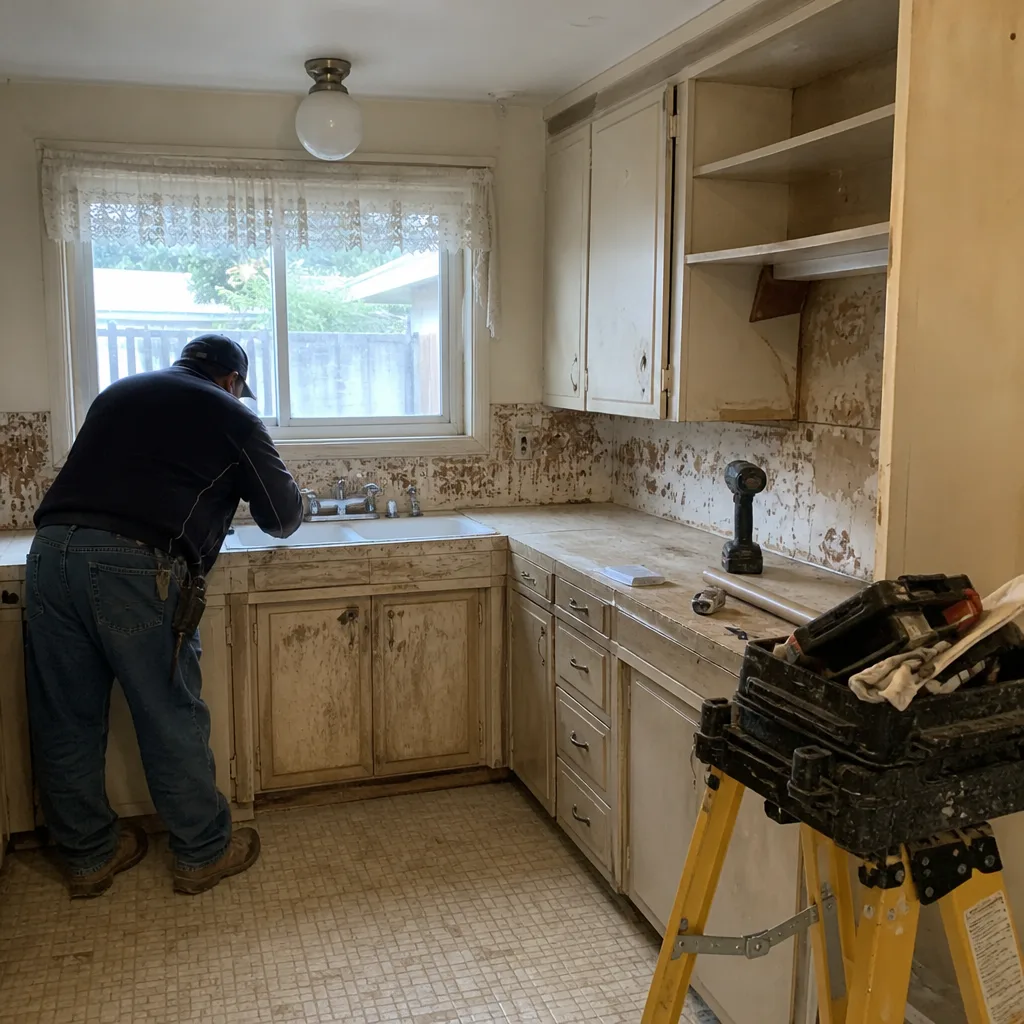 Before
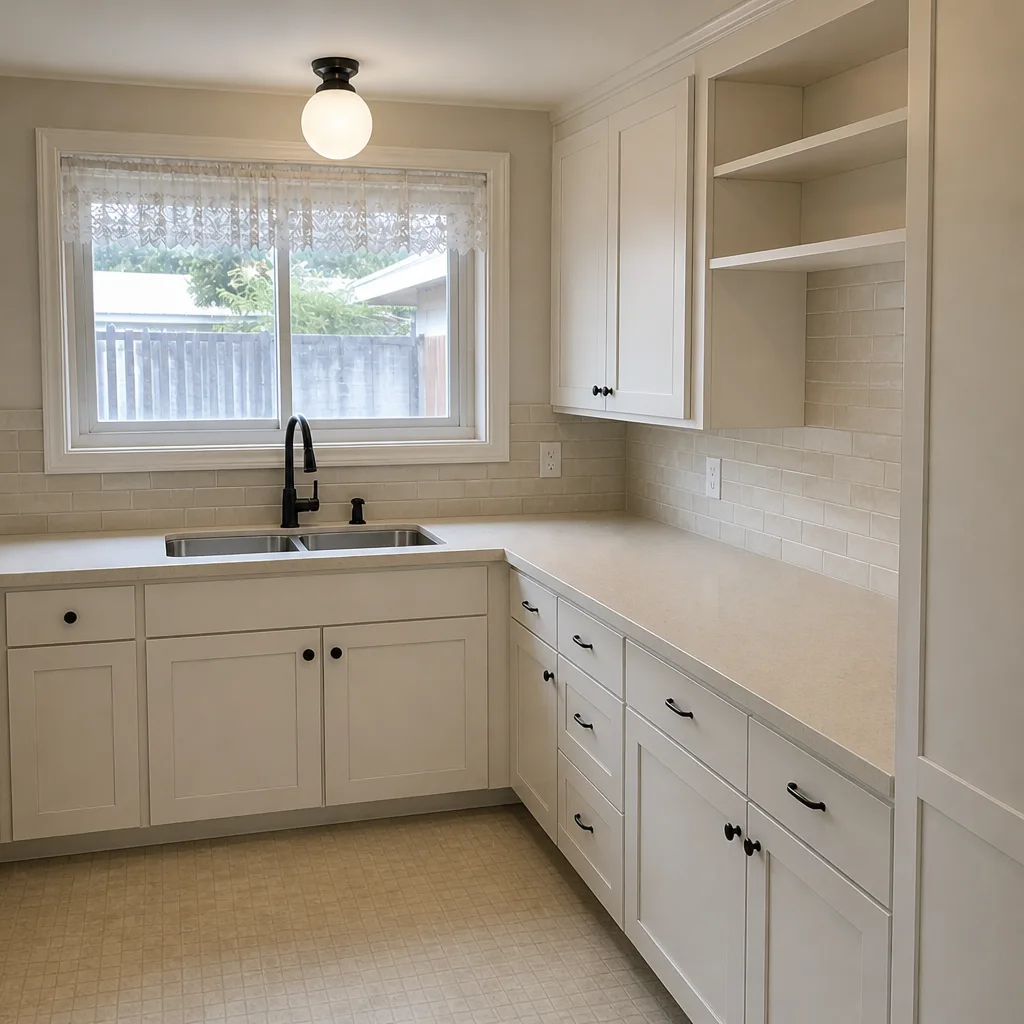 After
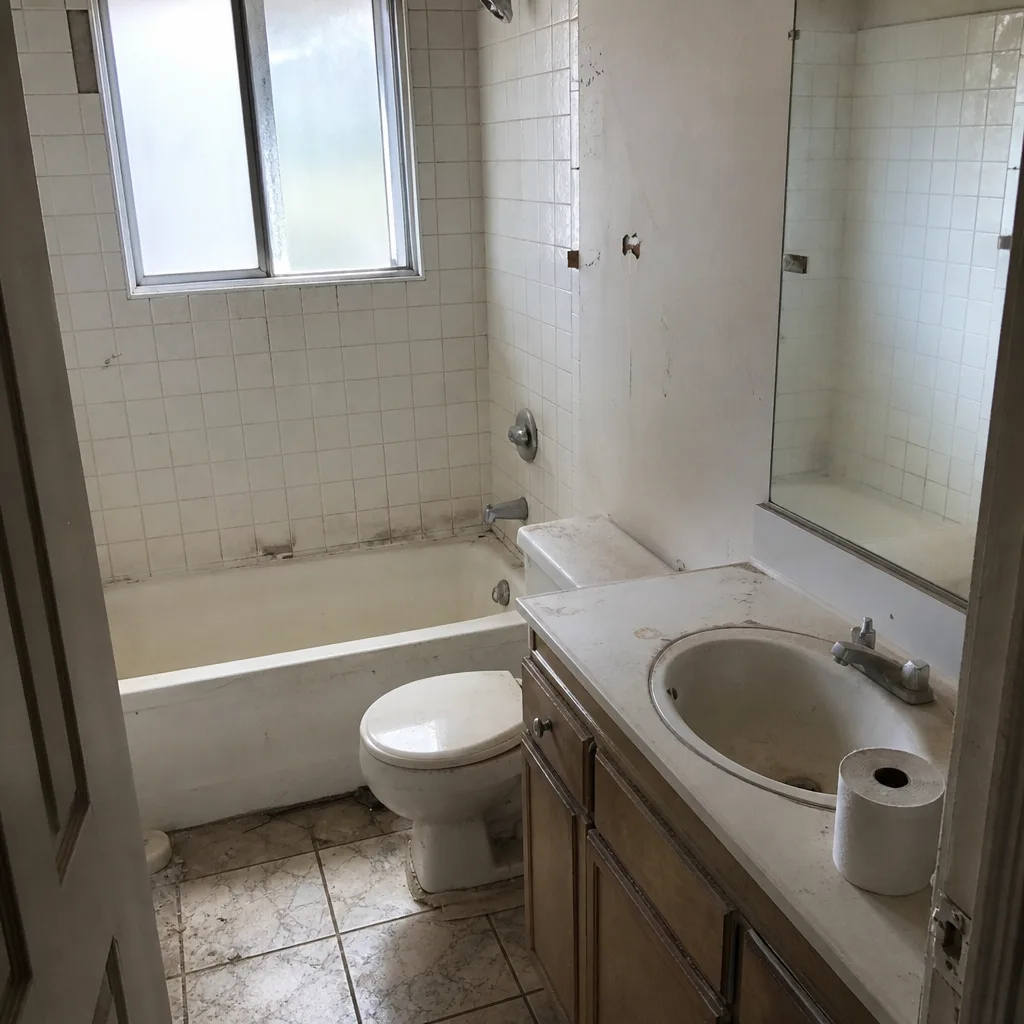 Before
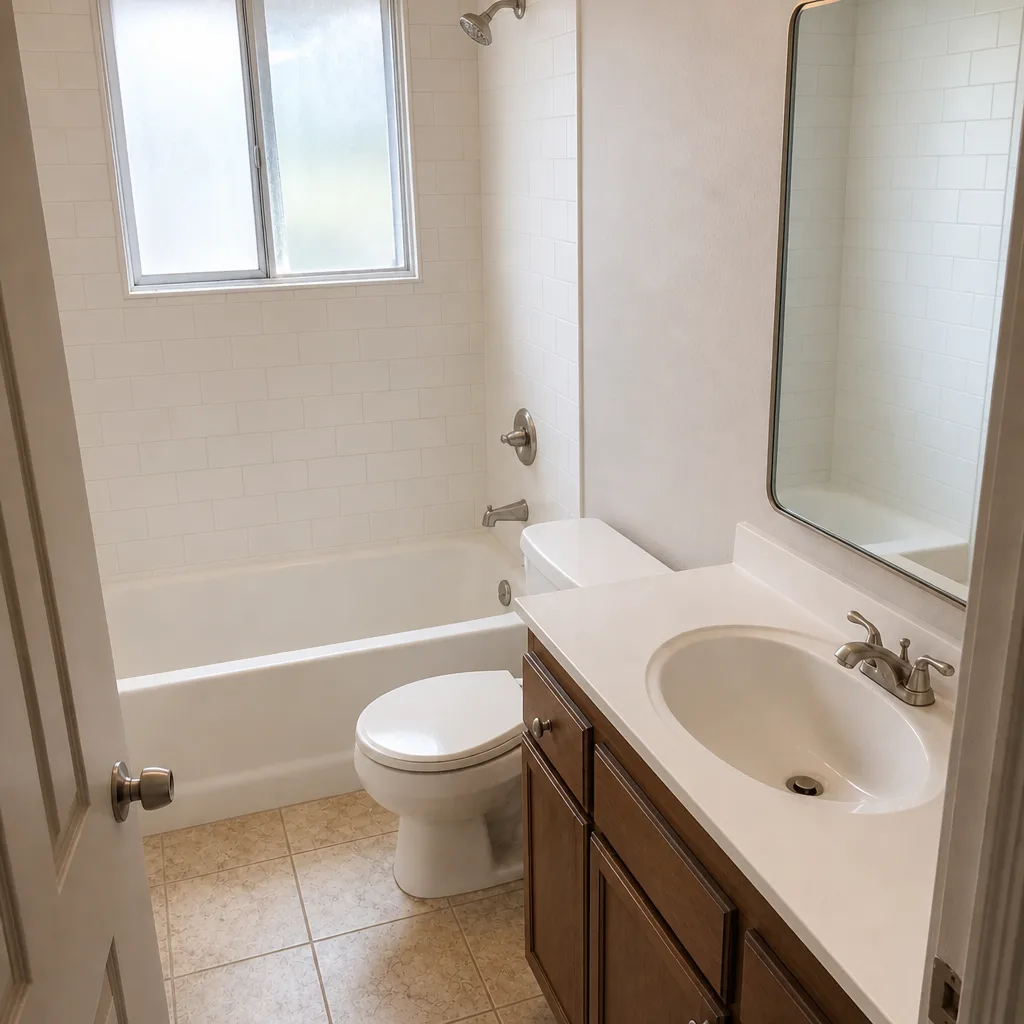 After
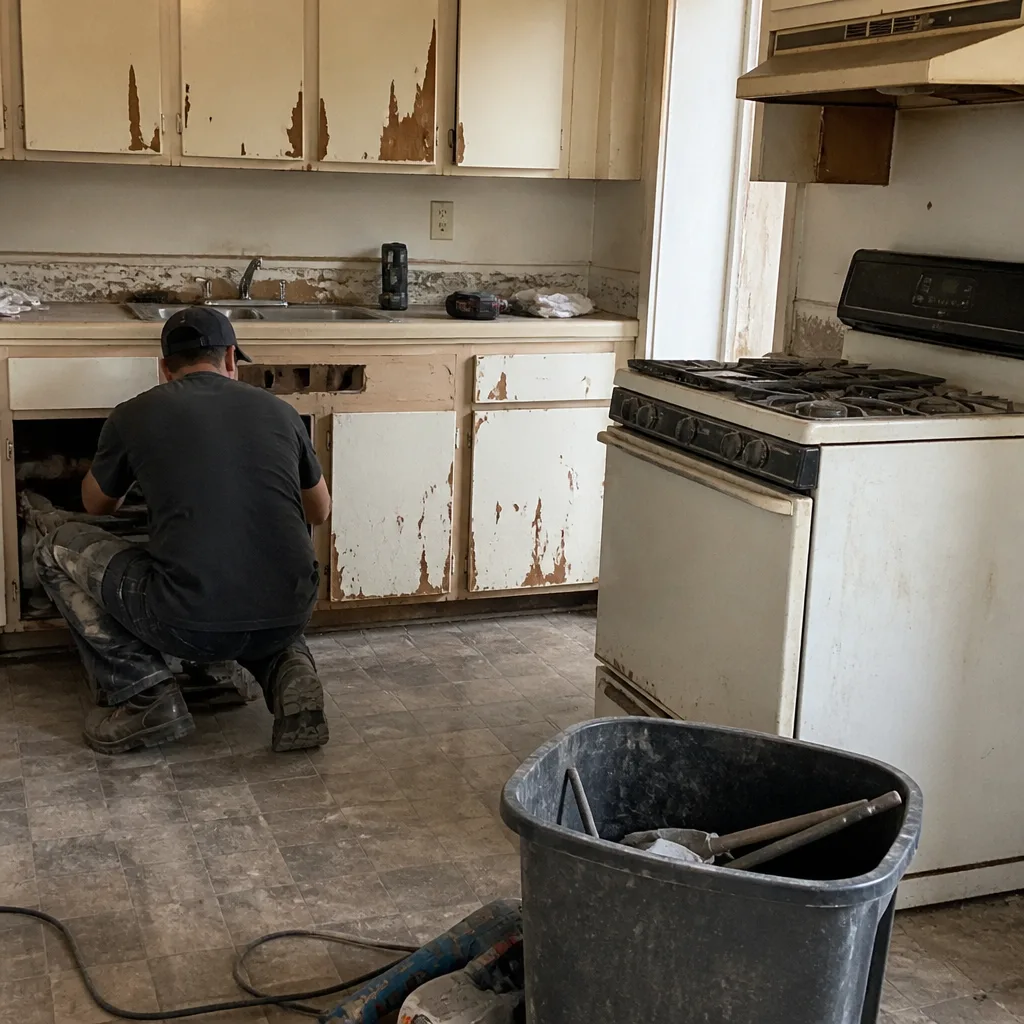 Before
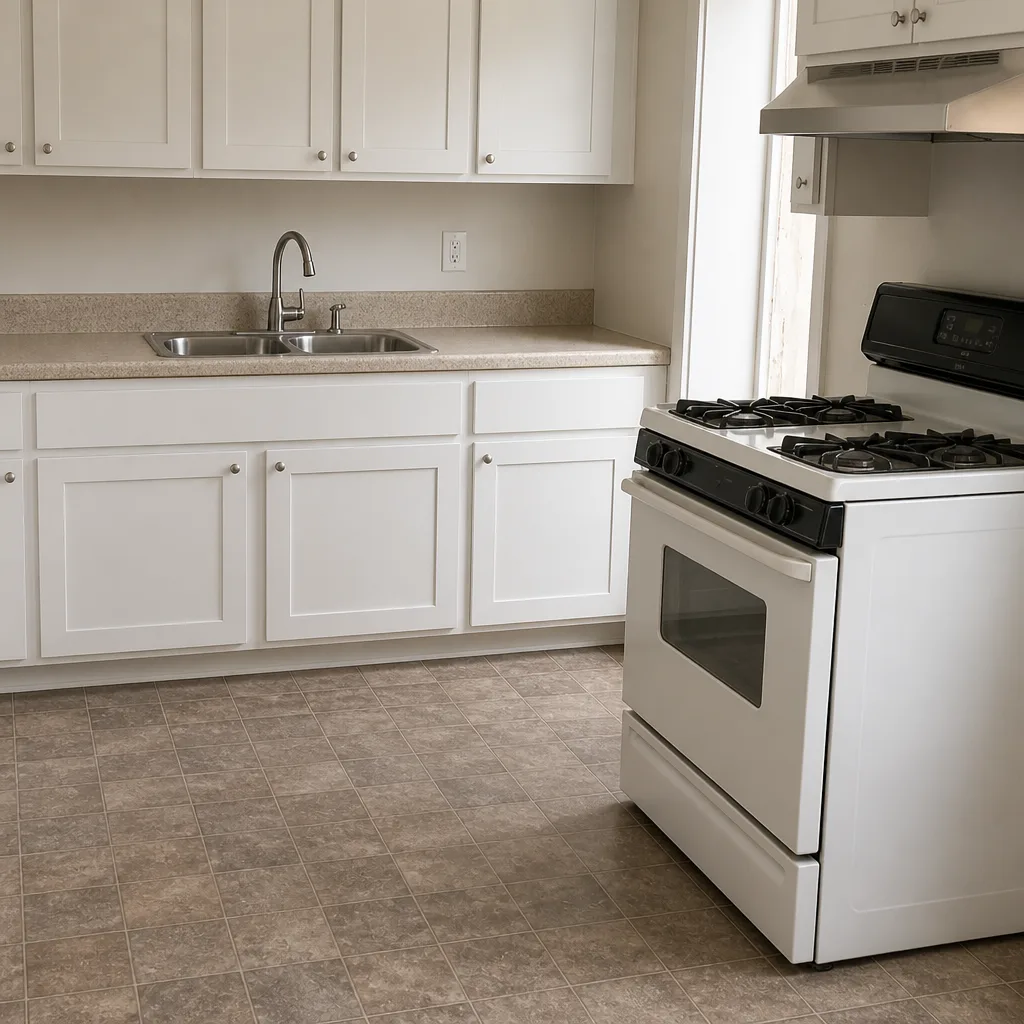 After
When to Call a Professional
Call a professional if you’re seeing any of the following: water stains on the ceiling or walls, a downspout that’s pulling away from the wall, moisture under the finished floor near an exterior wall on a garage conversion, a water heater that’s rumbling or leaking, a mini-split that won’t hold temperature, or any issue involving the electrical panel or gas appliances. Also call if you’re not sure whether a garage conversion was done to code and you want a professional assessment before problems compound. Barrett & Sons Construction Garden Grove offers free estimates in Garden Grove – call (833) 703-5196. Every eligible job comes with permits pulled and inspections signed, and every price change arrives as a written change order before work starts.
Frequently Asked Questions
An ADU needs monthly attention on HVAC filters and visual checks, seasonal work twice a year before and after the rainy season, and one annual deep inspection in the fall. The annual inspection is the one most owners skip, and it’s the one that turns up the most expensive problems early. The tankless water heater descaling is an annual job; the exterior repaint is every eight to twelve years.
The owner stays responsible for habitability under California law, which covers working plumbing, hot water, heat, weatherproofing, and the electrical system. The tenant is typically responsible for basic housekeeping like running the bath fan and cleaning filters. The lease should spell out the split in writing. Call us for an estimate on any repair that falls to you.
Routine upkeep runs $400 to $900 a year for a typical Garden Grove ADU, covering HVAC service, tankless descaling, gutter clearing, and small stucco repairs. A year that includes a full flashing rebuild or a repaint will run higher. If you’re not sure where to start, call (833) 703-5196 for a free estimate on anything that needs attention.
Yes. In Garden Grove, a legal ADU requires permits and inspections. If you inherited an unpermitted conversion when you bought the house, get it assessed before you rent the space. We pull permits on every eligible job, and we can look at yours and tell you where it stands; call for a free estimate.
Slab moisture and the grade at the original garage door opening. The concrete slab was poured to shed water out the door, and once that opening is framed and finished, the same slope can direct moisture toward an interior wall instead. Test slab moisture with a taped-down plastic sheet and look for staining or lifting near exterior walls, especially after a wet winter.
Filters, gutters, stucco crack patching, and visual inspections are safe to handle yourself. Anything involving the electrical panel, gas appliances, refrigerant, or roof work above a single story needs a licensed professional. If you’re unsure, a free estimate from us will tell you what’s actually worth doing and what can wait.
The Bottom Line
An ADU ages on a different clock than your main house, and Garden Grove’s two-season weather tests it twice a year. Inspect the exterior before Santa Ana season in the fall, check drainage and the flashing joint after the last winter rain in spring, service the mini-split and descale the tankless water heater once a year, and inspect in person once a year even if the unit is rented. Budget $400 to $900 a year for routine work, plan for a repaint every eight to twelve years, and call a licensed pro for anything involving the panel, gas, refrigerant, or the roof. That’s the whole plan. It’s less work than it sounds, and it keeps a small structure from becoming a large bill.
If you’re still planning an addition or ADU for a Garden Grove property, our Barrett & Sons Construction Garden Grove home page covers how we approach a project, or call us at (833) 703-5196 for a free estimate and a written scope before you commit to anything.
Written by the team at Barrett & Sons Construction Garden Grove.