
Last updated November 18, 2026








Free written scope consultation - allowances, timeline, and change-order rules on paper before a single trade is scheduled
Home Additions & ADU Troubleshooting: Common Problems and How to Fix Them
A new addition that develops a musty smell within the first year almost never has a ventilation problem. It almost always has a flashing or vapor barrier problem that got covered up during framing, and by the time you smell it, the fix is behind drywall instead of in front of it. We’ve walked into enough finished rooms in Garden Grove to know the pattern. The complaint sounds like one thing; the cause is usually something else, and the homeowner has spent weeks chasing the wrong repair. This guide teaches you to read the early signals correctly. You’ll learn the five complaints that come up after nearly every addition or accessory dwelling unit (ADU), what actually causes each one, and how to tell a normal drywall crack from a structural warning you shouldn’t sleep on.
Quick Answer
Most post-construction addition and ADU problems fall into five buckets: moisture intrusion, settlement cracks, HVAC underperformance, electrical nuisance tripping, and slow plumbing drains. The fix depends on the category, not the symptom. Moisture and code issues are usually the builder’s responsibility, nuisance cracks and small leaks are often routine, and diagonal cracks at window corners or stair-step brick cracks mean you stop and call a structural professional today. Document everything with dated photos the moment you spot it.
Styles & brands we work with
- Kitchen remodeling
- Bathroom remodeling
- Home additions & ADU
- Roofing
- Windows & doors
- Driveway & pavers
- Fence
Table of Contents
- Why Does My New Addition Smell Musty?
- Settlement Cracks: Which Ones Matter and Which Don’t
- Why Is the New Room Always Too Hot or Too Cold?
- Electrical Nuisance Tripping After an Addition
- Slow Drains in a Brand-New Bathroom or Kitchenette
- Warranty, Maintenance, or Code: Who’s Actually Responsible?
- How to Document a Problem So It Gets Fixed
- Common Mistakes to Avoid
Why Does My New Addition Smell Musty?
If a finished room smells damp in its first rainy season, the source is water getting in where it shouldn’t. In Garden Grove, we see two versions of this. The first is a flashing failure where the new roof or wall meets the original house. That junction is the single most common leak point on any addition, and it’s also the hardest one to inspect once siding and drywall go on. The second is a vapor barrier installed on the wrong side of the wall or torn during framing. Both problems hide behind finishes, which is why the smell shows up long before a visible stain does.
Here’s how to narrow it down before anyone opens a wall:
- Check the calendar. Did the smell start after the first heavy rain, or has it been there since move-in? Rain-triggered points to flashing. Constant points to vapor or plumbing.
- Sniff the perimeter. If the closets and corners against exterior walls smell worse than the middle of the room, you’re looking at an envelope problem, not a spill.
- Look at the ceiling and baseboards near the addition’s roofline. A faint brown ring or bubbling paint is water finding a path.
- Rule out the simple stuff first. A clogged dryer vent or a bathroom fan venting into the attic can mimic a moisture problem at a fraction of the cost to fix.
If it’s the envelope, the repair usually involves removing a section of drywall or exterior siding, correcting the flashing or membrane, and drying the cavity before closing it back up. It’s not a weekend job, and it’s not a job for a handyman with a caulk gun. Water that’s been sitting in a wall for months can also mean mold behind the drywall, which changes the scope. Ask anyone on your street who’s had an addition leak – the story usually starts with “we thought it was the AC.”
Settlement Cracks: Which Ones Matter and Which Don’t
Every new addition moves a little in its first year. Wood framing shrinks as it dries, foundation soil settles, and drywall does what drywall does. Some cracking is normal, and some cracking is a message. Knowing the difference is the single most useful skill in this whole guide, because it’s the difference between a $200 drywall patch and a call to a structural engineer.
Normal and cosmetic:
- Hairline cracks at drywall seams, usually where two sheets meet.
- Cracks radiating from the corner of a door or window frame that stay under about the width of a credit card and don’t grow.
- Cracks along the line where the new addition ties into the original house’s wall.
- Small cracks at ceiling corners in the first 12 to 18 months.
Stop and call someone today:
- Diagonal cracks running from the corner of a window or door up toward the ceiling, especially if they’re widening.
- Stair-step cracks in brick or block, where the crack zig-zags along the mortar joints.
- Doors or windows that suddenly won’t latch, or that stick in one season and swing free in another.
- Any crack wider than a pencil, or one you can see daylight through.
- Floors that feel bouncy or slope noticeably in the new room versus the old one.
The diagonal and stair-step patterns are the ones that keep us up at night. They usually mean differential settlement, which is the new foundation moving at a different rate than the original house, or a footing that wasn’t dug deep enough. In Garden Grove’s older neighborhoods, where additions often go onto houses built in the 1950s and 60s, that footing question is worth asking your contractor before the concrete goes in, not after. A structural engineer’s inspection usually runs a few hundred to under a thousand dollars. Catching it early is cheap. Fixing a foundation after the fact is not.
Why Is the New Room Always Too Hot or Too Cold?
This is the complaint we hear most about additions, and the cause is almost always the same: the existing HVAC system got extended to serve the new square footage without a load calculation. A contractor runs a duct off the main trunk, drops a register in the new room, and calls it done. On a mild day it works. In August it doesn’t, because the system was sized for the original house and now it’s pushing the same tonnage through more space and a longer duct run.
What actually goes wrong:
- Undersized equipment. Your furnace or AC can only move so much air. Adding 400 square feet of conditioned space to a system built for 1,800 doesn’t scale.
- Long duct runs. The farther the register is from the air handler, the less air arrives. Long runs in an addition often need their own dedicated return or a booster.
- Poor insulation on the addition’s envelope. New walls should perform better than the old ones, but only if the insulation was installed correctly. Gaps around outlets and window frames let heat in fast.
- No dedicated return air path. A supply register without a return pressurizes the room and starves the rest of the house. This often shows up as the original rooms getting stuffier after the addition.
The real fix starts with a Manual J load calculation, which any competent HVAC contractor can run and which tells you what the addition actually needs. Sometimes that’s a small ductless mini-split serving just the new zone. Sometimes it’s upsizing the main system or adding a second zone. Sometimes it’s as simple as rebalancing dampers and sealing leaks, which costs a fraction of a new unit. Don’t let anyone sell you a bigger AC before they’ve run the numbers. If your HVAC person won’t do a load calculation, find another one.
Electrical Nuisance Tripping After an Addition
You plug a space heater into the new bedroom, and the breaker trips. Again. And again. Nuisance tripping in an addition has three common causes, and only one of them is a real defect.
- Circuit overload. The new room’s outlets were tied into an existing circuit that was already near capacity. This is a design problem, not a hazard per se, but it means the new room needs its own circuit or two.
- Arc-fault or ground-fault breaker sensitivity. Modern code requires arc-fault circuit interrupter (AFCI) protection in bedrooms and ground-fault circuit interrupter (GFCI) protection in kitchens and baths. These breakers are designed to trip on things that older breakers tolerated. A shared neutral in a multi-wire circuit will drive an AFCI crazy, and so will a loose connection anywhere on the circuit.
- A loose neutral or ground connection. This one is a genuine safety issue. It can cause flickering lights, warm outlet covers, or a faint burning smell. Shut the breaker off and call an electrician.
Safety note: electrical panel and wiring work is not a homeowner repair. Even seasoned DIY folks should not be opening a panel to chase a tripping breaker on a new addition. Call a licensed electrician. If the original contractor’s wiring is the cause, that’s typically a workmanship issue under warranty, and you want documentation before anyone touches it.
Slow Drains in a Brand-New Bathroom or Kitchenette
A drain that’s slow from day one is not a clog. It’s an installation issue. In our experience, the three culprits are a slope problem (the drain line doesn’t have enough pitch to carry waste downhill), a venting problem (the fixture doesn’t have proper venting, so it gurgles and drains slowly), or construction debris left in the line during the build. Debris is the easiest to rule out – a plumber runs a camera down the line and either finds the blockage or doesn’t. Venting and slope problems are more involved, and they’re worth catching within the warranty window because they can be expensive once the floor is finished.
Signs a slow drain is an install problem and not a clog:
- The sink or shower drains slow from the first day you use it.
- You hear gurgling from another drain when you use the fixture.
- The toilet in the new bathroom flushes weakly and rocks slightly – which can also mean the flange wasn’t set level.
- The problem shows up in one fixture but not others, with no pattern of use.
Have a plumber camera the line while you’re still inside the warranty period, even if the drain is only mildly slow. A camera inspection is inexpensive, and having a dated report on file makes a warranty claim straightforward if the fix turns out to be in the plumbing rough-in. This is also one of the areas where the original permit inspection sometimes misses something, because rough-in inspections happen before the fixtures go in and before anyone runs a real load through the system.
Warranty, Maintenance, or Code: Who’s Actually Responsible?
Before you call anyone, figure out which category the problem falls into. It changes who pays and how you approach the conversation.
| Category | Typical Examples | Who’s Responsible |
|---|---|---|
| Workmanship / warranty | Flashing leaks, improper vapor barrier, HVAC sized without load calculation, slow drains from install, drywall cracks from poor fastening | The contractor who built the addition |
| Owner maintenance | Clogged gutters, dirty HVAC filters, caulking that dried out, a hose left running against the foundation | You |
| Code / inspection | Missing AFCI protection, unvented plumbing fixture, footing depth issue that should have been caught at rough-in | The builder first; the permitting authority if the inspection missed it |
The tricky part is code issues. If the addition was permitted and inspected, the city signed off on the work at specific stages. That doesn’t mean the inspector caught everything, and it doesn’t mean the builder is off the hook if something’s wrong. It means you have a paper trail, which is exactly what you want. If the addition was built without permits, which we still see in Garden Grove on older ADU conversions, you’re in a harder spot. The fix may involve a retroactive permit and an inspection that forces rework.
If our 90-Day Done Right Promise has something to say about this, it says it in writing on the contract. If a job we built has an issue within that window, one call brings us back. And if you’re looking at a written estimate from another contractor and want a second set of eyes, we offer a free second opinion. Barrett & Sons Construction Garden Grove home has the details.
How to Document a Problem So It Gets Fixed
Whether you’re dealing with a warranty claim, a contractor dispute, or a code issue, the way you document the problem matters as much as the problem itself. A contractor who gets a clear, dated, specific report has a much easier time helping you than one who gets a phone call saying “something’s wrong in the back room.” Here’s a framework that works:
- Photograph with a ruler or coin in frame. A crack photo without scale is useless. A dollar bill or ruler next to the crack communicates width instantly.
- Date every photo. Most phones do this automatically. Don’t edit or crop in a way that strips the timestamp.
- Photograph the same spot on the same day each month. A crack that isn’t growing is a cosmetic issue. A crack that adds a millimeter a month needs a structural call. The series is what proves it.
- Write a one-page description with dates. When did you first notice it? What was the weather? Has it gotten worse? What have you already tried? Keep it factual and neutral.
- Save every email, text, and written estimate in a single folder. Paper contracts go in the same folder. Digital records disappear when a phone gets replaced.
- Report in writing within the warranty period. A phone call with a verbal “we’ll look at it” is worth less than an email with a read receipt and a photo attached. Report early, report in writing.
If it comes to a formal dispute, ask the California Contractors State License Board about the complaint process. Every licensed contractor’s number is public. Barrett & Sons publishes our license number and address so homeowners can check us before signing, and we recommend you check anyone you’re considering the same way. This is why permits matter. The inspection record is a document that exists whether or not anyone ever needed it.
Common Mistakes to Avoid
- Treating a musty smell as an HVAC problem. We’ve seen homeowners pay for three service calls before anyone checked the flashing. If the smell showed up after the first rain, treat it as a water problem first.
- Filling a structural crack with spackle. Cosmetic filler on a diagonal crack hides the evidence and makes the next inspection harder. Photograph it, date it, and get an engineer.
- Adding a bigger AC unit without a load calculation. Undersized ductwork and a leaky envelope will defeat a bigger unit every time. Fix the envelope and the ducts first.
- Hiring an unlicensed contractor for an ADU conversion in Garden Grove. ADUs run into city zoning, setback, and utility requirements that don’t forgive an unpermitted build. The retrofit costs more than the original job.
- Verbal reports only. A phone call to the contractor saying “something’s wrong” leaves no trail. Put it in writing with photos and dates.
- Ignoring a gurgling drain in a new bathroom. Gurgling is a venting signal, not a quirky noise. It’s cheapest to fix while you’re still inside warranty.
- Letting an adjacent yard drainage issue sit. A downspout that dumps water against the new foundation for two winters will find a way in. Fix the grading before it becomes a foundation story. Our Driveway & Pavers in Garden Grove page covers how to redirect water away from the house.
See the difference
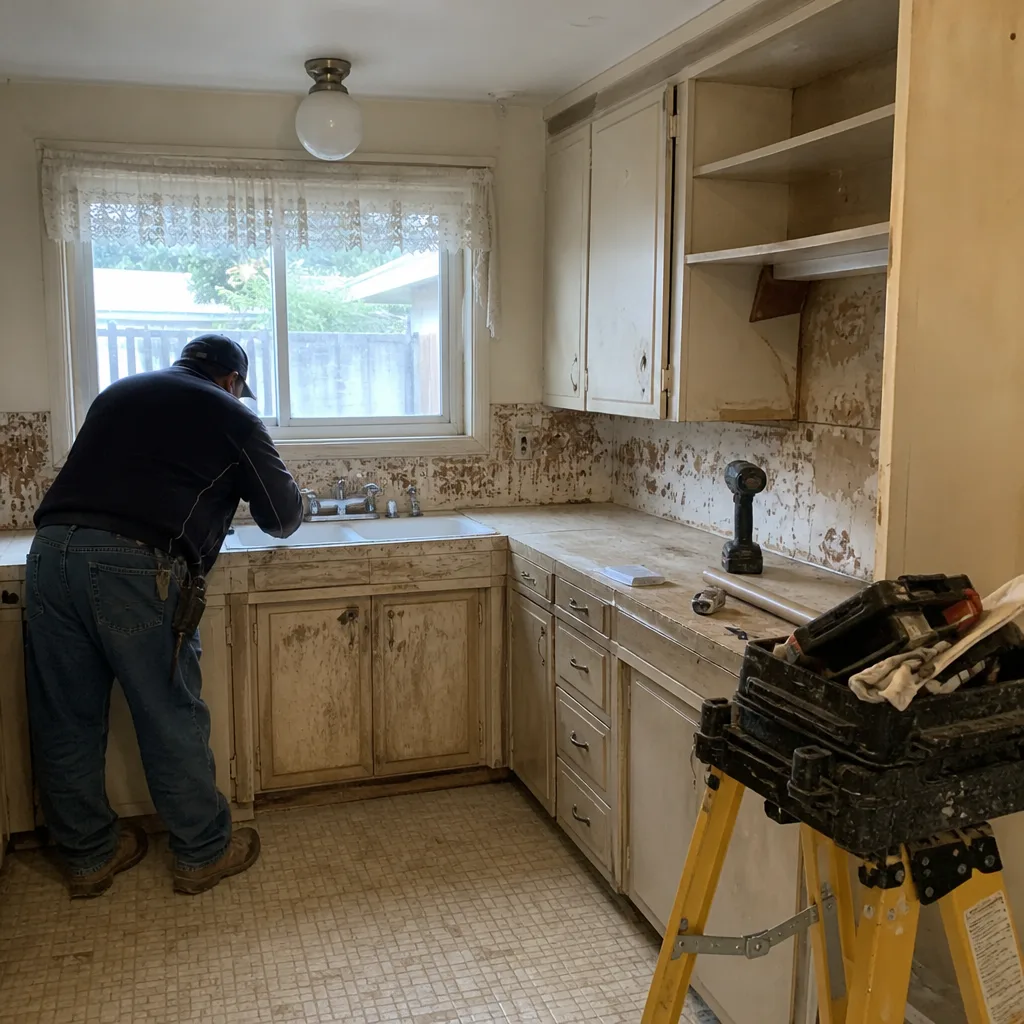 Before
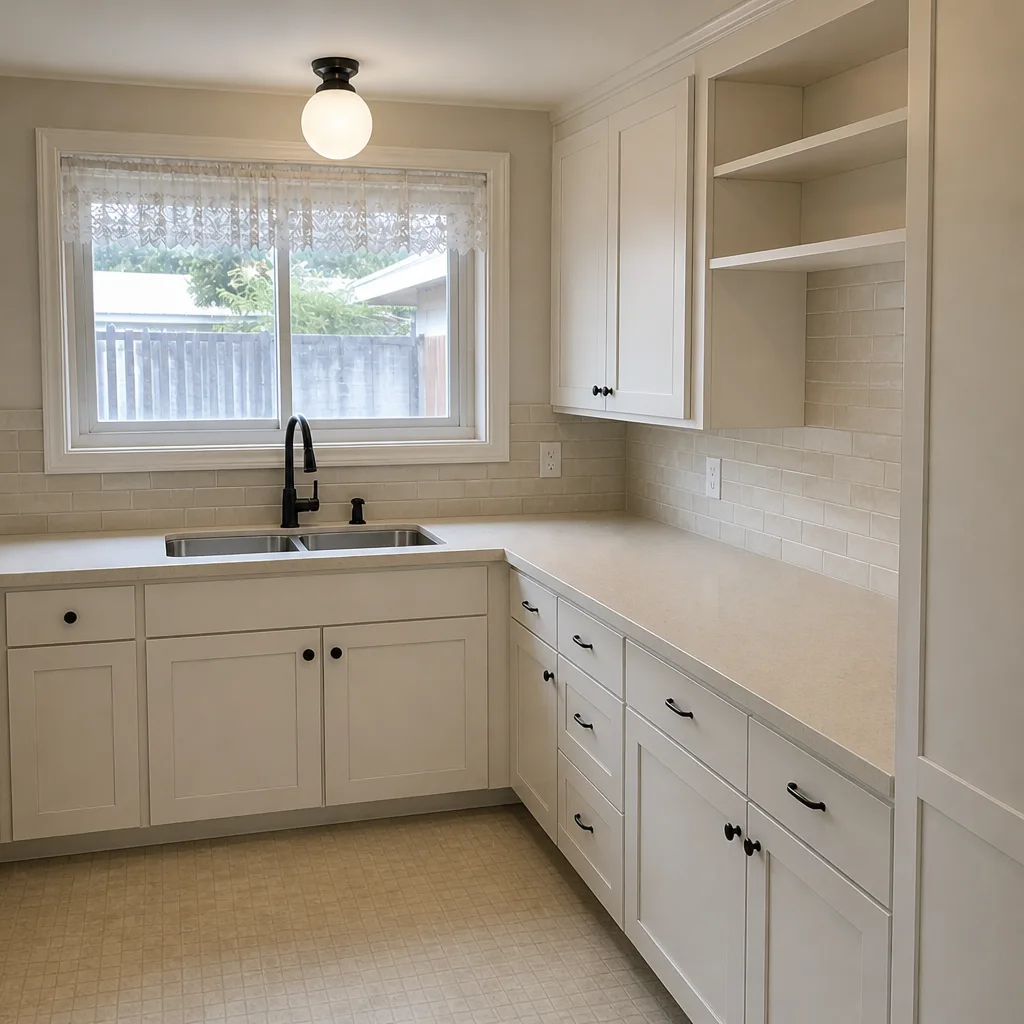 After
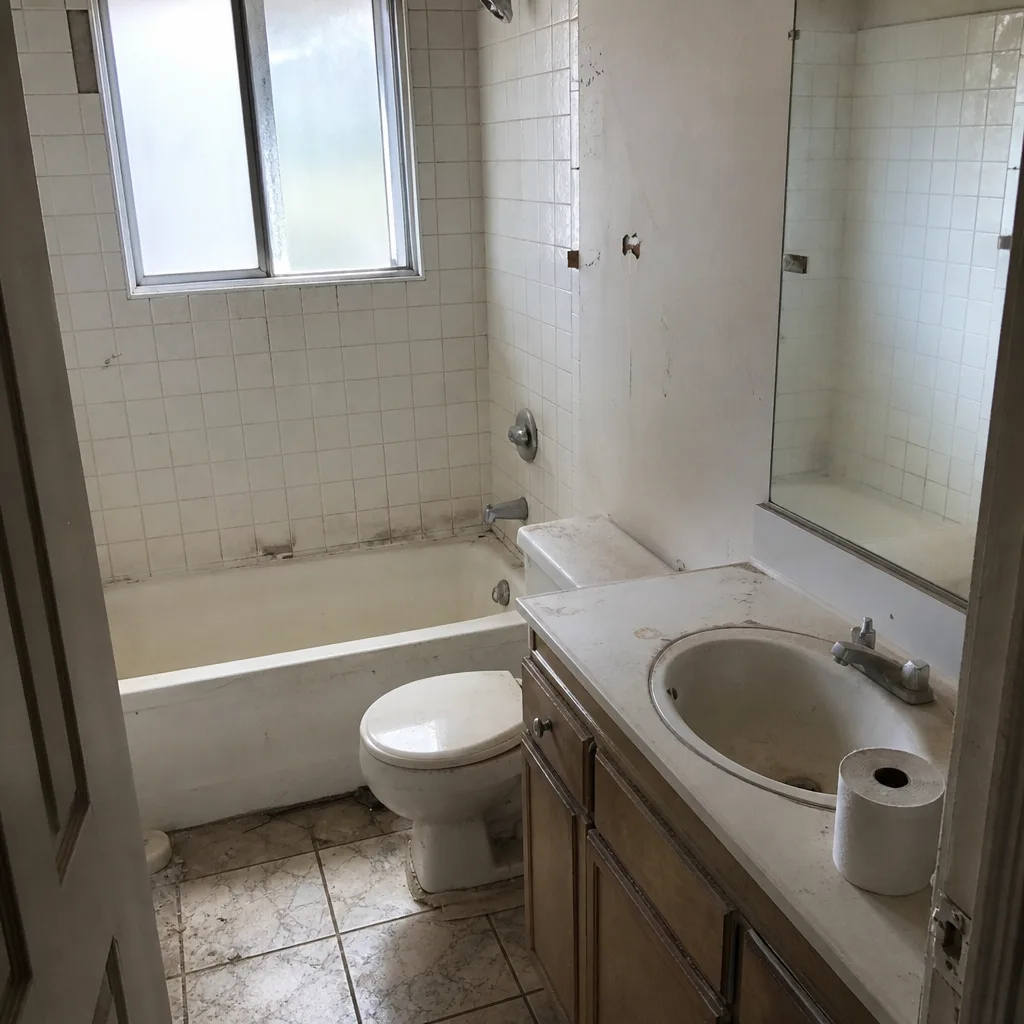 Before
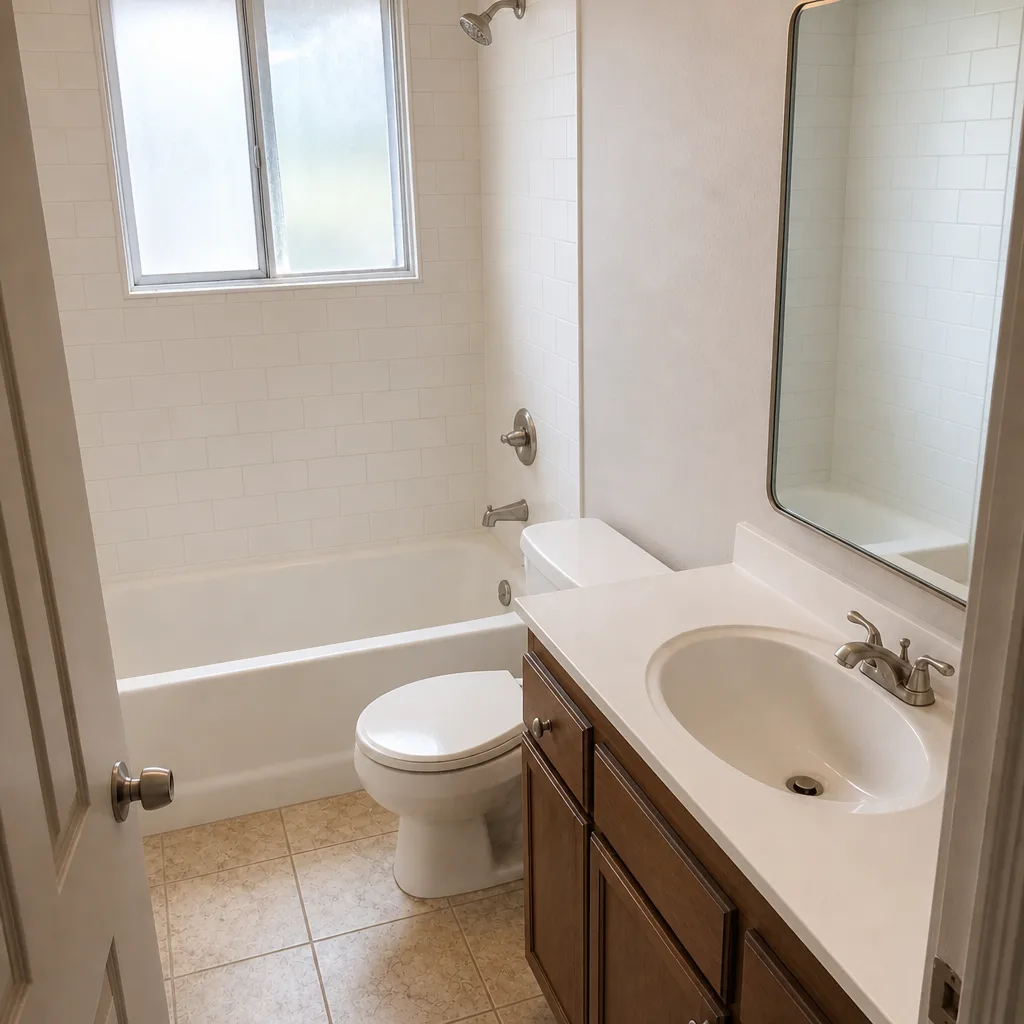 After
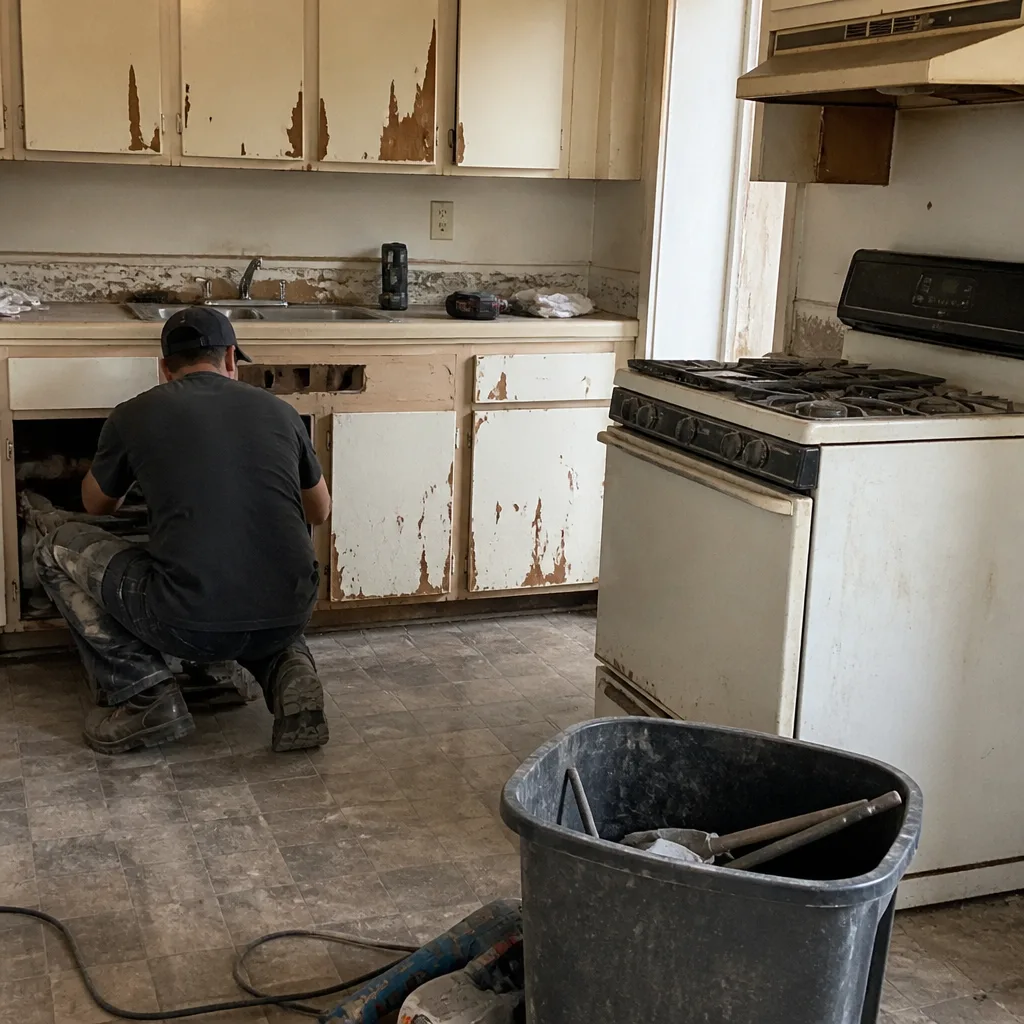 Before
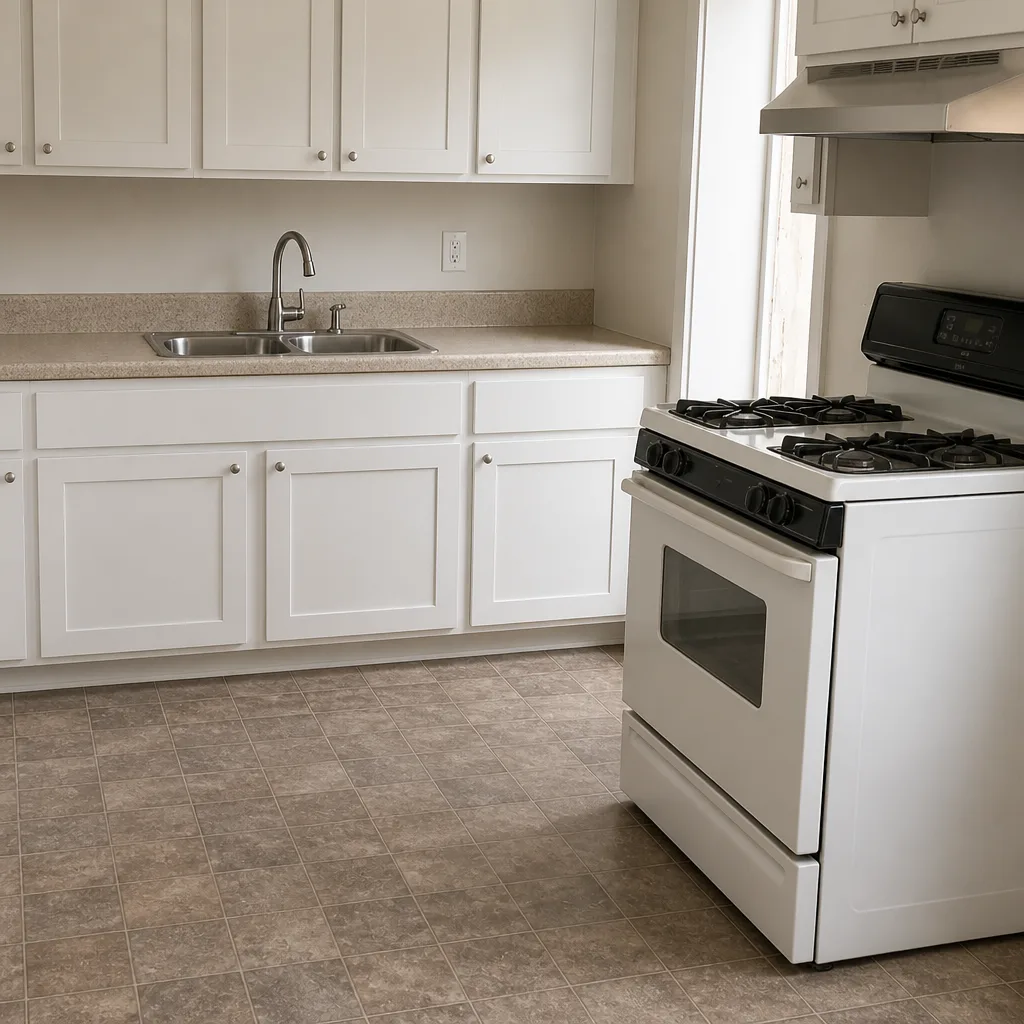 After
When to Call a Professional
Some of this guide you can check yourself. Some of it you shouldn’t touch. Call a licensed professional immediately if you see: a diagonal crack that’s widening, a stair-step crack in brick, a door or window that suddenly won’t open, a burning smell at an outlet, a tripping breaker that won’t reset, standing water inside a wall cavity, or anything involving the electrical panel or the main gas line. Do not attempt to rewire a circuit, open a panel, or patch over a leak you haven’t confirmed the source of. For water intrusion that’s still just a smell, get a contractor out for an inspection before the drywall goes further – a leak behind paint can grow mold in a wall cavity within a few months in our climate.
Barrett & Sons Construction Garden Grove offers free estimates on any Home Additions & ADU work in Garden Grove – call (833) 703-5196. If you’re weighing a repair against rebuild, or you’re looking at a written estimate from another contractor and want a second opinion, that’s a free service too. Every eligible job we take includes permits pulled and inspections signed, a written scope before work starts, and the 90-Day Done Right Promise on the contract. See how we handle additions on our Home Additions & ADU in Garden Grove page.
Frequently Asked Questions

Yes, if the smell traces back to a flashing, vapor barrier, or envelope defect caused by the build – which it usually does. Workmanship issues of that kind generally fall under the builder’s warranty. Get the source confirmed by a contractor or building inspector first, then report it in writing with a dated photo. Call (833) 703-5196 for an inspection if you’re not sure.
Some are. Hairline cracks along drywall seams and corners, especially in the first 12 to 18 months, are normal material shrinkage. Cracks wider than a pencil, diagonal cracks at window corners, or stair-step cracks in brick are structural warnings and need a structural engineer today. Not next week.
The existing HVAC system was likely extended into the new square footage without a load calculation. Undersized equipment, a long duct run, or a missing return air path are the usual suspects. Ask an HVAC contractor to run a Manual J calculation before anyone sells you a bigger AC unit. Mini-splits sized to the addition are often the cleanest fix.
Yes. Garden Grove requires permits for ADU construction and conversion, and the process involves zoning review, plan check, and inspections at multiple stages. Skipping the permit risks a code enforcement action and makes the unit much harder to finance or sell. We pull permits on every eligible job and sign inspections, and we recommend every Garden Grove homeowner check the contractor’s license before hiring.
It depends on the contract terms, and there’s no universal answer. Read your contract carefully for the workmanship warranty period, and report problems in writing the moment you find them. Even if a warranty has lapsed, a code issue or a concealed defect may still put responsibility on the builder. Keep your photos and dates. And if you’re not sure, call a contractor you trust for an independent look.
You still have options. Signed inspections don’t retire the builder’s responsibility. Report the issue to the contractor in writing first, with a photo and the specific code concern. If that doesn’t resolve it, contact the city’s building department and the Contractors State License Board. Document everything. That’s the paper trail that makes a claim move.
The Bottom Line
Most addition and ADU problems are predictable once you know the pattern. A musty smell in the first rainy season is almost always an envelope issue, not a ventilation one. A diagonal crack or a stair-step crack in brick is a stop-and-call today situation. An HVAC complaint in a new room almost always traces back to a load calculation nobody ran. Nuisance tripping has three causes and only one of them is a genuine defect. Slow drains in a new bathroom are installation issues, not clogs. Classify the problem before you fix it – workmanship, maintenance, or code – because it decides who pays and how you make the call. And then document: dated photos, written reports, and a folder you keep in one place. That’s the difference between a warranty fix and a mess.
If you’re in Garden Grove and you want a second set of eyes on an estimate, or you’re planning an addition or ADU and want a written scope before any work starts, call Barrett & Sons Construction Garden Grove at (833) 703-5196 for a free estimate. A live person answers, day or night. If you’re still mapping out the whole project, Fence Installation in Garden Grove covers the yard work that usually runs alongside a build, and Barrett & Sons Construction Garden Grove home is a good place to start on everything else.
Written by the team at Barrett & Sons Construction Garden Grove.