Last updated November 18, 2026



Free written scope consultation - allowances, timeline, and change-order rules on paper before a single trade is scheduled
Bathroom Remodeling Warning Signs Every Homeowner Should Know
A floor tile that rocks slightly when you step on it isn’t a cosmetic issue. It’s a broken bond that lets water migrate under the substrate every time someone showers, and by the time it smells like mildew, the subfloor is already compromised. That’s the thing about bathrooms: the damage almost always starts underneath, where nobody’s looking. Most warning signs don’t announce themselves. They show up as a soft spot you talk yourself out of, a musty smell after the shower, or a water bill that quietly climbed for three months. This guide walks through the signals that are easy to rationalize away right up until they become a five-figure repair. We’ve seen every one of them in Garden Grove bathrooms, and we’ll show you what each one is actually telling you.
Quick Answer
The core bathroom remodeling warning signs are a floor that flexes or feels soft underfoot, paint or drywall bubbling on walls next to the shower, a toilet that rocks or leaves water marks at the base, and a slow rise in your water bill with no obvious cause. Any one of these usually means moisture is reaching a material that wasn’t built to get wet. Caulk gaps and stained grout are surface maintenance. Soft floors, bubbling drywall, and base water are structural, and they warrant a professional look before the numbers climb.
Styles & brands we work with
- Kitchen remodeling
- Bathroom remodeling
- Home additions & ADU
- Roofing
- Windows & doors
- Driveway & pavers
- Fence
Table of Contents
- The Soft Spot Test: Reading Your Bathroom Floor
- Why Paint Bubbles Next to the Shower, Not On It
- Toilet Warning Signs Homeowners Mistake for Normal
- How to Read a Water Bill Spike
- Cosmetic Caulk Gap vs. Structural Waterproofing Failure
- Ventilation, Mold, and the Garden Grove Humidity Factor
- When a Warning Sign Means Remodel, Not Repair
The Soft Spot Test: Reading Your Bathroom Floor
Spend two minutes walking the perimeter of your bathroom floor in socks and pay attention to how the surface answers back. A healthy tile floor feels solid and quiet under a normal step. What you’re listening for isn’t the tile itself; it’s what happens underneath it when your weight lands.
Here’s how to walk it:
- Walk the whole floor, heel to toe, in socks. Note any tile that rocks, clicks, or shifts underfoot. A single loose tile is common. A pattern of flex across several tiles is not.
- Press down hard on suspect tiles with your full weight. If the tile moves but the whole floor doesn’t, you’re likely looking at a failed thinset bond or a wet substrate.
- Watch the toilet and vanity for movement too. If the floor flexes near a fixture, that fixture’s seal is probably opening up.
- Look for dark grout lines radiating from a wet-zone edge. Grout that stays darker in one area after a shower usually means moisture is trapped below.
Different flex patterns tell you different things. A tile that rocks in the middle of the room, away from any water source, often points to a broken tile-to-substrate bond from a bad original install. A tile that flexes near the shower or toilet points to subfloor damage from moisture. If the whole floor feels bouncy, the joists underneath may be undersized or have taken on water. In Garden Grove’s older ranch-style homes, we regularly find bathroom subfloor panels that swelled and delaminated after years of slow leaks the family never saw. The tile felt “a little spongy” for years, and the joists were soft by the time anyone pulled the floor. When the joists are involved, the scope jumps from a floor replacement to structural repair, and the price climbs fast. That’s why the soft spot test matters: a $40 repair becomes a $15,000 one when it’s ignored.
Why Paint Bubbles Next to the Shower, Not On It
Plenty of contractors will tell you a bubbling wall over a tub is just bad paint. It usually isn’t. Paint bubbling on the drywall adjacent to your shower, or on the wall behind the tile in a neighboring room, is often the first visible sign that the shower’s waterproofing membrane has failed and moisture is migrating sideways. The shower wall itself looks fine because the tile and grout are still holding. The paint on the wall next to it tells the truth.
Here’s what that looks like in plain language. On the wall beside a tub or shower, you see a cluster of small soft blisters, sometimes peeling in a ragged water-stain shape. The drywall behind a blister feels spongy if you press it. Along the base of that same wall, the paint may stain or the baseboard may swell. When you pull back the tile on a wall like this, the backer board underneath is usually black with mildew and the paper face of the drywall has turned to mush. Traditional drywall, even the moisture-resistant kind, was never meant to be the last line of defense against a shower. The waterproofing membrane in a proper assembly is. When the membrane fails, moisture goes wherever gravity and the paper face of the drywall send it, and the room next door finds out first.
In Garden Grove, this pattern shows up most in homes built between the 1960s and 1990s, where a previous owner tiled directly over drywall at a time when code in many of our surrounding areas didn’t yet require a bonded waterproofing layer behind the tile. A remodel done right uses a properly installed waterproofing membrane, and the entire assembly gets inspected before any waterproof membrane is covered by tile. When the paint starts bubbling on the wall next to your shower, treat it as a structural call, not a paint call.
Toilet Warning Signs Homeowners Mistake for Normal
Toilets are the most under-diagnosed fixture in the house because every warning sign they give also shows up as “normal” in old fixtures. Not here. Each of these means something specific:
- A rocking toilet base. This usually means the flange or wax ring seal has failed, or the subfloor under the toilet has softened. When the toilet rocks, the seal between the toilet and the soil pipe opens on each tilt, letting in sewer gas and letting out water onto the floor. A rocking toilet almost always means the subfloor is wet and soft, even if the tile in front of it feels solid.
- A slow fill. If the toilet takes much longer than usual to fill after a flush, you’re likely looking at a worn fill valve or a partially clogged supply line. On its own that’s a $20 part. But if the water runs continuously or the tank refills long after the flush stops, you may have a silent flapper leak draining hundreds of gallons a month.
- Water marks at the base. This is the one to trust. A brown tide line around the toilet’s footprint, or dark grout in a ring around the fixture, is water arriving from either the toilet seal or the shower lines nearby. Every one of those leaks rots the subfloor from the top down.
What makes toilets so dangerous is that none of this requires anyone to notice it. A toilet leaking at the base can send water under the tile for years without staining the grout, and the first sign is often subfloor collapse underfoot. In our experience working Garden Grove properties near the older downtown blocks, we’ve torn out vanities and found toilet seals sitting on soggy, soft subfloor that the family had no idea was failing because the floor in front of the toilet felt fine.
How to Read a Water Bill Spike
A rising water bill with no change in habits is a diagnostic tool, not just a nuisance. Your water meter is reading the water that leaves your home. If your consumption climbs for no reason, water is leaving somewhere it shouldn’t, and the bathroom is a frequent suspect because its leaks are often out of sight.
Here’s how to use it:
- Do a meter test. Turn off every faucet and appliance in the house. Write down the reading on your meter. Don’t run any water for two hours. Read the meter again. If it moved, water is moving somewhere in the house.
- Compare the gallons to your baseline. A silent toilet flapper leak can waste hundreds of gallons a day. Two hundred gallons a month is a small leak. Two thousand gallons a month is usually a flapper or a fill valve. Five thousand is a supply line or something hidden.
- Check the toilet tank with a drop of dye. Put a few drops of food coloring in the tank, wait 15 minutes, and look in the bowl without flushing. Color in the bowl means the flapper is leaking.
- Look for a wall or ceiling stain under the bathroom. A bathroom over a crawlspace or a first-floor bath over a garage is the most likely place to see the trail of a hidden leak.
Catching a leak this way buys you the difference between a $150 repair and a subfloor rebuild. If your meter is moving while everything is off, get a licensed plumber on it before the sheetrock and joists tell you what the water bill was trying to. In Garden Grove, our local water costs add up fast, and a slow fill valve that would cost a few dollars a month to replace can push a family’s bill up by $60 or more without anyone realizing where it went.
Cosmetic Caulk Gap vs. Structural Waterproofing Failure
One of these is a Saturday afternoon. The other is a phone call. Here’s how to tell them apart in plain language, without any technical terms:
What a cosmetic caulk gap looks like: a thin dark line separates the caulk from the tile, usually where the tub meets the wall or where two tiles meet. The caulk peels back like a rubber band. The surface underneath is dry to the touch. No soft spots in the wall, no bubbling paint on the other side, no discoloration in the tile. You can cut the old bead out and recaulk it yourself. That’s surface maintenance, and it needs doing every couple of years in a wet room.
What a structural waterproofing failure looks like: the tub edge drops away from the tile when you step in (a flexible gap, not a thin line). The caulk keeps returning black or purple, sometimes within weeks of replacing it. The wall around the shower feels soft to press. The tiles sound hollow when you tap them. The paint bubbles next door. The base of the tub or shower shows water stains after a shower. Each of those is a sign that water is passing the waterproofing membrane. No amount of caulk stops that, because the water isn’t coming through the caulk line; it’s behind the tile. This is a professional call.
The difference between these two is the single most expensive mistake a homeowner can make. Caulking a failed membrane is like painting over rot: it hides the problem for a season and lets it grow underneath. If you can’t tell which one you’re looking at, that’s the answer: call and have it looked at.
Ventilation, Mold, and the Garden Grove Humidity Factor
Garden Grove sits a short drive from the ocean, and that gives our bathrooms a specific challenge most national bathroom guides don’t account for. Our humidity stays up through most of the year, and winter mornings mean cold walls and warm showers. That’s the recipe for condensation on the inside of any bathroom wall that isn’t properly vented. You’ll see it as that fog on the mirror that doesn’t clear until lunchtime, or a lingering musty smell a couple hours after anyone showers. That’s a signal, not a personality trait.
Signs that your bathroom’s ventilation is failing:
- The mirror and walls stay wet more than 20 minutes after a shower.
- A musty smell that lingers in the bathroom and drifts into the hallway.
- Dark spotting on the ceiling above the shower, or at the top corners where two walls meet.
- Peeling paint at the top of the wall, far from any plumbing.
- Moisture on the outside of the bathroom door.
Bathroom fans that were installed when the house was built may still be moving air, but not enough for a modern shower. A quiet fan rated for the room’s cubic footage does more than almost any other fix for a stubborn mildew smell. In our experience around Garden Grove bathrooms, an underpowered fan plus a failed seal adds up to a full remodel five years sooner than necessary, simply because the moisture never got a chance to leave. If you’re remodeling anyway, a properly sized fan and duct run are not optional, they’re the difference between a finished bathroom and one that grows its own ecosystem.
When a Warning Sign Means Remodel, Not Repair
Some warning signs are a single repair. Others quietly tell you the room has reached the end of its service life and you’re patching a system that will keep failing in a new spot every year. When does a fix turn into a remodel?
Consider a remodel if three or more of these are true:
- A soft spot in the floor that spans more than one tile.
- Water damage under the vanity or around the toilet that reaches the subfloor.
- Walls bubbling next to the shower, on more than one wall.
- Mold or mildew returning within a few months of cleaning it.
- The bathroom’s original layout dates back to the 1970s or 1980s, with the original cast-iron plumbing inside the walls.
- The bathroom is the household’s only full bath and getting harder to use safely as the household gets older.
A repair that closes the warning sign but leaves the wet envelope in place will usually come back. And when you’re doing a bathroom right, the permit inspector becomes your ally: they sign off on the waterproofing, the plumbing, the electrical, and the venting. The permit inspector works for you, not for the contractor. That’s why every eligible Barrett & Sons job gets its permits pulled and its inspections signed, because a remodel without permits is a warning sign you can’t see but your buyer will eventually find.
If you’re planning a remodel, we install the brands our customers can look up: KraftMaid cabinetry and James Hardie backer materials. You can read the spec sheets yourself. If you want to see how we handle the rest of the house, our Barrett & Sons Construction Garden Grove home page is the place to start, and our Home Additions & ADU in Garden Grove work shows the framing and finishing standards that come with any bath we touch.
Common Mistakes to Avoid
- Caulking over a failed membrane. Fresh caulk along a shower edge looks like a fix, but it hides a failing waterproofing layer that keeps feeding moisture into the wall. It buys a month and costs a remodel.
- Assuming a rocking toilet is just loose. A rock means the flange or the subfloor is compromised, and tightening the bolts can crack a flange that was already failing. It needs a diagnosis, not a wrench.
- Ignoring a slow water bill climb. A rising bill with no behavior change is usually a leak, and Garden Grove water rates aren’t getting cheaper. The meter test above costs five minutes and finds it.
- Replacing a bathroom fan with the same underpowered model. A new fan rated for the same cubic footage as the old one will fail the same way. Ventilation has to match the room, not the old unit.
- Painting over bubbling wall paint without finding the source. Paint bubbling next to a shower almost always means moisture is behind the wall. Fresh paint will blister again within a season.
- Hiring a contractor who says permits are optional. Permits protect the homeowner. Skirting them in a bathroom remodel can mean unpermitted plumbing or electrical that bites you at resale. If you want to know which permits apply to your Garden Grove address, ask the city, then ask your contractor why they said no.
- Letting a small allowance become a surprise invoice. The allowance that isn’t on paper is a surprise waiting for a date. Get every scope, allowance, and price change in writing before work starts.
See the difference
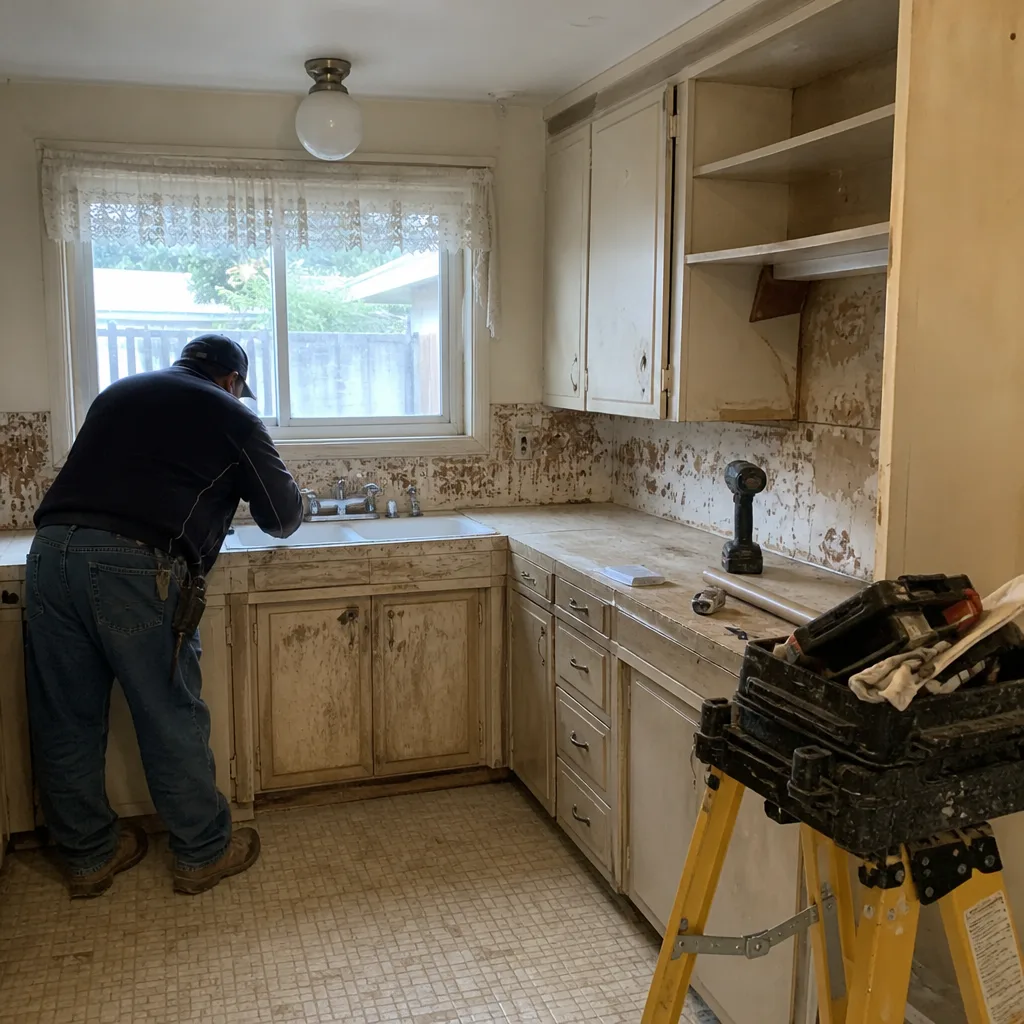 Before
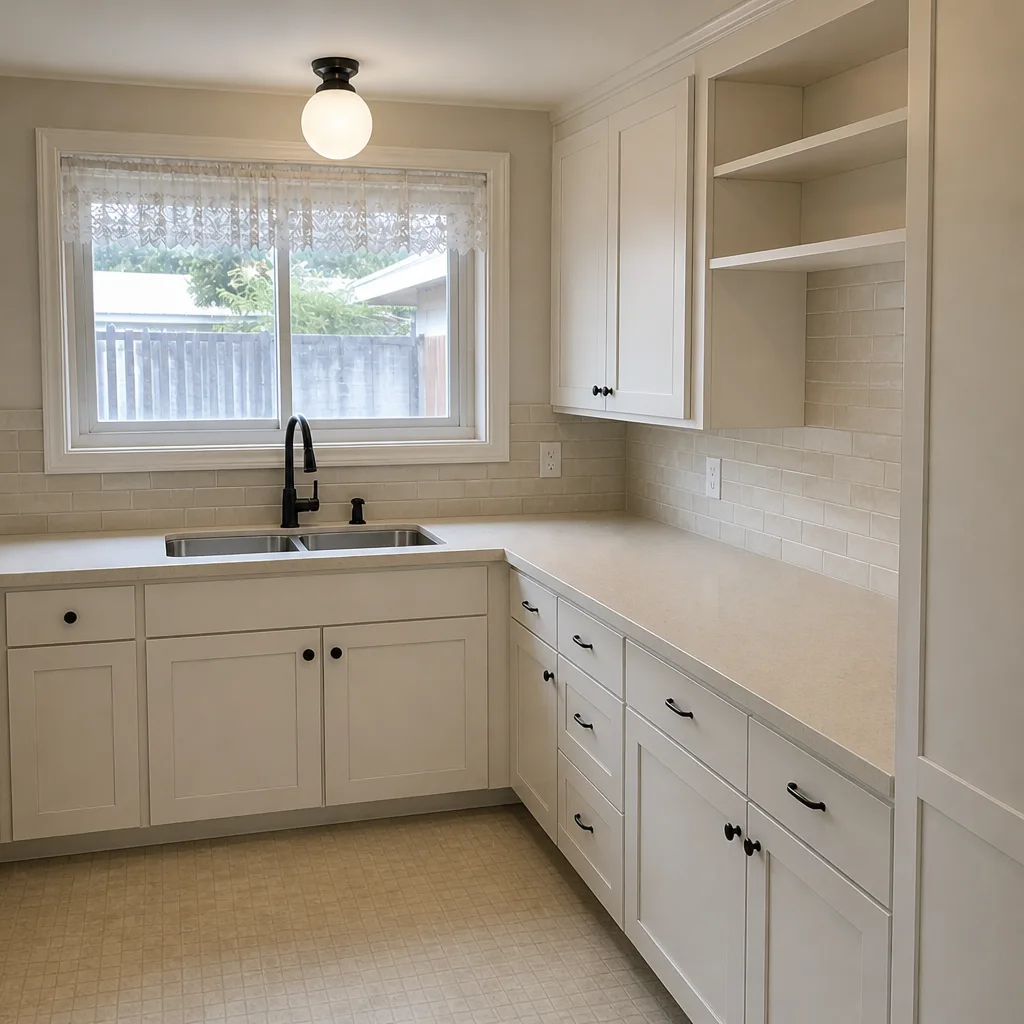 After
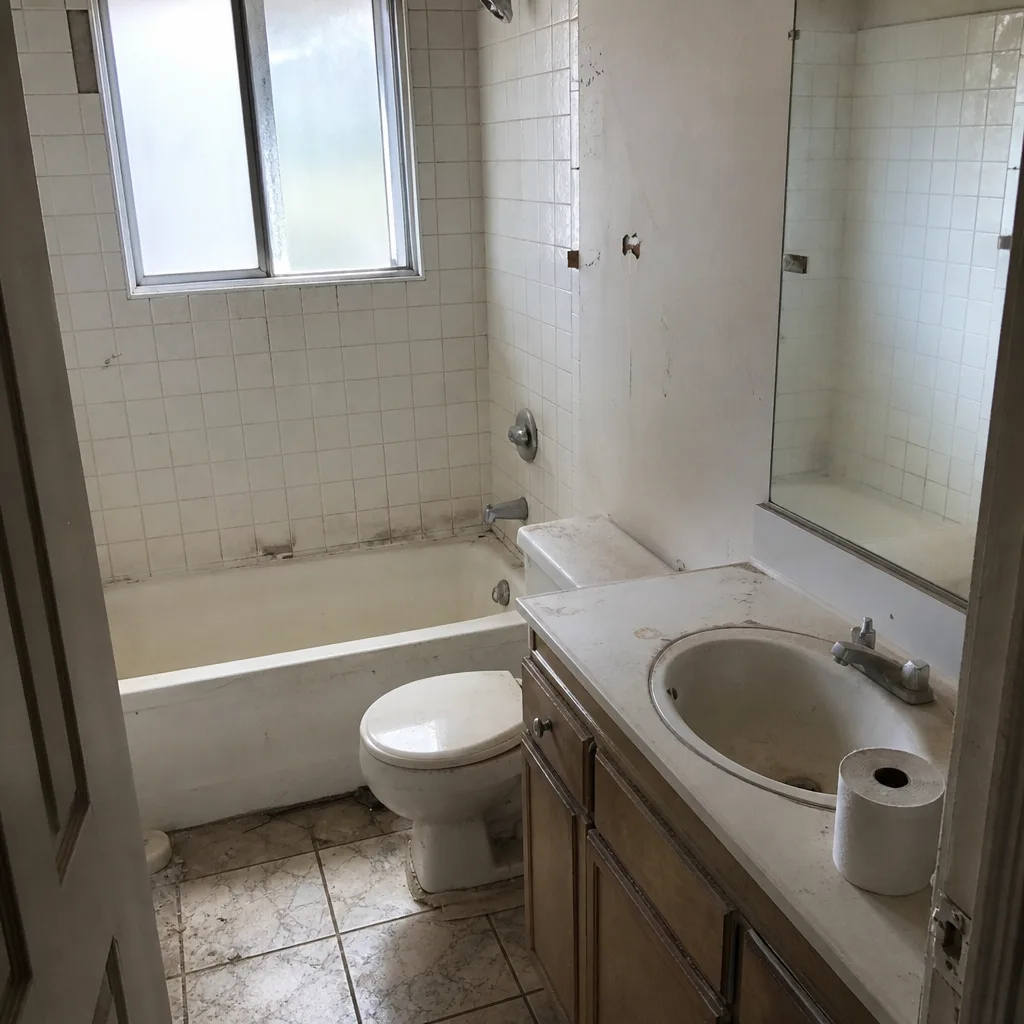 Before
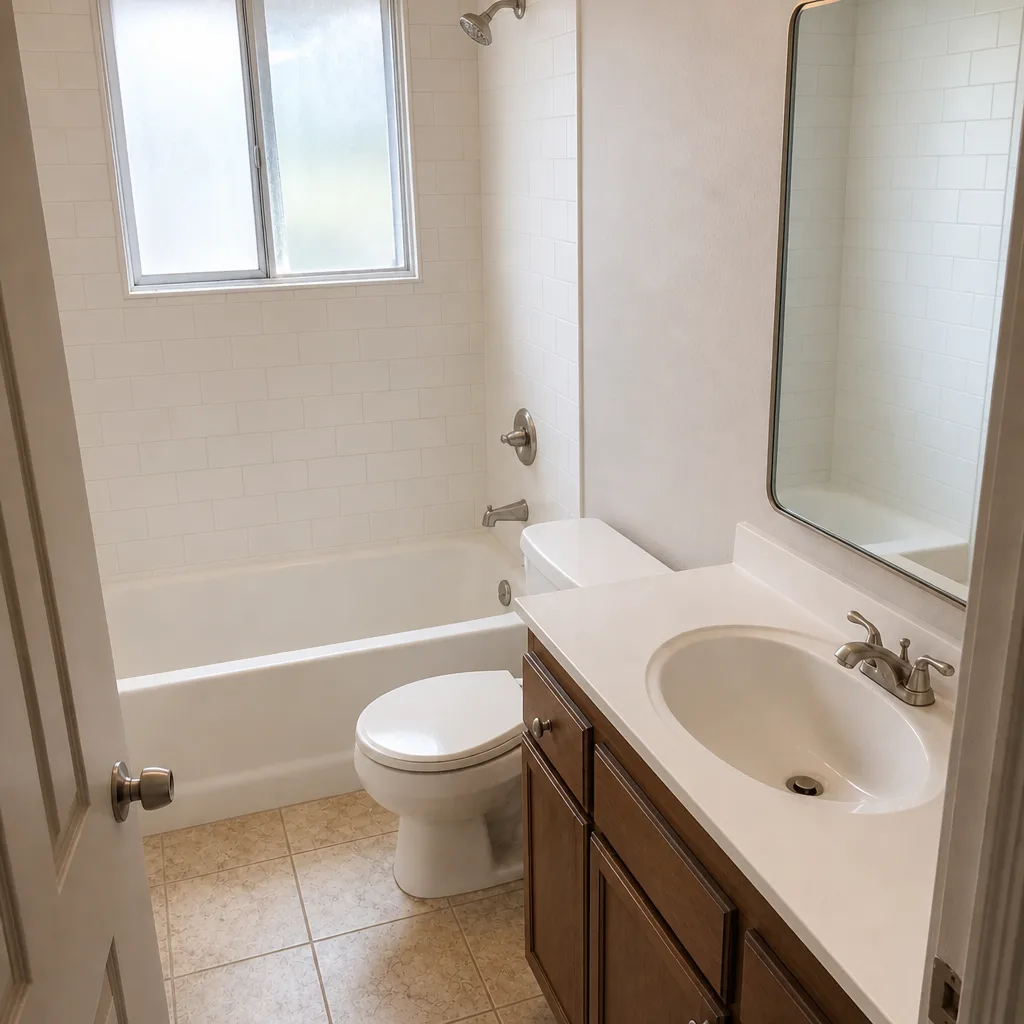 After
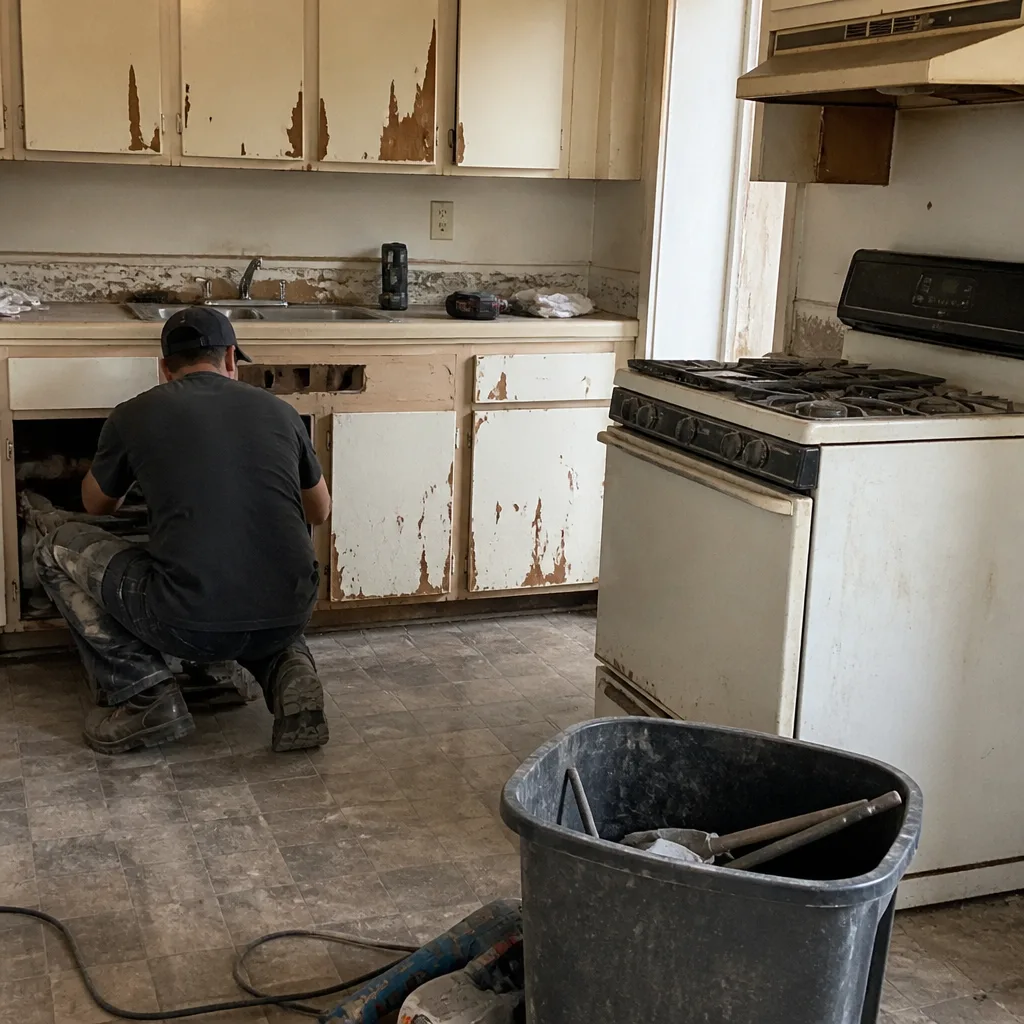 Before
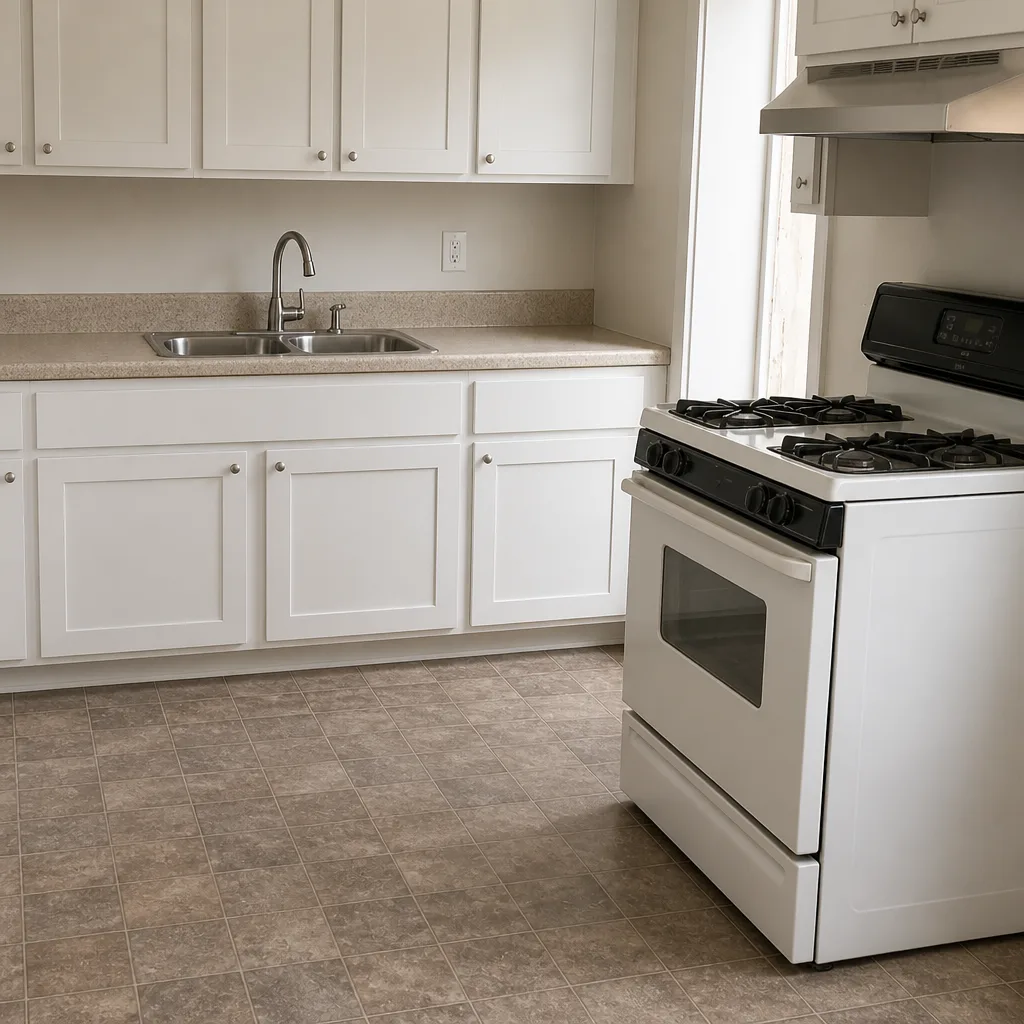 After
When to Call a Professional
Call a professional when a warning sign points below the finish layer. A floor that flexes across more than one tile, a wall that bubbles next to the shower, a toilet that rocks, or a water meter that won’t sit still after everything is off. Those are structural or below-tile signals, and no product from a hardware store solves them from the surface. A licensed contractor will look at the assembly, not just the symptom, and tell you whether it’s a repair or a remodel. Barrett & Sons Construction Garden Grove offers free estimates in Garden Grove. Call (833) 703-5196 and we’ll walk the room with you before you spend a dollar. If the truth is that a repair will do, that’s what we’ll tell you.
Frequently Asked Questions
The first warning sign is usually a floor that doesn’t feel solid. A tile that rocks or a floor that flexes slightly across more than one tile means water is likely reaching the substrate. It often shows up long before a musty smell does, when the tile-to-subfloor bond has failed but the finish still looks intact. Call (833) 703-5196 for an exact quote on your Garden Grove bathroom. Estimates are free.
Paint bubbling next to a shower almost always means moisture is passing the waterproofing layer behind the tile and traveling sideways. The wall inside the shower still looks fine because the tile and grout are holding, while the drywall next to it soaks up water and the paint blisters. Treat it as a structural call, not a paint call. A free estimate from Barrett & Sons Construction Garden Grove will tell you whether you’re looking at a patch or a remodel.
A rocking toilet isn’t an emergency, but it’s not something to wait on. The cause is usually a failed flange or wax ring seal or softened subfloor, and each lift of the toilet lets water out and sewer gas in. Call (833) 703-5196 and have it looked at before the subfloor gets worse.
Do the meter test. Turn off every faucet and appliance, note the meter reading, wait two hours without using water, and read it again. If the meter moved, you have a leak, and the bathroom is a common source. A few hundred gallons a month is often a toilet flapper; thousands of gallons is usually a supply line. Call us and we’ll help you sort out which one.
Most bathroom remodels that move plumbing, electrical, or structural elements require permits, and Garden Grove follows standard local code. The permit inspector works for the homeowner, not the contractor. Every eligible job we take gets its permits pulled and inspections signed, and you’ll see that in writing before work starts.
Not without your signature. Every scope, allowance, and price change at Barrett & Sons arrives as a written change order before any work happens, so there are no surprise invoices at the end. If a wall opens up and something new is behind it, you’ll see the number and sign it before we move forward. Call (833) 703-5196 to talk through your bathroom estimate.
The Bottom Line
The signs that matter most in a bathroom are the quiet ones: a floor that flexes, a wall that bubbles next to the shower, a toilet that rocks, a water bill climbing for no reason, a caulk gap that keeps coming back black. Cosmetic caulk is weekend maintenance. Soft floors and bubbling walls are structural, and the difference between a repair and a remodel gets wider every month you wait. Trust the signals, run the soft spot test, and get a professional eye on the ones that point below the finish. If you’re in Garden Grove and something in your bathroom doesn’t feel right, call (833) 703-5196 for a free estimate. We’ll tell you the truth about what we see.
You can also look at the rest of what we do around the property, from Driveway & Pavers in Garden Grove to Fence Installation in Garden Grove. And when you’re ready to talk bathrooms, call (833) 703-5196 for a free estimate. Our technicians have up to 28 years of experience, and every completed job is backed by our written 90-Day Done Right Promise. A free second opinion on any written estimate is always available, along with a permanent 10% Senior & Veteran discount and $40 off any repair over $200. Ask anyone on your street, or look up the license number yourself. We’d rather you check.
Written by the team at Barrett & Sons Construction Garden Grove.