Last updated November 18, 2026


Free written scope consultation - allowances, timeline, and change-order rules on paper before a single trade is scheduled
DIY vs Professional Driveway & Pavers: What’s Safe to Do Yourself
Thousands of videos show you how to drop a paver onto sand and set it with a rubber mallet. Almost none show you renting a plate compactor, testing soil compaction with a proof-roll, or figuring the right base depth for clay-heavy soil. That gap is exactly where DIY driveway projects fall apart. This guide is about that gap. We’ll walk through which driveway tasks a capable homeowner can honestly own and which ones belong to people with the right equipment and trained judgment. You’ll get a straight rental cost breakdown, the Garden Grove permit rules that catch people at resale, and the three phone questions that tell you whether a contractor will build a base that lasts. Plenty of Garden Grove homeowners are handy enough to lay pavers. Fewer are set up to do the part that decides whether the driveway lasts twenty years or three.
Quick Answer
You can safely handle paver layout, cutting, and top-layer placement on a standard residential driveway in Garden Grove. The excavation, subgrade prep, and compaction work is where DIY goes wrong, because it needs rental equipment and trained judgment and it’s the layer nobody sees. If your base is solid and inspected, DIY assembly is realistic; if the base is a guess, hire a contractor who can prove the numbers.
Styles & brands we work with
- Kitchen remodeling
- Bathroom remodeling
- Home additions & ADU
- Roofing
- Windows & doors
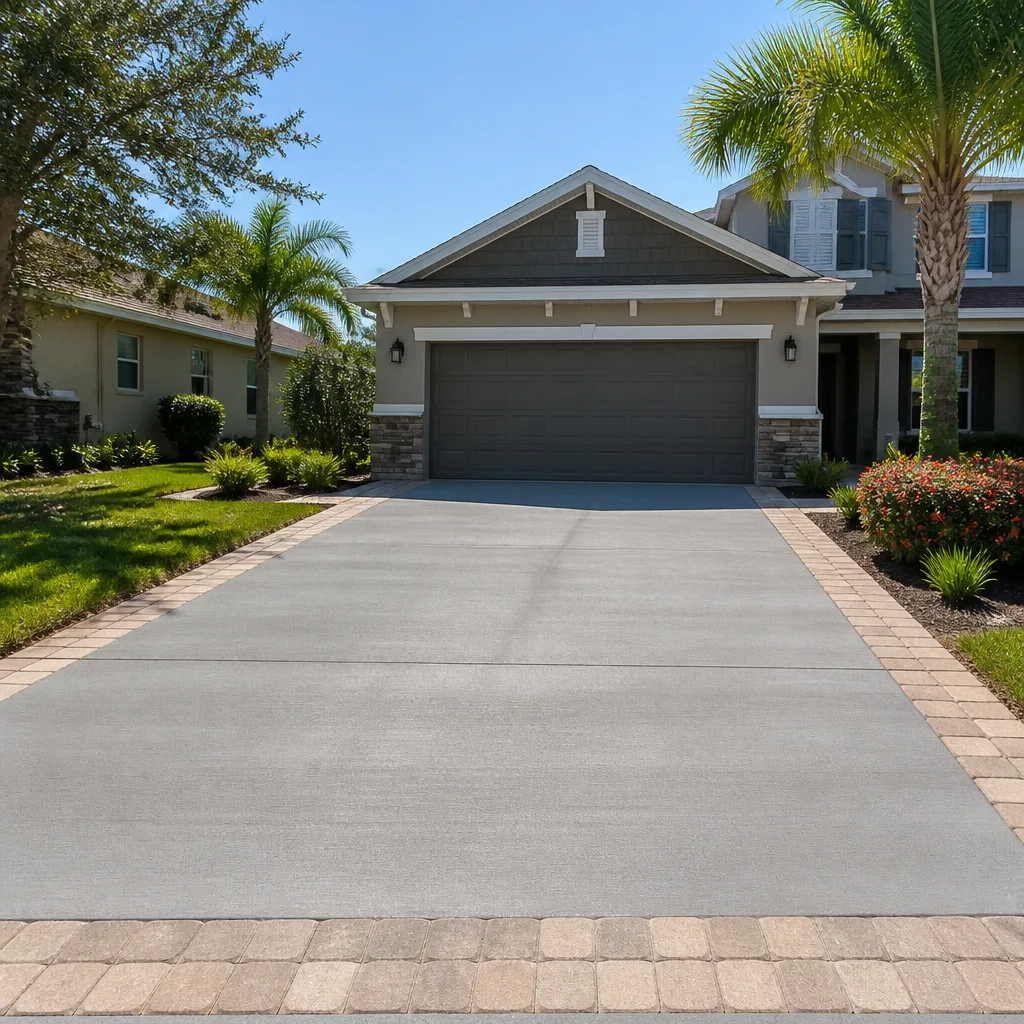
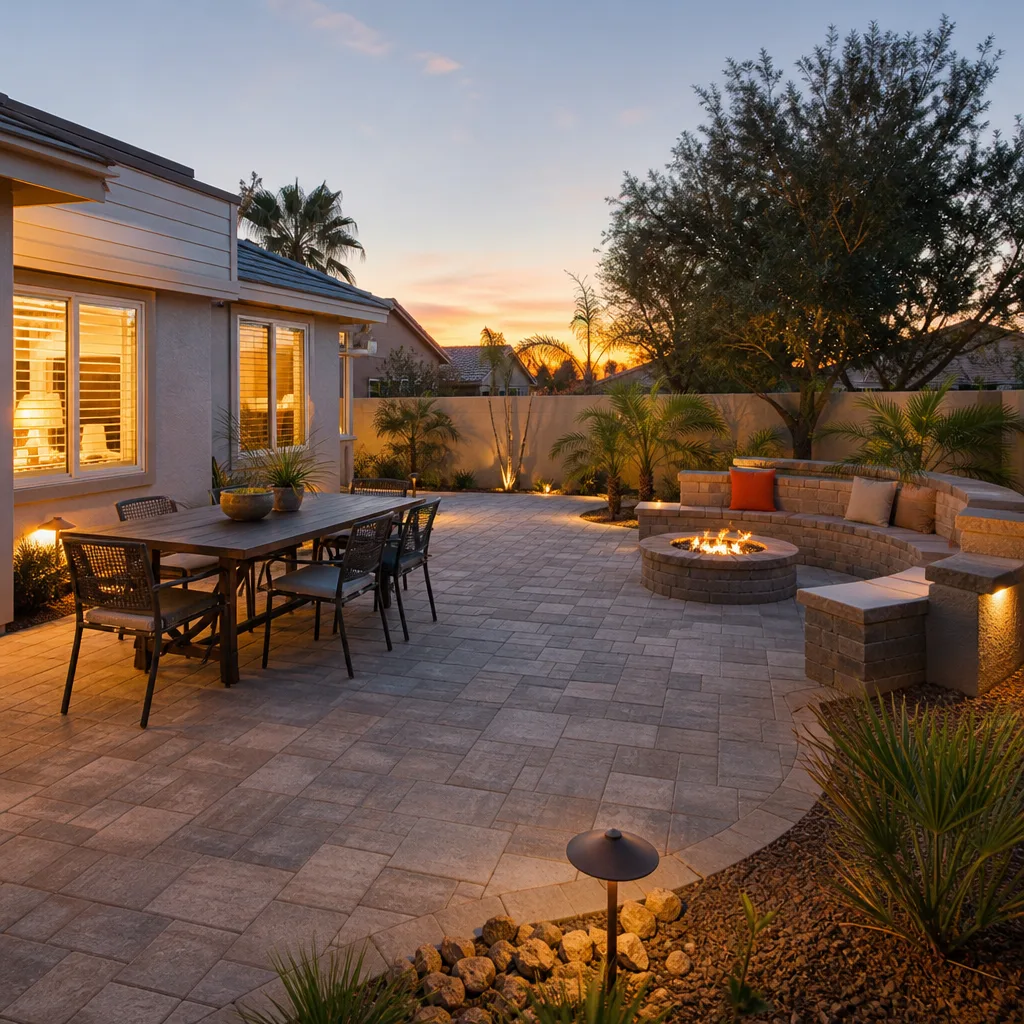
- Driveway & pavers
- Fence
Table of Contents
- What Can You Safely Do Yourself on a Driveway Project?
- Why Base Preparation Is the Whole Ballgame
- What Does DIY Equipment Rental Actually Cost?
- Do You Need a Permit for a Driveway in Garden Grove?
- How Base Mistakes Void Manufacturer Warranties
- How to Hire a Contractor Who Does the Base Right
- Garden Grove Soil, Drainage, and Climate Factors
- Common Mistakes to Avoid
What Can You Safely Do Yourself on a Driveway Project?
The honest answer is more than most cautious guides will admit and less than most YouTube channels imply. Cutting, layout, and setting pavers are skills you can learn in a weekend. Excavation depth, subgrade compaction, and edge restraint are judgment calls that take experience to read correctly on a given lot. Segregate the work that way and the DIY conversation gets much clearer.
Tasks a capable DIYer can usually own:
- Laying out the pattern. Herringbone, running bond, basketweave: setting chalk lines and dry-fitting courses is visual work you can rehearse before you commit.
- Cutting pavers to fit. A wet saw rented for a day handles most cuts, including curves and border transitions.
- Setting the bedding layer. Screeding a 1-inch sand bedding layer is doable once you build the screed rails.
- Placing and tapping pavers. The drop-and-tap rhythm is teachable and forgiving if the base below is right.
- Sweeping in polymeric joint sand. Straightforward labor, though the joint sand brand matters for stability.
Tasks that need rental equipment and trained judgment:
- Excavation to the correct depth for your soil type. Too shallow and pavers heave; too deep and you’re paying for base material you don’t need.
- Compacting subgrade in lifts. You’re layering 2 to 4 inches of aggregate at a time and compacting until a plate compactor stops registering movement.
- Verifying compaction. A proof-roll or a density gauge gives you a number; eyeballing does not.
- Setting edge restraint and grading for drainage. Water has to leave the driveway and stay off the house, garage, and adjacent properties.
The pattern is the same on every driveway we look at: the parts people see are the parts most DIYers get right, and the parts buried under them are the parts that fail. If your subgrade and base compaction are wrong, beautiful paver work will still crack, settle, and wash out within a few seasons.
Why Base Preparation Is the Whole Ballgame
A paver driveway is a sandwich: subgrade on the bottom, a compacted aggregate base in the middle, a thin sand bedding layer, then pavers. Almost all of the driveway’s load capacity lives in the base. Get the base right and the pavers are decoration. Get it wrong and no amount of good-looking pavers will save the surface.
Here’s what the skipped steps actually look like in practice.
- Excavate to the calculated depth. For a residential driveway with typical garden-variety traffic, base depth is usually 4 to 8 inches of compacted aggregate, depending on soil. For a clay-heavy lot, you want the deeper end. For a sandier, well-draining lot, you can run shallower.
- Proof-roll the subgrade. A loaded truck makes a few passes, and any soft spots pump and show. Those soft spots get cut out and replaced before a single inch of base rock goes down.
- Lay aggregate in lifts. Generally 2 to 4 inches per lift, compacted to refusal with a plate compactor before the next lift.
- Test compaction. A density gauge reading gives you a real number; a “looks solid” verdict does not.
- Set edge restraint properly. Pinned or glued edge restraint is what stops pavers from spreading and walking under load. Skip it, and your driveway’s edges shift by the second summer.
- Grade for drainage. The finished surface should slope away from the structure at a minimum 2% over the first 10 feet. Get it right and runoff goes where it’s supposed to.
Every one of those steps happens before a single paver gets placed. That’s the reason we spend so much of a driveway project under the ground: the surface is the easy part. In Garden Grove, where many homes sit on lots with seasonal high water tables and clay-rich subsoils, we regularly see base failures on driveways that were laid over scraped-but-uncompacted dirt. Those driveways look pristine for a year and then start to dish where the tires run.
What Does DIY Equipment Rental Actually Cost?
The DIY savings math looks great on paper until you add up what the equipment rental costs, how many days you actually need it, and how much base material you’ll buy. Here’s a realistic breakdown for a two-car driveway of 400 to 500 square feet, the size range most Garden Grove front yards fall into.
- Plate compactor rental: roughly $90 to $140 per day, and you’ll need it for two or three days if you’re doing lifts correctly.
- Wet saw rental: roughly $70 to $120 per day, usually one day if you’re efficient.
- Mini-excavator or skid steer rental (for excavation): roughly $250 to $400 per day, often two days if you’re learning as you go.
- Dumpster for spoil: roughly $350 to $550 for a 10 to 15 yard roll-off.
- Class II base aggregate: expect somewhere in the $40 to $60 per ton range; a 500-square-foot driveway with 6 inches of base needs about 15 tons.
- Paver cost: quality pavers run a wide range depending on the brand; expect roughly $3 to $8 per square foot for material on typical concrete or clay pavers.
- Polymeric joint sand, edge restraint, geotextile fabric, and bedding sand: another $250 to $500.
Total those numbers honestly and a $9,000 to $12,000 contractor driveway starts to look closer to $6,000 to $8,000 on DIY once equipment, disposal, materials, and the inevitable “I need a second rental” day get added in. The gap shrinks fast. And if the base fails because the compaction wasn’t right, you’re paying to do it twice. For a fuller picture of installed costs, see our breakdown of Driveway & Pavers in Garden Grove.
Do You Need a Permit for a Driveway in Garden Grove?
If your driveway project touches the public right-of-way, changes the curb cut, or connects to a public street, you need a permit in Garden Grove. A driveway that strictly stays on private property and replaces an existing surface without changing width or the curb cut is usually a lighter touch, but you should confirm with the city before you break ground. The cost of being wrong here is real.
Two specific situations catch homeowners:
- Resurfacing versus reconstruction. Replacing pavers over an existing sound base doesn’t trigger the same permitting as a full removal-and-rebuild that changes the driveway footprint or the curb cut.
- Right-of-way encroachment. The apron between the sidewalk and the street typically belongs to the city, not to you. Work in that zone almost always needs a permit and a final inspection.
Here’s the part nobody mentions at the point of sale: when you sell a Garden Grove home, a driveway that was rebuilt without permits can become a disclosure item that costs you a buyer, or a concession at the negotiating table. Title companies pull permit history, and buyers’ inspectors know what to look for. The permit inspector works for you, not for us, and that’s exactly why we like him.
Barrett & Sons Construction Garden Grove pulls permits and signs off on inspections on every eligible job. If a contractor tells you permits are optional for your driveway, that’s a genuine red flag.
How Base Mistakes Void Manufacturer Warranties
Paver manufacturers write their warranties around installation conditions, and the biggest one is base preparation. Not pattern, not color, not surface finish. Base. If a paver installation fails from settling, heaving, or edge spread and the base wasn’t built to spec, the manufacturer will happily point to the installation as the cause and decline the claim.
Most quality paver warranties – including those from brands like Belgard and Techo-Bloc that we install – require:
- Excavation to the manufacturer-specified depth for the traffic class and soil condition.
- Compacted base installed in lifts, not dumped and leveled as one thick layer.
- Edge restraint pinned or glued per the manufacturer’s detail.
- Drainage grading that keeps water moving away from the surface.
Skip any of these and the warranty you paid for is essentially a decorative document. For a homeowner finishing a driveway themselves, that’s a five-figure risk taken to save a day of equipment rental.
How to Hire a Contractor Who Does the Base Right
You don’t need a contractor who’s flashy. You need one who will talk about base depth, compaction, and drainage in the first conversation. Three questions weed out the wrong crews before you ever schedule an estimate.
- “How deep are you going to excavate, and why that depth?” A real answer references your soil type, your driveway’s traffic, and the aggregate specification. A bad answer references “whatever the last one was.”
- “How do you verify compaction?” Look for proof-roll, density gauge, or another defined test. “We compact it really well” is not a technique.
- “Will you pull permits, and will you put the base scope in writing?” If the answer to either is vague, that’s your signal. A scope that lives only on a handshake is a scope you’ll pay for twice.
Every scope, every allowance, every price change at Barrett & Sons arrives as a written change order before work happens. That’s also how we want you to expect every driveway project to be handled, whether you hire us or someone else. If a contractor gives you a range on the phone and a different number on paper, walk.
Garden Grove Soil, Drainage, and Climate Factors
Garden Grove sits in a coastal-influenced basin where clay-rich subsoils are common, and seasonal rain between November and March can push a poorly drained driveway base to its limit. What that means in practice:
- Clay-heavy lots need deeper base and better drainage. Water pools and doesn’t percolate, so the driveway surface has to shed water reliably.
- Slope matters more than people think. A minimum 2% slope away from the house over the first 10 feet is the standard, and it’s easy to lose when you’re grading by eye.
- Summer heat expansion is real. Driveways without proper edge restraint spread and gap in the hottest months, then collect water in the winter.
- Tree roots are a wild card. Older neighborhoods in Garden Grove often have mature ficus and liquidambar trees with aggressive root systems that can lift a base. It’s worth walking the layout with a contractor who’ll flag root conflicts before excavation.
If your driveway abuts a new fence line or a home addition you’re planning, coordinate the sequencing. Our pages on Fence Installation in Garden Grove and Home Additions & ADU in Garden Grove cover how driveways interact with adjacent work, and it’s a lot easier to handle it all in one plan than to redo a base later.
Common Mistakes to Avoid
- Skipping the proof-roll. If you don’t test the subgrade for soft spots, you’ll build a beautiful base over a problem that grows into a settlement bowl within two years. On Garden Grove’s clay-heavy lots, this is the number-one cause of driveway callbacks we see.
- Compacting the base in one thick layer. Six inches of aggregate compacted at once is six inches that didn’t actually compact. Lift compaction is not optional.
- Skipping edge restraint. Pavers will spread and walk without it, especially in summer heat. Pinned or glued restraint is the difference between a driveway that holds and one that slowly floats apart.
- Doing the work without a permit. A rebuilt driveway without permits is a resale disclosure problem in Garden Grove. Even for a private-side project, confirm with the city before you break ground.
- Grading by eye. Water flows downhill; make sure it flows to the street and not to your foundation. A laser level or a string line with a 2% fall is worth the twenty minutes.
- Buying the cheapest pavers without checking warranty terms. The warranty language around base preparation is what actually protects you; cheaper product with a warranty that voids on installation errors is money poorly spent.
- Assuming DIY always saves money. Add up rental days, disposal, base material, and the possibility of a redo, and the honest savings are often much smaller than the YouTube videos suggest.
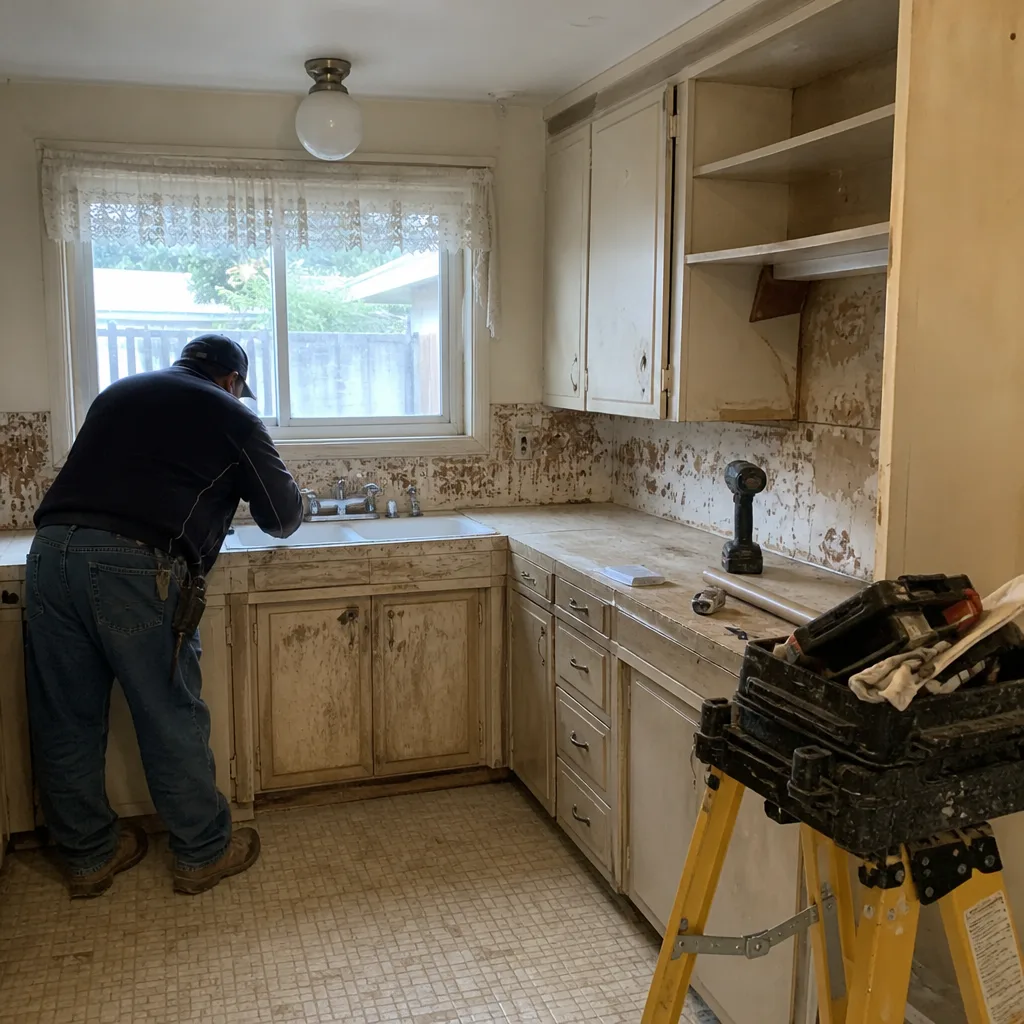
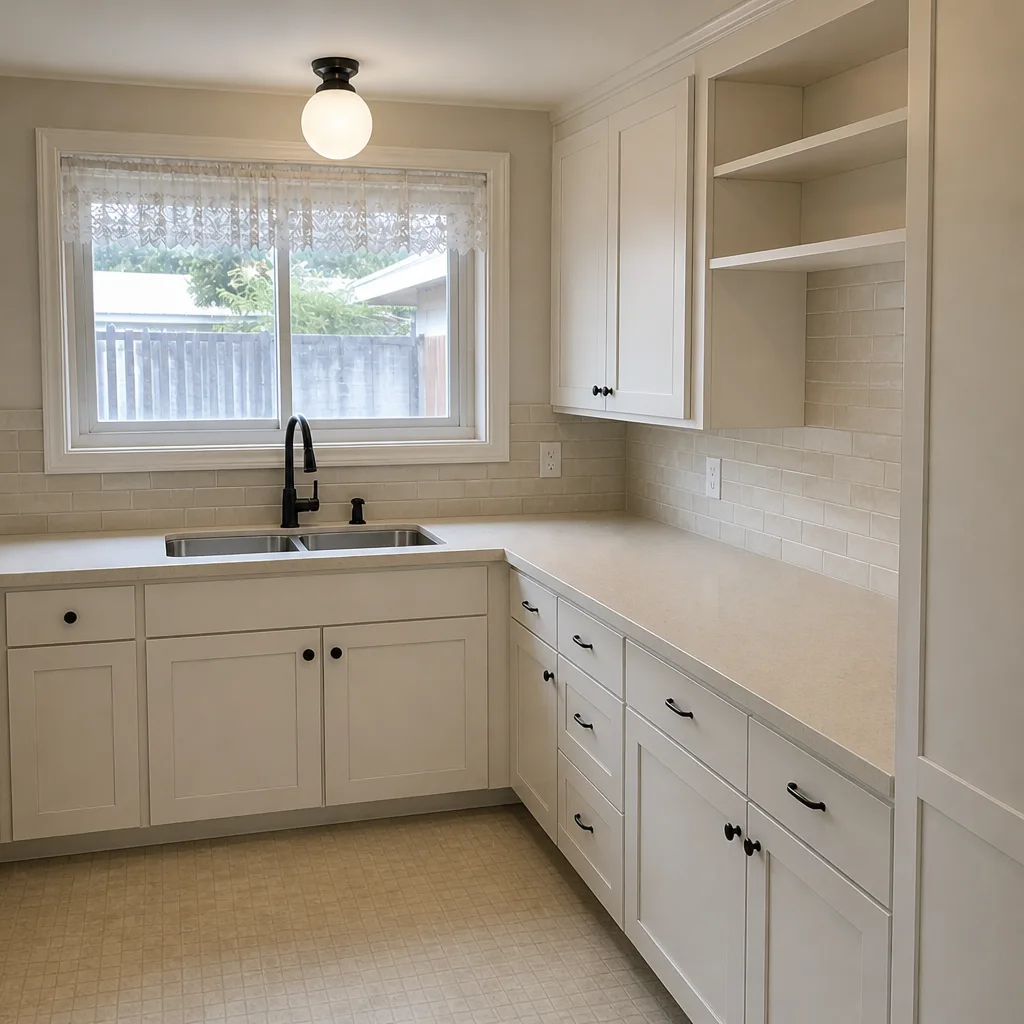
See the difference
 Before
 After
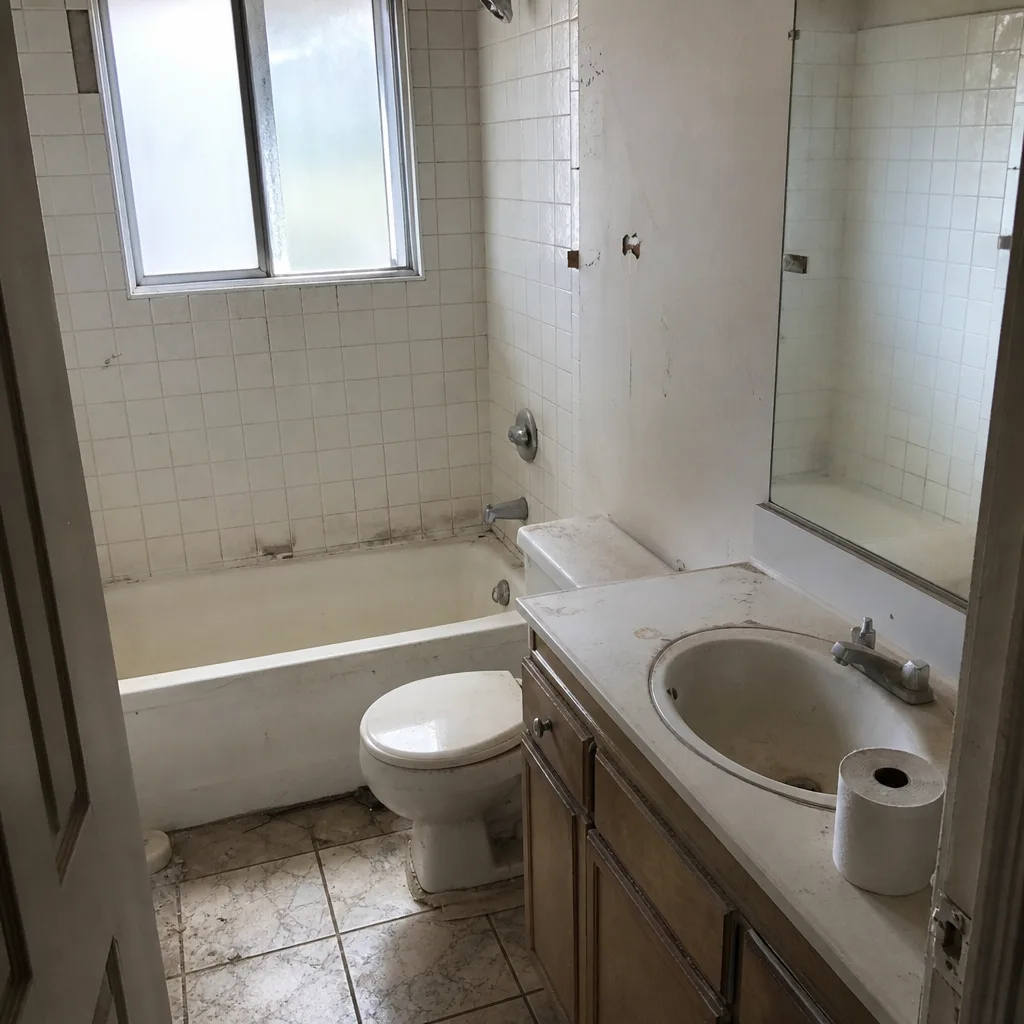 Before
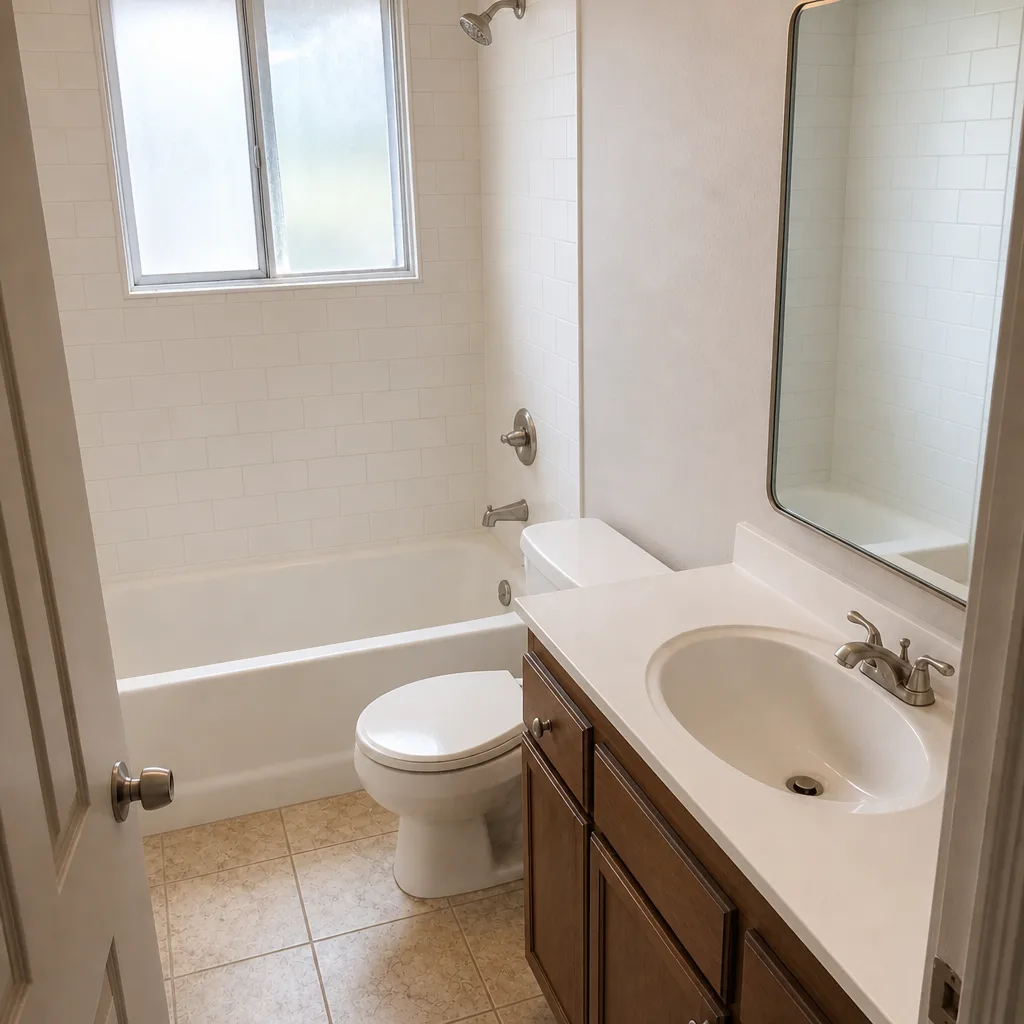 After
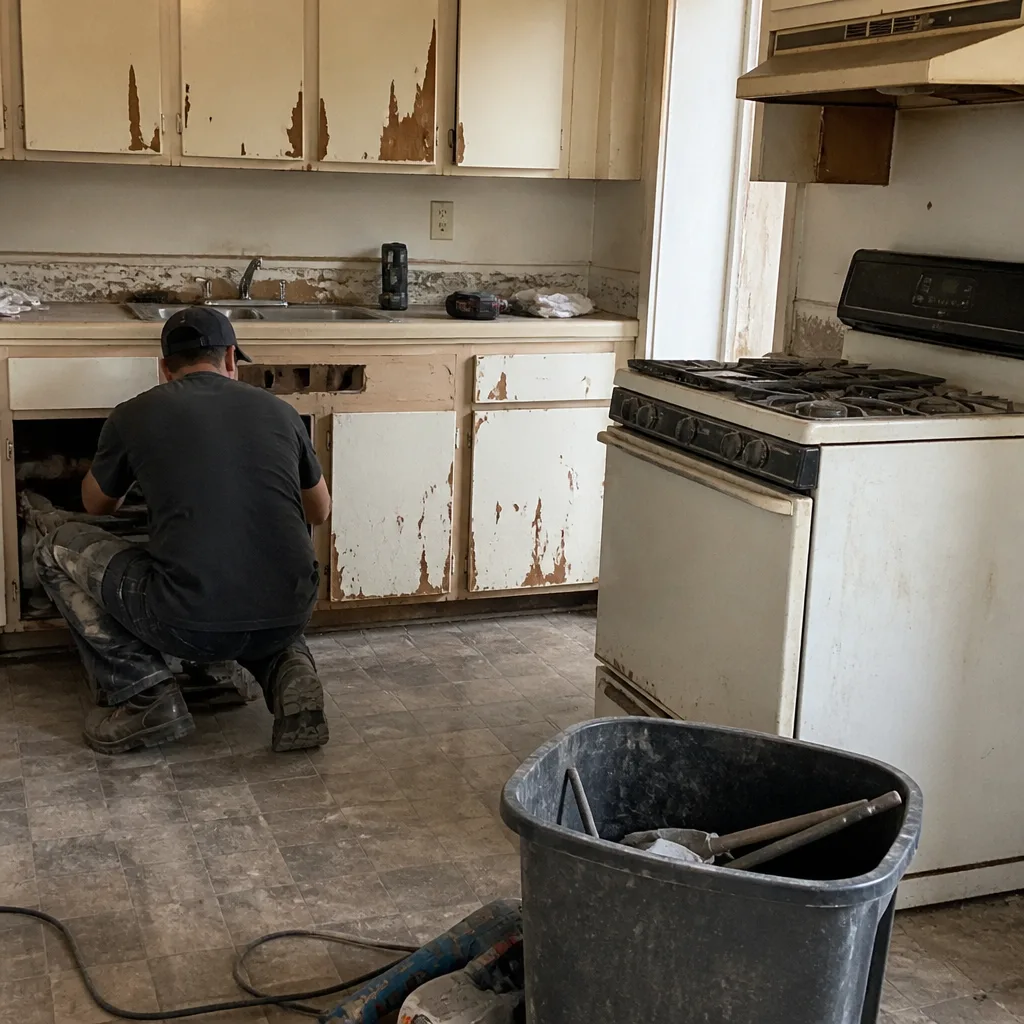 Before
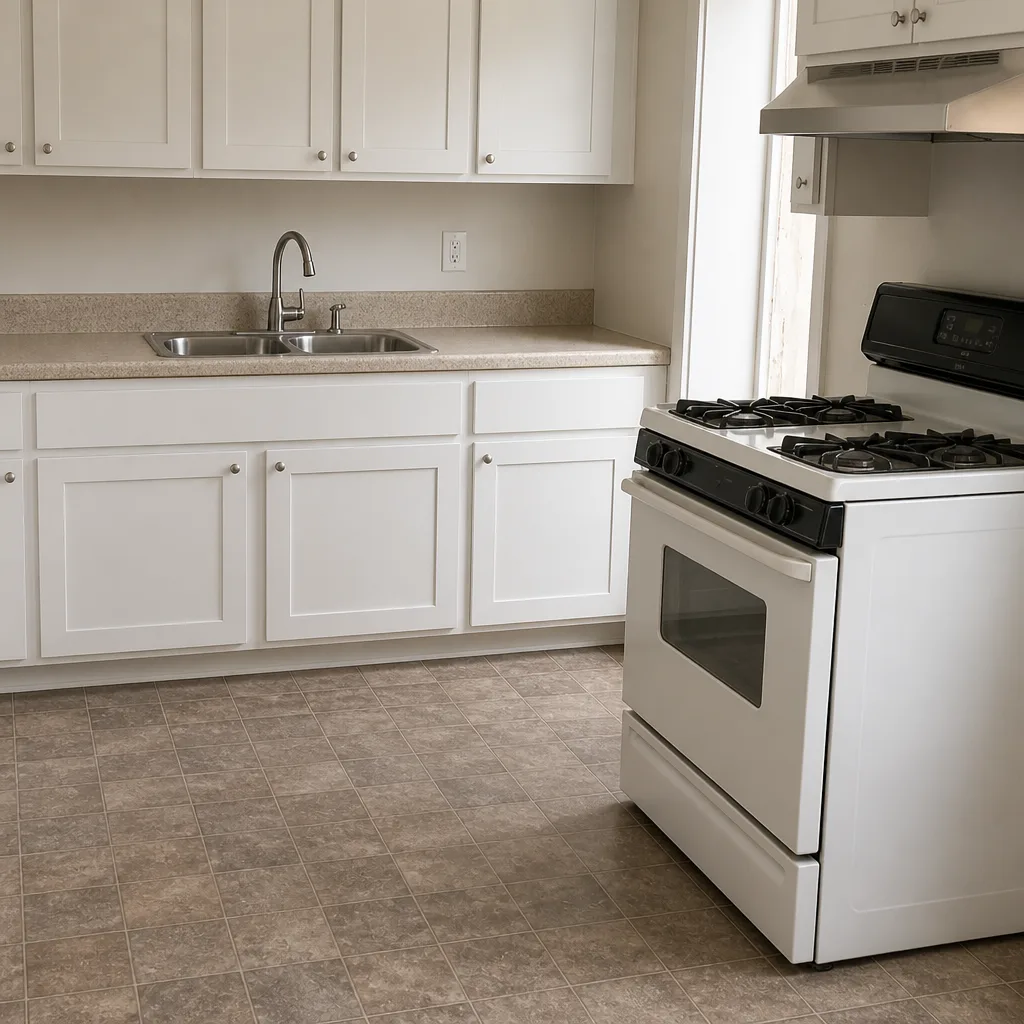 After
When to Call a Professional
Call a professional if any of these is true: your lot has visible drainage problems, your driveway touches the right-of-way or changes the curb cut, the existing driveway is failing across more than a small patch, your soil tests clay-heavy, or you want a warranty that’s actually enforceable. Those are all situations where the base work becomes the deciding variable, and where getting it wrong costs more to fix than the original project cost to build. If your driveway is part of a bigger plan – a new garage, an ADU, a fence line – sequencing matters, and it’s worth talking about that upfront. For the wider picture of what we do, see the Barrett & Sons Construction Garden Grove home page. Barrett & Sons Construction Garden Grove offers free estimates in Garden Grove. Call (833) 703-5196.
Frequently Asked Questions
You can, but the concrete has to be sound, properly sloped, and sound enough that it won’t crack underneath the pavers. If the existing slab has large cracks, low spots, or drainage problems, pavers over it will telegraph those issues within a season or two. Have the slab evaluated first; the paver work itself is the easy part.
Most residential driveways in Garden Grove want 4 to 8 inches of compacted aggregate base, with the deeper end for clay-heavy lots. Sandier, well-draining lots can run shallower; heavy clay can need more. The number matters more than the material because settling and heaving almost always trace back to base depth and compaction.
A permit is required when the work touches the public right-of-way, changes a curb cut, or connects to a public street. A pure private-property resurface or in-kind replacement without footprint changes may not need one, but you should always confirm with the city before breaking ground. Unpermitted driveway work can become a resale disclosure issue down the road.
On a typical 400-to-500 square-foot driveway, honest DIY savings after rental equipment, disposal fees, base materials, and paver cost usually land in the $2,000 to $4,000 range versus a professional install. That’s real money, but it shrinks further if the base has to be redone. And a failed base wipes out every dollar saved.
Belgard and Techo-Bloc are both well-regarded and widely specified on residential driveways in Orange County, and both publish warranty terms that depend on base preparation. Ask your contractor to show you the warranty language around installation conditions; that’s where the useful information lives.
Most residential driveways in Garden Grove take 3 to 6 working days once permits are pulled and materials are on site, with the base work taking a full day or more on its own. Weather, drainage corrections, and pattern complexity will shift that range. If a contractor quotes you “2 days, no problem,” ask specifically how they’re handling compaction and drainage in that window.
The Bottom Line
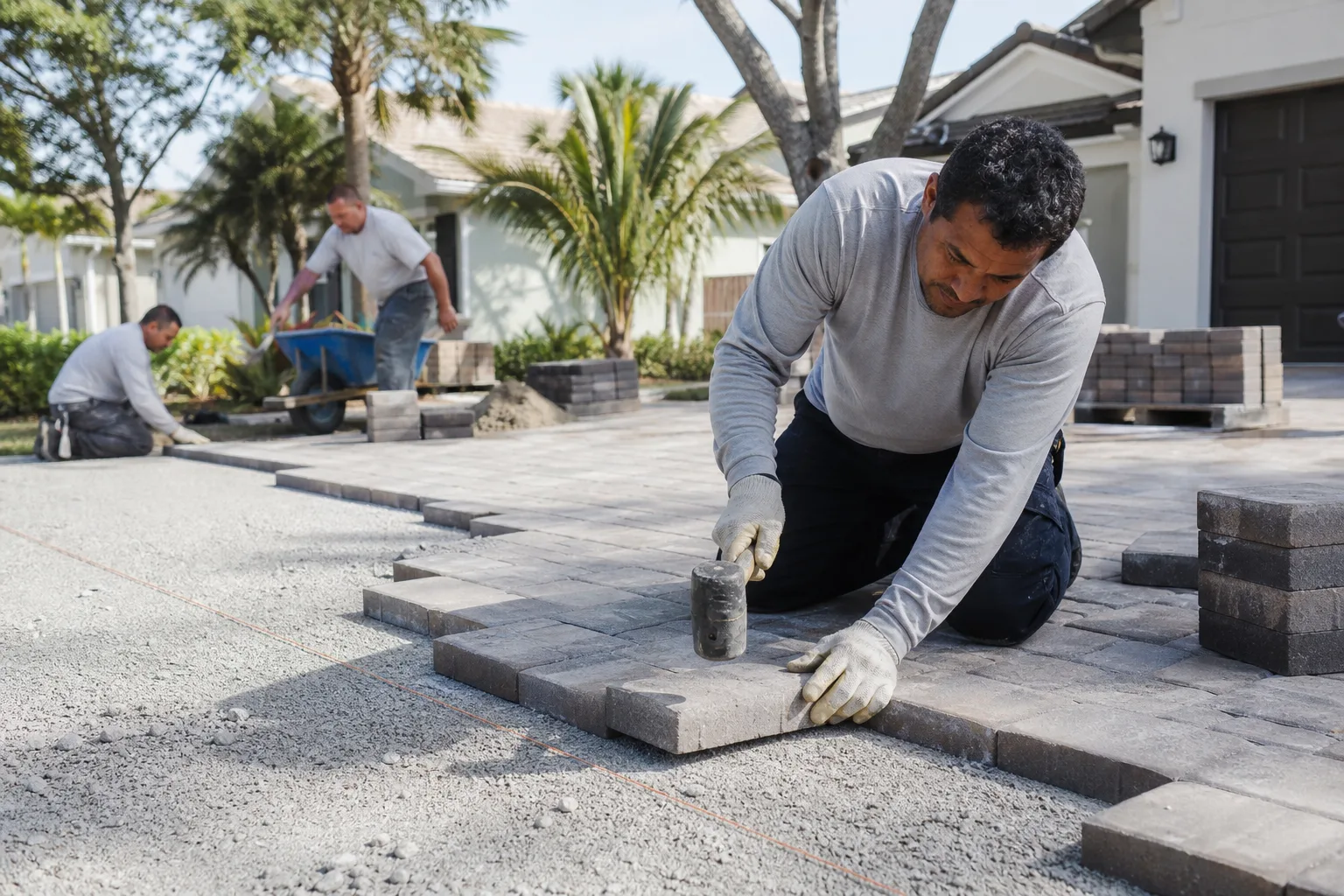
You can absolutely lay pavers. What most homeowners can’t realistically do is build a base that will hold up for two decades, which is where the actual project lives. The safe-DIY list is layout, cutting, and placement. The risky list is excavation, lift compaction, compaction testing, edge restraint, and drainage grading. Add up rental costs honestly and the savings are narrower than they look. Garden Grove soil is clay-heavy and seasonal rain is real, so base mistakes show up faster here than in sandier markets. If you’re weighing the DIY route, price it accurately. If you’re hiring out, ask the three base questions first and expect the answers in writing. Call (833) 703-5196 for a free estimate.
Written by the team at Barrett & Sons Construction Garden Grove.