Last updated November 18, 2026
Free written scope consultation - allowances, timeline, and change-order rules on paper before a single trade is scheduled
DIY vs Professional Home Additions & ADU: What’s Safe to Do Yourself
Here’s the part most guides skip. In California, you can legally pull your own permit as an owner-builder and do the work on your primary residence. But the moment you rent out that finished ADU, you’ve represented to the state that you were the contractor of record on a rental dwelling – and that declaration carries real liability if anything goes wrong. Not “you might get a letter.” Real liability, real exposure, real trouble at resale or in a courtroom. The question was never whether you’re handy. It’s whether the work needs a licensed contractor, carries structural risk, or will get inspected by a city official who can order it torn out. This guide draws that line honestly, trade by trade. We build additions in Garden Grove, and we’ve watched homeowners win some of these calls and lose others badly.
Quick Answer
On a primary residence, an owner-builder can legally do framing, finish carpentry, painting, insulation, tile, and most non-structural work with a permit – provided they act as their own general contractor and take on the full legal role. Electrical, plumbing, gas, and HVAC require a licensed contractor in almost every case, no matter how skilled you are. Structural work – load-bearing walls, foundations, and roof framing on an addition – falls into a gray zone where it’s technically permitted for an owner-builder but is the single fastest way to fail inspection and lose your insurance coverage. If the ADU will be rented, the owner-builder exemption is off the table for practical purposes.
Styles & brands we work with
- Kitchen remodeling
- Bathroom remodeling
- Home additions & ADU
- Roofing
- Windows & doors
- Driveway & pavers
- Fence
Table of Contents
- What California’s owner-builder permit really lets you do
- What the owner-builder declaration actually says you’re agreeing to
- Trade by trade: DIY, assist, or no-touch
- The inspection reality in Garden Grove
- Insurance: the angle most guides ignore
- An honest cost comparison, line by line
- How DIY work affects your ability to sell
- Where prefab fits: Boxabl, Mighty Buildings, and Dvele
What California’s owner-builder permit really lets you do
California’s Business and Professions Code lets an owner-builder pull a permit and perform work on a home they occupy as their primary residence. That’s real. But the exemption is narrow, and it comes with a small mountain of obligations. Pull a permit as an owner-builder in Garden Grove and you become the general contractor of record. That means you’re responsible for scheduling every inspection, coordinating every licensed subcontractor, complying with worker’s compensation rules for anyone you hire, and providing a construction contract with all required disclosures. You also waive some of the consumer protections a licensed contractor would be required to provide you.
Here’s the part that trips people up. Owner-builder exemptions typically apply only to a residence the owner occupies. Rent it out – even part of it – and many cities and lenders treat the work differently. Some jurisdictions require a licensed contractor for any improvements to a rental dwelling. Garden Grove’s permit office will tell you plainly whether your specific project can be pulled owner-builder, and that answer changes based on whether the ADU is attached or detached, whether it’s gas and electrical, and how you declare occupancy on the application.
So the honest answer to “can I pull my own permit?” is: sometimes, on your primary residence, for the work that’s actually eligible. Ask before you buy lumber. A single phone call to the city before you break ground saves months of paperwork on the back end.
What the owner-builder declaration actually says you’re agreeing to
The owner-builder declaration isn’t a formality you initial on your way to the counter. It’s a legal acknowledgment that you, personally, are accepting liability the state would otherwise place on a licensed contractor. Here’s roughly what you’re signing on to:
- You are the contractor of record and are responsible for code compliance on every element of the job.
- You’re responsible for ensuring all subcontractors carry their own licenses, insurance, and workers’ comp – or you accept the liability if they don’t.
- You accept that you won’t have access to the Contractors State License Board’s arbitration process if something goes wrong with a sub.
- You acknowledge that if you sell the property within a certain window (often one year, sometimes five depending on the circumstances and lender), the buyer can pursue you for defects you created.
- You acknowledge any unpermitted or failed-inspection work becomes your problem to disclose at sale.
That last point matters even more than the others. If a Garden Grove inspector flags work you did and you can’t get it corrected, you don’t get to forget it. It sits on the record. Every future buyer’s agent will find it. Every future inspector will ask about it. The five-year window isn’t a magic reset button – it’s the minimum amount of time you’re the one on the hook before a buyer might reasonably stop chasing you.
Trade by trade: DIY, assist, or no-touch
Here’s the line we draw with homeowners we’ve worked alongside. This isn’t a judgment about your skills. It’s a judgment about which trades carry legal, structural, or safety consequences that a permit can’t retroactively fix.
Framing (partly DIY-able, with limits)
Non-structural framing – interior partition walls, soffits, blocking, backing for cabinets – is genuinely within reach of a capable homeowner. Structural framing on an addition is different. Load-bearing wall removal, floor joist replacement, roof rafter construction, and anything that touches shear walls all need engineering calculations and stamped drawings. You can assist, but the layout needs to be designed and inspected. In Garden Grove’s older neighborhoods, plenty of additions were built decades ago on framing that doesn’t match current seismic code. Fixing that properly is not a weekend project.
Electrical (requires a licensed electrician, period)
In nearly every California jurisdiction, no homeowner can pull an electrical permit for anything beyond minor fixture swaps. Panel work, circuit additions, subpanels, and any wiring that serves an ADU require a licensed C-10 electrician. This is one of the few trades where the danger isn’t theoretical. A finished wall doesn’t tell you the wire is undersized. An AFCI breaker that keeps tripping isn’t a nuisance – it’s telling you something.
Plumbing and gas (licensed plumber, no exceptions)
Sweating copper, running PEX, roughing in a bathroom, tying into a sewer main, relocating a gas line – all of it requires a licensed plumber in California on residential permits. Gas is the one to never touch yourself. A small leak behind drywall costs you a life. A small leak on a gas line costs you a house. You can absolutely help – run material, dig trenches, clear access – but the connection, pressure test, and inspection belong to a licensed plumber.
HVAC (licensed contractor required)
Ductwork, refrigerant lines, and heat loads on an addition or ADU are calculated, not estimated. A new ADU needs its own heat load calculation, its own return air path, and its own permit. You can be present for the design and make decisions about where vents go, but the work itself is a licensed C-20 contractor’s job. If you’re adding a mini-split, those do come as pre-charged systems that some homeowners install themselves – check with the city first, because the permit and inspection question varies.
Roofing (possible for a roofer or a bold homeowner)
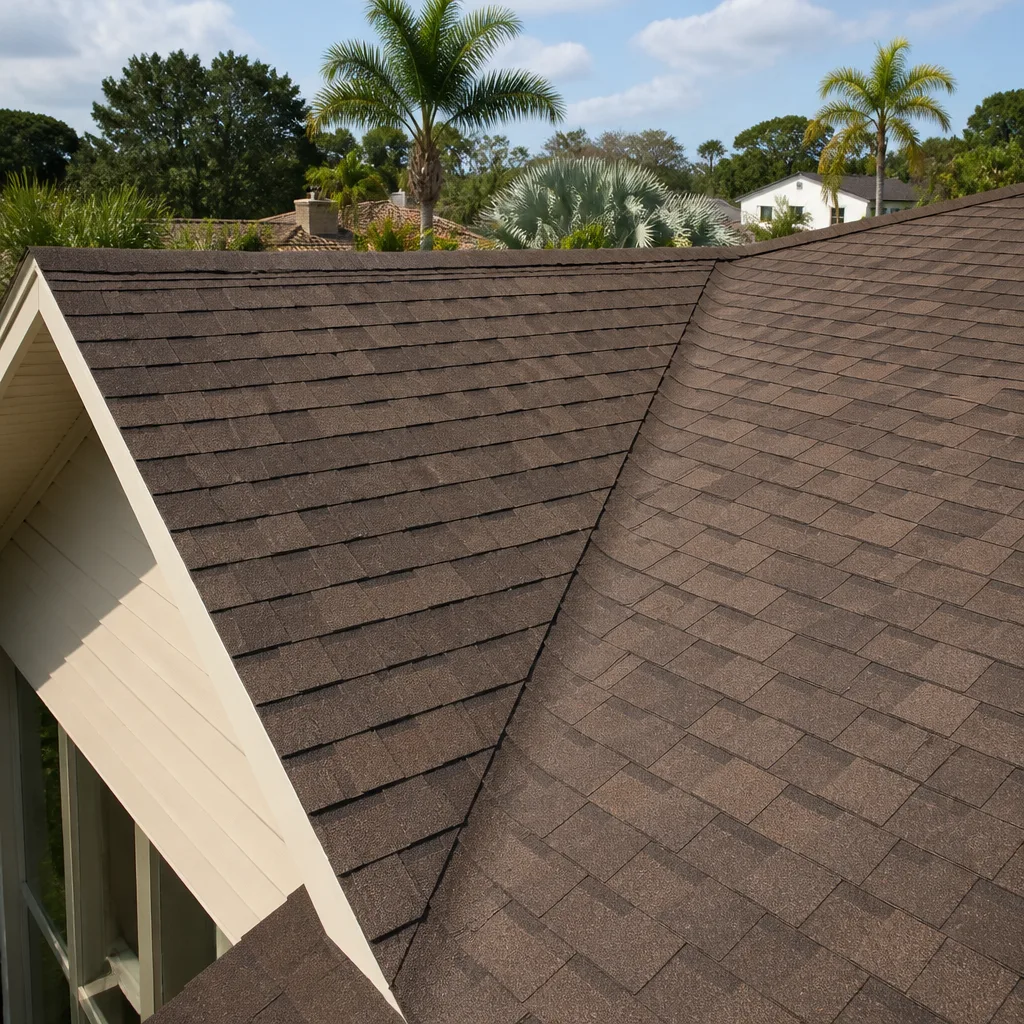
Roofing is one of the trades where an experienced homeowner can genuinely do the work – if the pitch is low, the roof is single-story, and you have a proper fall-protection plan. GAF and CertainTeed both publish detailed installation guides. That said, we’ve seen as many homeowner shingle jobs fail on flashing as on field shingles. Flashing details at valleys, chimneys, and wall intersections are where leaks start, and those are invisible until they’re not. On a Garden Grove roof, the hot inland sun bakes bad details faster than coastal air would. If a roof will be inspected on the ADU or addition, get the flashing and underlayment signed off before you lay a single shingle over it.
Concrete (assist, don’t solo)
Forming, pouring, and finishing a slab for an addition or ADU is not the same as pouring a patio. Foundation slabs for structures need engineering, rebar placement, and inspection before pour. It’s the point of no return – once you pour, you can’t fix the rebar layout. Hire a licensed concrete contractor and be present for the layout and inspection. Post-tension, anchor bolts, and vapor barriers are details that fail quietly and cost you the entire slab.
The inspection reality in Garden Grove
Here’s a truth that surprises homeowners who’ve never built: garden variety city inspectors aren’t trying to catch you. They’re trying to verify minimum code compliance on your behalf. The inspector is your ally in the sense that their signature protects you from a future lawsuit, a failed appraisal, or an insurance denial. But they have a job to do, and their sign-off means the work meets the code in effect on the day they inspected it.
What happens when work fails inspection? You correct it. You re-inspect. In most cases you pay a re-inspection fee (Garden Grove’s fee schedule is published online, and it’s usually modest). But here’s the trap. Concealed work that never got inspected stays your liability forever. Drywall covers framing. Concrete covers rebar. Backfill covers underground utilities. If a step was skipped – or worse, never scheduled – a future buyer’s inspector will find it. Fixing it out of sequence costs five to twenty times what getting it right in sequence costs.
In our experience building additions in Garden Grove, most inspection failures trace back to one of three things: missing or undersized anchor bolts, incorrect shear panel nailing patterns, and vapor barrier details. All three are visible and fixable during framing, none of them are visible after drywall.
Insurance: the angle most guides ignore
Your homeowner’s policy probably has a clause about owner-performed work. Read it before you start. Many policies flat-out exclude coverage for damage caused by a homeowner’s own construction work unless the homeowner was acting under a permit and within a licensed-contractor scope. Others cover the structure but not the construction materials while the work is in progress. Either way, you may find that your insurance quietly stops working for you the moment the first permit is pulled.
That’s where a builder’s risk policy comes in. A builder’s risk policy covers the structure and materials during construction. It’s normally the contractor’s responsibility to maintain, but an owner-builder can and should buy one before the foundation goes in. For a Garden Grove ADU, the premium is small compared to the cost of an uncovered fire or storm loss on a half-finished building.
And if the ADU will be rented, this is the whole ballgame. A standard homeowner’s policy usually won’t cover a rental ADU the same way it covers your primary residence. You’ll likely need a landlord policy or a rider, and the insurer will ask who did the work and whether it was inspected. If the answer is “I did it, and here’s the signed-off permit,” coverage usually follows. If the answer is “I did it, no inspection,” coverage often doesn’t.
An honest cost comparison, line by line
Most “DIY saves 40%” articles pick the number that makes the headline pop. That’s not useful. Here’s where labor costs make DIY genuinely worth it, and where the cost of one mistake erases the savings entirely. These are rough numbers from watching actual Garden Grove projects, not national averages.
| Trade / Element | Typical labor cost to hire | Realistic DIY savings | Cost of one mistake |
|---|---|---|---|
| Interior painting and trim | $3,500 – $6,000 for a 400 sq ft ADU | High – nearly all labor is recoverable | Low – repaint, reorder trim |
| Tile and drywall | $6,000 – $11,000 (bath + main rooms) | Moderate to high, with a learning curve | $800 – $3,000 – tear out, redo, waterproofing failures |
| Framing (non-structural) | $4,000 – $9,000 | Moderate | $1,500 – $5,000 – out-of-square walls, failed inspection |
| Framing (structural) | $8,000 – $18,000 | Low – engineering cost dominates | $15,000 – $60,000+ – failed shear, tear-out, re-engineer |
| Electrical rough and finish | $6,000 – $12,000 | Not available in CA | Life-safety. Not costed. |
| Plumbing and gas | $7,000 – $14,000 | Not available in CA | Water or gas leak. Not costed. |
| HVAC (heat load, ducts, equipment) | $5,000 – $11,000 | Not available in CA | Comfort failures, and full system redo |
| Roofing | $4,000 – $9,000 for ADU square footage | Moderate if single-story, low pitch | $3,000 – $10,000 – leak, tear off, redo flashing |
| Concrete foundation | $9,000 – $20,000 | Low – assist only | $10,000 – $30,000 – tear out slab |
The trades where DIY makes sense are almost always the ones a permit doesn’t turn on – painting, trim, tile, finish carpentry. The trades where DIY makes no sense are the ones you can’t recover from. Everything in between is the gray zone where your specific skills, timeline, and appetite for risk should decide.
How DIY work affects your ability to sell
If you plan to sell within five years of doing owner-builder work, the safe approach is to keep every scrap of paper. Every permit, every inspection card, every change order, every photo of the work at each stage. A future buyer’s agent will ask for this. A lender will ask. An appraiser will ask. If you can produce a complete permit file, your DIY work is an asset – it’s the same paper trail any licensed contractor would leave. If you can’t produce that file, your addition or ADU becomes a discount at the negotiating table.
The resale implications in Garden Grove specifically: ADUs here are in demand, and an ADU with a full permit history and inspection record commands real value. An unpermitted one usually has to be disclosed, sometimes demolished, and almost always discounted. Prefabricated units can actually improve this picture – a Boxabl, for instance, ships with a factory-built certification and its own documentation, which reduces the paperwork burden on you when it comes time to sell. Dvele and Mighty Buildings units do much of the same. Those aren’t a way around permits – you still need the site permit, foundation, utility connections, and inspection – but they shift the structural and envelope responsibility off your shoulders and onto a manufacturer, which is worth thinking about if resale is on your mind.
Where prefab fits in the DIY vs professional equation
Prefab ADUs sit in a strange middle ground. The building itself is built in a factory to code – so the framing, envelope, electrical rough-in, and plumbing rough-in come pre-inspected under factory certification. What remains is the site work: foundation, utility trenching, final connections, and the final inspection by your local building department. Those last pieces are where an owner-builder can actually save real money, because site work is where a lot of the labor cost lives.
The catch: not every prefab company will sell direct-to-owner-builder, and not every Garden Grove lot is set up for a crane delivery. A pitched lot, a narrow side yard, or overhead power lines can turn a delivery into a bigger job than building on site. If you’re considering prefab, spend a full day on the lot details before you place an order. We’ve seen prefab ADUs cost more than a stick-built one in a tight setback, purely on delivery and rigging.
Common Mistakes to Avoid
- Pulling a permit as owner-builder without reading the declaration. The signature is not a checkbox – it’s a legal transfer of liability from the contractor to you. Read it before you sign and call the CSB if anything is unclear.
- Skipping the pre-pour inspection on a concrete foundation. Once the concrete sets, you own the rebar that’s inside it forever. A foundation is not a place to learn on the fly.
- Assuming your homeowner’s policy covers construction. Many policies reduce or drop coverage the moment a permit is pulled for major work. Call your agent before you call the lumber yard.
- Hiring a subcontractor without verifying the license. As an owner-builder, you’re responsible if your sub isn’t licensed. Check every license on the CSB website, or the liability follows you.
- Renting out an ADU you built as owner-builder. The owner-builder exemption narrows or disappears on a rental. Talk to the city and your insurance carrier before advertising the unit.
- Forgetting to archive inspection photos and cards. Work that isn’t documented may as well not exist when it’s time to sell. Build a permit binder on day one.
- Underestimating Garden Grove’s inland heat on roof flashing and exterior paint. Details that last on the coast fail faster here. Take the extra step on flashing and paint prep.
See the difference
 Before
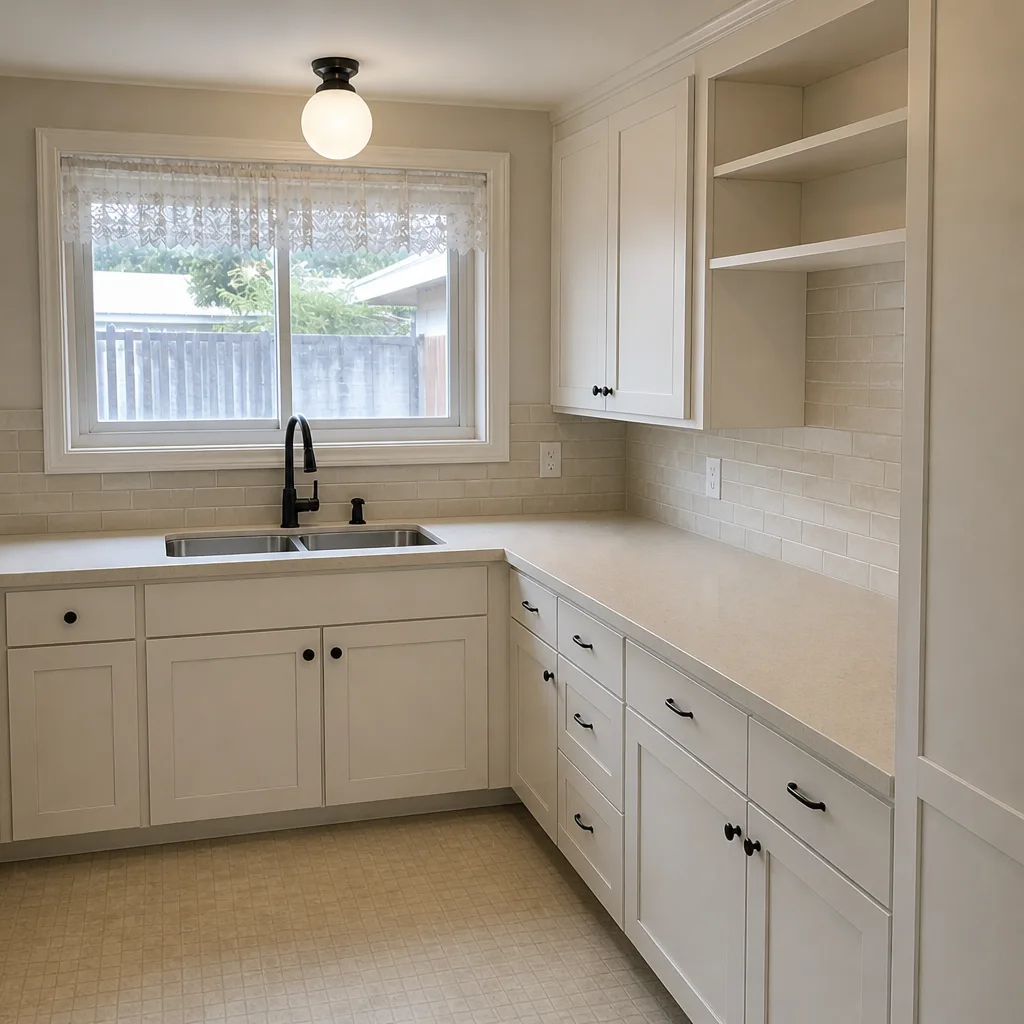 After
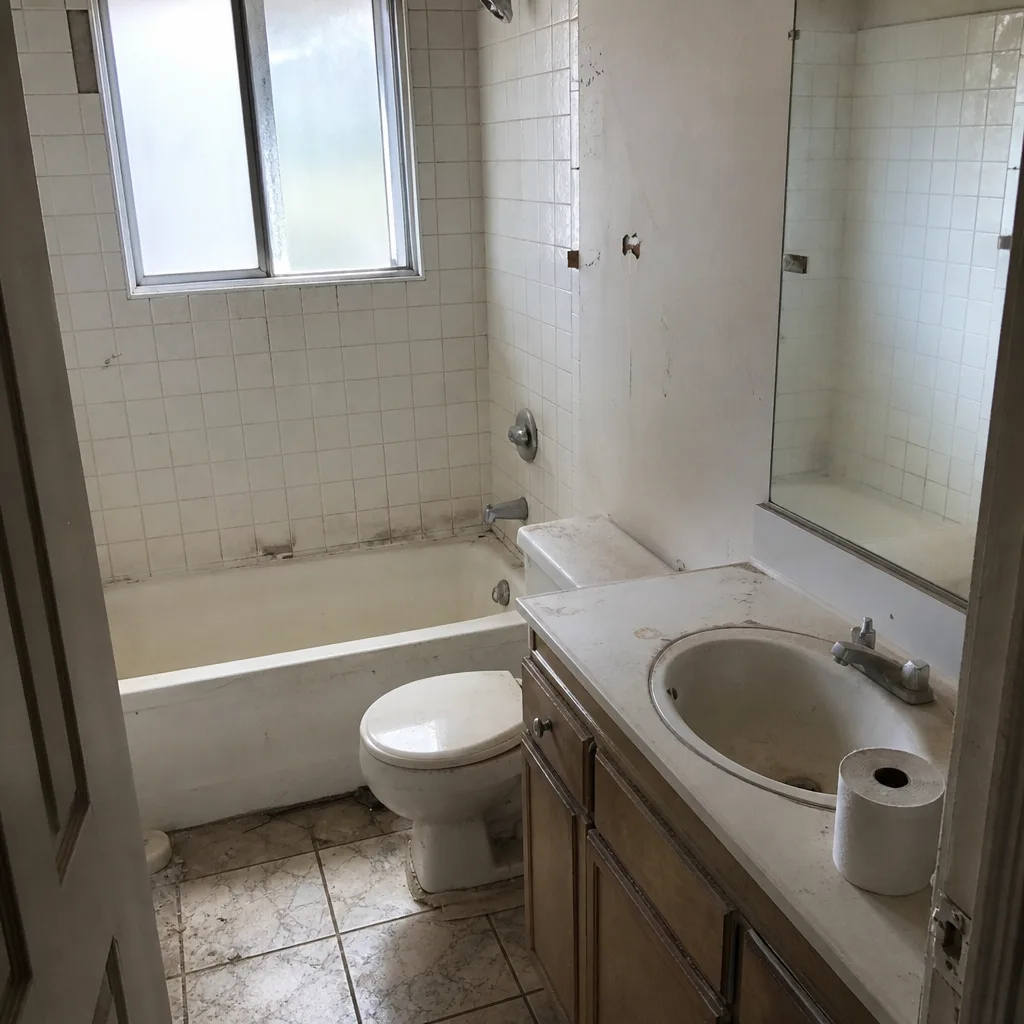 Before
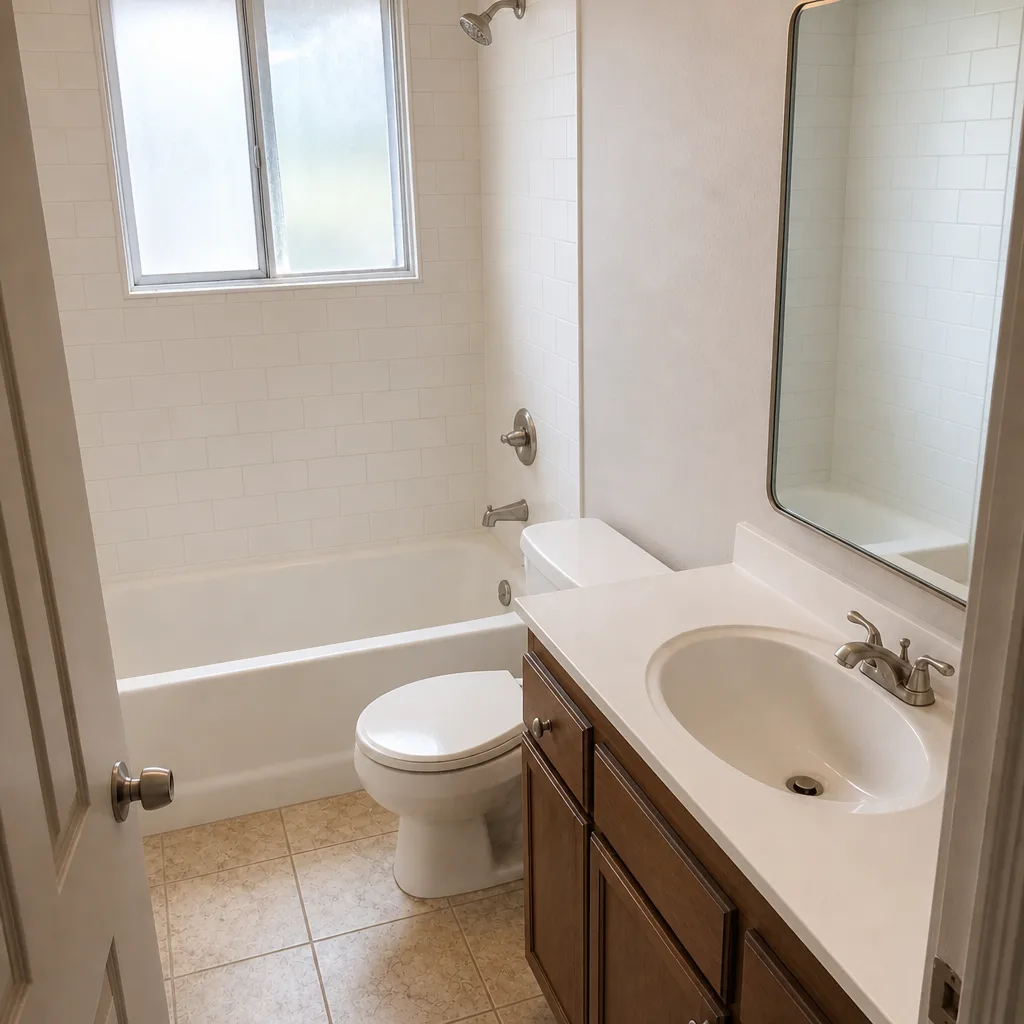 After
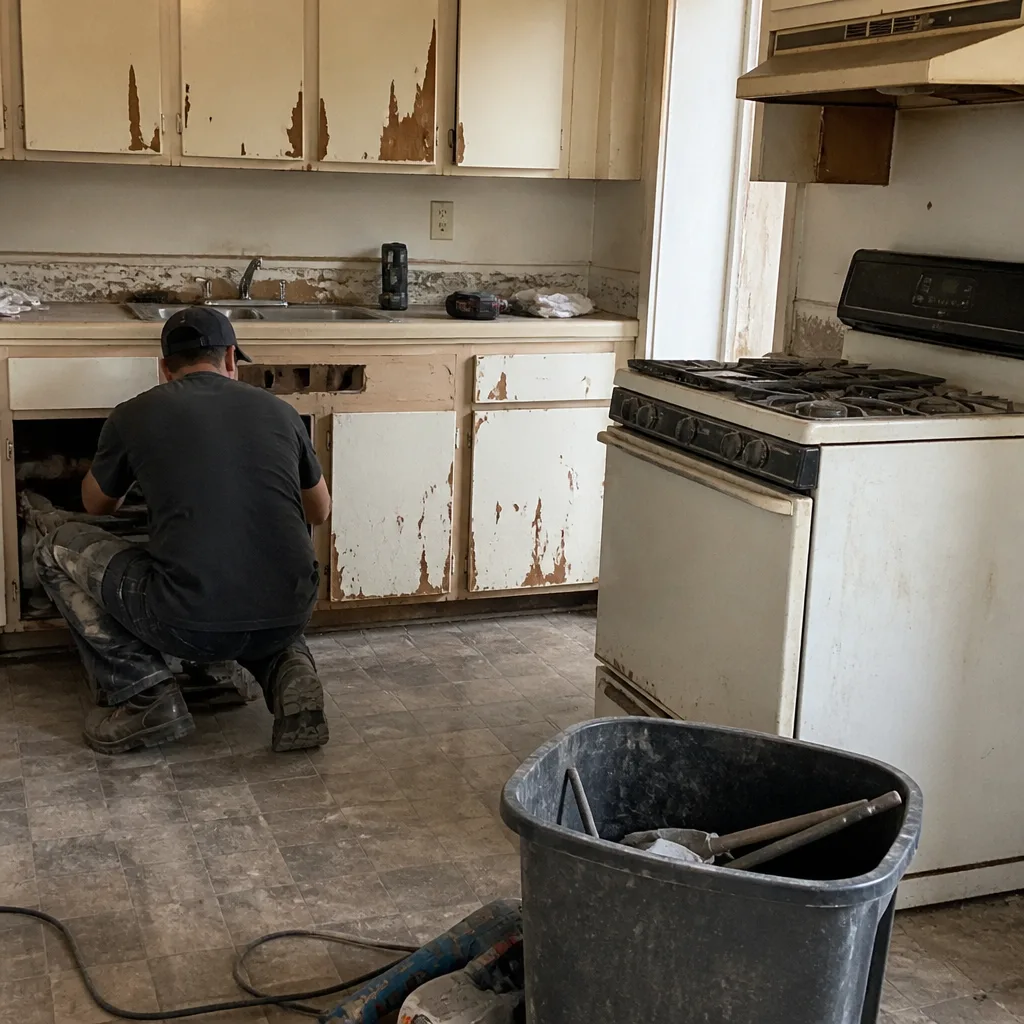 Before
 After
When to Call a Professional
Call a licensed contractor when the work touches structure, when it needs an inspection card that will matter at sale, when it involves electrical, plumbing, gas, or HVAC, or when you’ve never done that specific trade before. Call when the insurance question is unclear. Call when the permit office tells you the job needs a general contractor of record. And call when the timeline matters – an owner-builder job done in stages around your day job often runs two to three times the length of a contractor-led job of the same scope, which changes the math in ways a straight labor comparison won’t show.
Barrett & Sons Construction in Garden Grove builds home additions and ADUs with permits pulled and inspections signed on every eligible job, and every scope, allowance, and price change arrives as a written change order before work starts. Free estimates in Garden Grove – call (833) 703-5196.
Frequently Asked Questions
Yes, if the property is your primary residence and the specific scope is eligible for the owner-builder exemption. That’s not a blanket permission – pass-through items like electrical, plumbing, gas, and HVAC still require a licensed contractor in almost every case, and structural elements often trigger engineering review regardless of who does them. Call the Garden Grove permit office with the address and scope before you start, and confirm what your specific project allows.
You can, but the legal picture changes materially when you do. The owner-builder exemption was designed for a residence you occupy; a rental ADU is treated differently by many municipalities, lenders, and insurers. Your homeowner’s policy will likely need to be replaced with a landlord policy or rider, and the insurer will want to see the permit history and inspection sign-offs on the work. If you skipped inspections, the coverage often doesn’t follow. Talk to the city and your insurance carrier before you rent.
You correct the work and get re-inspected, usually with a modest re-inspection fee. The bigger problem is concealed work – if you cover framing, wiring, or plumbing without inspection, that work becomes your liability indefinitely. It doesn’t go away when you sell. Future inspectors find it, future buyers ask about it, and future appraisers deduct for it. Getting it right in sequence is always cheaper than fixing it later.
Sometimes, and often less than you’d expect. Many homeowner’s policies carve out owner-performed construction, especially once a permit is pulled. A builder’s risk policy is usually the right tool to cover the structure and materials during construction, and it’s cheap relative to the cost of an uncovered loss. Call your agent before demolition starts, not after.
The building comes factory-built and factory-inspected, so the structural work is done – but site work is not. Foundation, utility trenching, final connections, and the final city inspection still happen at your property, and those are the pieces most homeowners underestimate. Delivery and rigging can be the trickiest part on a tight Garden Grove lot. Many prefab companies require a licensed general contractor on the site half regardless.
Painting, tile, and finish carpentry are the trades where DIY reliably pays for itself – labor is high relative to material, and mistakes are recoverable. Where DIY almost never pays off is anything under concrete, behind drywall, or in the electrical panel. One failed shear inspection or one re-poured slab erases every dollar you saved on paint twice over. The profitable DIY is finish work; the dangerous DIY is everything a permit turns on.
The Bottom Line
The question isn’t whether you’re capable. It’s whether the work requires a licensed contractor, carries structural risk, or will be inspected by a city official who can order a tear-out. Finish work – paint, tile, trim – is real DIY territory and saves real money. Electrical, plumbing, gas, and HVAC are no-touch in California no matter how handy you are. Structural framing and foundations are technically permitted for owner-builders but carry the highest consequence for a mistake. Keep every permit, every inspection card, and every photo. If the scope is unclear or the insurance question is open, call us in Garden Grove for a free estimate – we’ll tell you straight what needs a license and what doesn’t. (833) 703-5196 for your free estimate.
Related reading from our team: Barrett & Sons Construction Garden Grove home, Driveway & Pavers in Garden Grove, and Fence Installation in Garden Grove – the kinds of exterior projects homeowners often DIY successfully and often regret cheaping out on.
Written by the team at Barrett & Sons Construction Garden Grove.