Last updated November 18, 2026

Free written scope consultation - allowances, timeline, and change-order rules on paper before a single trade is scheduled
Driveway & Pavers Maintenance Schedule: What to Do and When
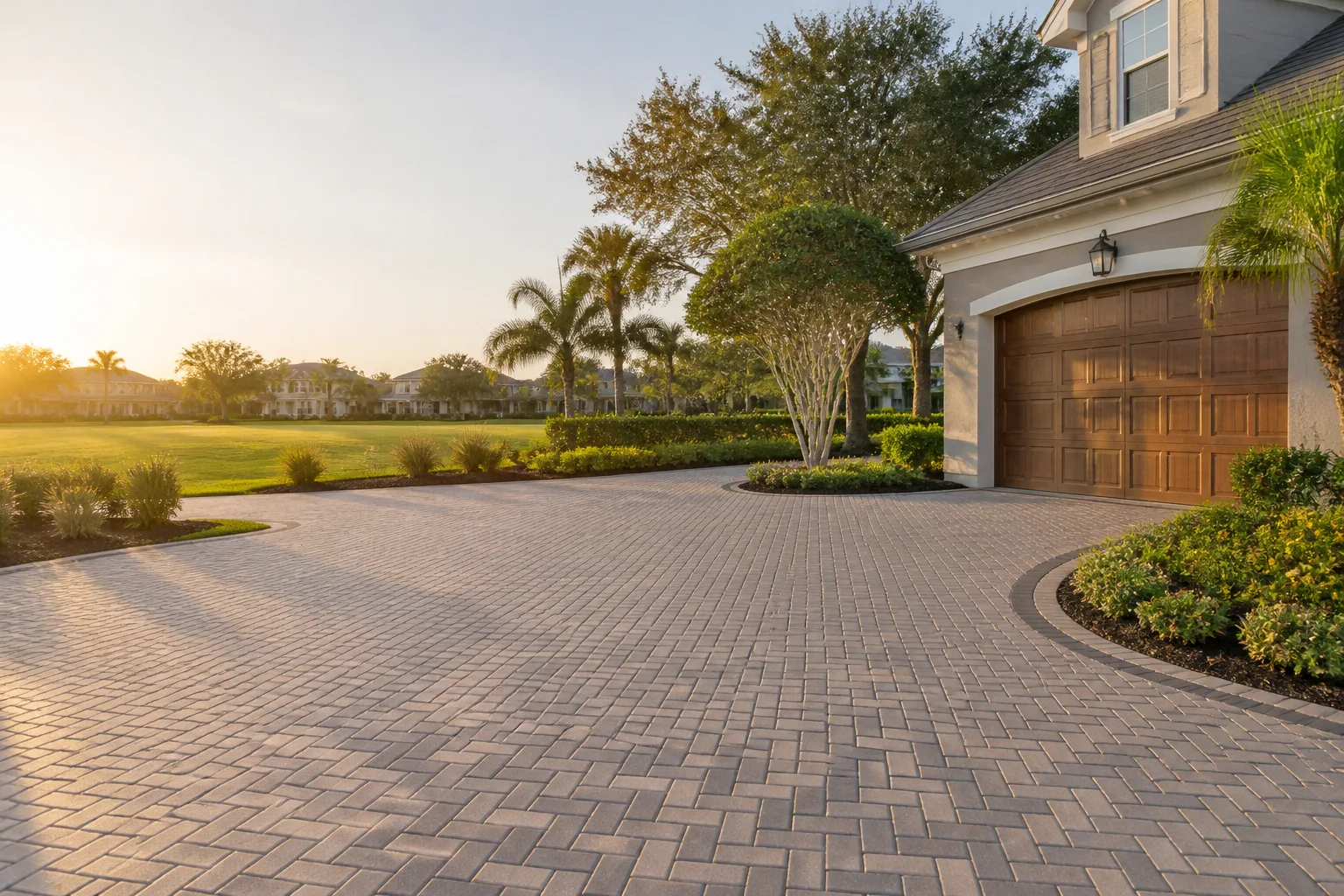
Power-washing your pavers every spring feels productive. It’s also one of the fastest ways to blast out the polymeric sand that holds everything in place. Maintenance done wrong is sometimes worse than no maintenance at all. In our experience across Garden Grove, the driveways that still look sharp at year fifteen get three focused visits a year, not a single annual scrub-down. The ones that need full replacement by year eight usually got pressure-washed hard, sealed at the wrong time, and left to sit through two winters with a loose edge restraint nobody noticed. This guide lays out a month-by-month routine built around Southern California’s dry summers and winter rains, not the freeze-thaw cycle most paver guides assume.
Quick Answer
A paver driveway in Garden Grove needs three real maintenance visits a year: a spring deep-clean and sand check, a mid-summer joint top-off and spot weed pull, and a fall edge-restraint and drainage inspection before the rains. Sealing is optional and climate-dependent, not annual. Between those visits, a stiff broom and a hose handle 90% of what you’ll see.
Styles & brands we work with
- Kitchen remodeling
- Bathroom remodeling
- Home additions & ADU
- Roofing
- Windows & doors
- Driveway & pavers
- Fence
Table of Contents
- Why Southern California Pavers Need a Different Schedule
- The Month-by-Month Paver Calendar for Garden Grove
- Spring: The Deep-Clean That Doesn’t Destroy Your Joints
- Reapplying Polymeric Sand the Right Way
- When to Seal and When Sealing Will Hurt You
- Fall Edge Restraint Checks Before Winter Rains
- What You Can Maintain Yourself vs. What Warrants a Call
- What Paver Maintenance and Repair Costs in Garden Grove
Why Southern California Pavers Need a Different Schedule
Most paver maintenance advice online was written for climates with hard freezes and heaving frost. Garden Grove doesn’t have that problem. What we have is a long dry season where polymeric sand dries out and cracks, followed by concentrated winter rains that find every one of those cracks. The soil under a Garden Grove driveway also tends to be clay-heavy in pockets, which means water that gets into the base and can’t drain will swell the ground and lift pavers seasonally.
That changes the calendar. In the Northeast, fall is about preparing for freeze damage. Here, fall is about making sure water leaves the driveway before the first real storm. Summer isn’t a rest period either: UV exposure on unsealed pavers in inland Orange County fades color faster than most homeowners expect, and the dry months are when weeds push through open joints.
Our crews have up to 28 years of experience working with Belgard and Techo-Bloc hardscape systems in this climate, and the pattern is consistent. A Garden Grove driveway maintained on a SoCal schedule outlasts one maintained on a generic national schedule by years. For a deeper look at how these systems get built in the first place, see our Driveway & Pavers in Garden Grove page.
The Month-by-Month Paver Calendar for Garden Grove
Here’s the routine we recommend to homeowners in Garden Grove, Westminster, and the surrounding neighborhoods. Three substantial visits, a handful of quick checks, and no power-washing marathon.
- February – Pre-rain inspection. Walk the perimeter. Look for pavers that rock underfoot and any gap at the edge restraint. Clear debris from the lowest corner where water exits.
- March – Spring deep-clean. Stiff broom, gentle hose rinse, spot weed removal. Check joint sand depth with a screwdriver tip.
- April – Polymeric sand top-off. Reapply only in joints that are more than about a quarter-inch low. Full re-sanding on a stable driveway usually isn’t needed more than every two to three years in this climate.
- May – Seal decision point. Evaluate the three sealing conditions (covered below). If they don’t all line up, skip it this year.
- June through August – Light upkeep. Pull weeds while they’re small, sweep off debris, don’t power-wash. Watch the inland-facing edges for color fade.
- September – Efflorescence check. White chalky haze on the surface means moisture is moving through the pavers. Note it, don’t scrub it yet.
- October – Edge restraint and drainage inspection. This is the big one before winter. See the fall section below.
- November through January – Rain-season watch. After each storm, clear the low corner and check for standing water within 24 hours.
Two visits do the heavy lifting, one is a check. That’s the whole thesis. The homeowners who call us in year eight for full replacement are almost always the ones who did the spring power-wash and nothing else.
Spring: The Deep-Clean That Doesn’t Destroy Your Joints
Power-washing at 3,000 PSI on a Garden Grove driveway will strip polymeric sand out of the joints in minutes. It’ll also pit the surface of softer pavers and drive water into the base where it doesn’t belong. A deep-clean doesn’t require that kind of force.
What actually works:
- A stiff-bristle push broom for the bulk of the grit and dry debris.
- A hose on a standard nozzle (not a pressure washer) for rinsing.
- Mild dish soap and a soft brush for any oil spots, worked in small circles and rinsed well.
- A plastic scraper for weeds in the joints, never a metal one.
- An afternoon of patience. Fast and aggressive is what damages pavers, not cleaning itself.
If the paver surface is genuinely stained – rust from a metal chair, hard-water deposits, tire marks that have set in – that’s a different job with different chemistry, and it’s worth a call before you reach for a jug of muriatic acid from the hardware store. Acid on certain pavers will etch the finish permanently. In Garden Grove, we see this most often on driveways near the older west side where pavers from the 90s are still in place and no longer have a protective finish.
Reapplying Polymeric Sand the Right Way
Polymeric sand needs to be re-topped every two to three years in the Garden Grove climate, not every year. The exception is the first year after installation, when settlement in the joints is normal and a light top-off at six months is expected.
Here’s how to do it without disturbing stable sections:
- Identify the low joints. Use a screwdriver tip to probe a handful of spots. Any joint more than a quarter-inch below the paver surface gets sand.
- Wait for the right conditions. Dry pavers, dry joints, air temperature between 50 and 80 degrees, and no rain in the forecast for 24 hours.
- Apply sand in those areas only. Pour, sweep across the top to fill the joint, and sweep off the excess. Do not spread sand across the whole driveway if only 20% needs it.
- Mist gently to activate. A light misting triggers the polymer binder. Do not flood the joint.
- Stay off it for 24 hours. No driving on the surface for at least a full day.
Skipping the low-joint check and dumping sand across the entire driveway every spring is one of the most common mistakes we see. It wastes material, it clogs the drainage at the edges, and it doesn’t fix the real problem if the base underneath has shifted. If a whole section is low, that’s a base issue and no amount of sand will solve it.
When to Seal and When Sealing Will Hurt You
Sealing is the most misunderstood step in the whole routine. It isn’t annual. It isn’t always helpful. In fact, sealing a damp paver surface traps moisture inside, which leads to efflorescence, spalling, and in a bad case, failure of the paver face itself.
Three conditions all need to line up before sealing will actually help:
- The pavers are fully dry. No rain for the previous 48 hours, no morning dew still sitting on the surface, and no sign of moisture below. If you have any doubt, wait.
- The joint sand is fresh and full. Sealing over low joints doesn’t protect anything – it just makes the missing sand permanent.
- The pavers have lost color or are showing UV fade. If the surface still looks rich and even, sealing adds no benefit and might just trap moisture if any part of the base is wet.
In Garden Grove, the honest answer for most driveways is that sealing every three to five years, not annually, is the right cadence. Older pavers with no factory finish may want it closer to the three-year mark. Newer Belgard or Techo-Bloc products often come with integral sealers or factory-applied finishes that make homeowner sealing unnecessary for the first several years. If you’re not sure which type you have, look up the product by name – both brands publish care guidance specific to their lines, and both make material you can verify rather than mystery product from an unmarked jug.
One more thing about sealing: it’s an exterior finish, not a waterproofing system. If water isn’t draining off the driveway already, sealing won’t fix it and might make it worse. Fix the drainage first. Always.
Fall Edge Restraint Checks Before Winter Rains
The edge restraint is the concrete or plastic curb that holds the pavers in place along the sides of the driveway. When it’s intact, the whole system stays locked. When it starts to move, the pavers can shift a half-inch in a single rainy season, and by the time you notice, a full-width spread is already happening.
Here’s the fall check, and it takes fifteen minutes:
- Walk the full perimeter of the driveway, paying attention to the sides and the transition at the garage apron.
- Look for any gap between the restraint and the pavers, or any restraint section that’s visibly tilted or separated.
- Press on each paver along the edge – it should be firm. Rocking means the restraint has moved.
- Check the low corner. Water should drain off, not pool. Pooling for more than a few hours after rain is a warning sign.
- Note any spots that show movement, and take a photo. It’s much easier to show a photo to a contractor than to describe the issue in words.
Minor edge movement is fixable in a single afternoon with the right materials. Left through a Garden Grove winter, that moving edge becomes the entry point for water into the base, and by spring the driveway might need four to six square feet of pavers reset – or worse, if the base under that section is compromised. Fall is the right time to catch it because once the rains come, the fix window closes.
If your paver work ties into a fence line or a gate, that perimeter matters too. Our Fence Installation in Garden Grove page covers how those transitions should be built so the paver edge and the fence post don’t fight each other.
What You Can Maintain Yourself vs. What Warrants a Call
Some of this is genuinely homeowner work. Some of it isn’t, and pushing too far is how a small problem becomes a full replacement. Here’s the split:
Fair game for the homeowner
- Sweeping and gentle rinsing.
- Spot weed removal in joints.
- Reapplying polymeric sand in low joints (with the correct material and conditions).
- Fall and spring walk-around inspections with a photo log.
- Clearing debris from the low corner after storms.
Time to call a professional
- Pavers that rock underfoot across more than a small area.
- Visible edge restraint movement, separation, or tilt.
- Standing water that doesn’t clear within 24 hours.
- Efflorescence that returns after cleaning.
- Any crack in the base or noticeable sinking in a section.
- Staining that won’t come out with mild soap.
If you’re planning a bigger change – a widened driveway, a new paver apron, or a garage extension – see our Home Additions & ADU in Garden Grove page. Those jobs change the grading and drainage, and the paver work needs to be planned around them, not after. For the broader picture of what Barrett & Sons does in Garden Grove, the Barrett & Sons Construction Garden Grove home page is the place to start.
What Paver Maintenance and Repair Costs in Garden Grove
Pricing here reflects the Garden Grove market and surrounding Orange County neighborhoods, and it’s meaningfully different from national averages you’ll find online. The climate pushes some costs down (no freeze-thaw repairs) and some up (specialty polymeric sand that holds in dry UV conditions).
- Spring deep-clean (professional, no sanding): $150 to $300 for a typical two-car driveway.
- Targeted polymeric sand top-off (60 to 100 square feet of low joints): $200 to $400.
- Full re-sanding (whole driveway): $400 to $700 depending on square footage.
- Sealing (full driveway): $500 to $900, or $850 to $1,400 for larger or stained surfaces.
- Spot reset of shifting pavers (up to 20 square feet): $300 to $600.
- Edge restraint repair (per linear foot): $15 to $35.
- Full section replacement (base and pavers, 100 square feet): $800 to $1,600.
These are honest ranges, not the lowball quote you’ll get on the phone from a national outfit. If a written estimate comes in under the low end, check what’s not in it. Reputable contractors pull the permits when a repair crosses into structural territory, and they put the price in writing before any work starts. Ask anyone in Garden Grove – the contractors still around after a decade are the ones who put it all on paper. Any price change should arrive as a written change order, never as a surprise on the final invoice.
Common Mistakes to Avoid
- Spring power-washing at full pressure. It strips polymeric sand, pits softer pavers, and drives water into base material. On a Garden Grove driveway it’s the number one reason re-sanding becomes a yearly chore instead of a three-year one.
- Sealing every year. Sealing over damp pavers traps moisture and leads to efflorescence and spalling. Sealing is climate-decision work, not an annual checkbox.
- Re-sanding the whole driveway every spring. Stable joints don’t need it. Target the low joints, save the material, and don’t clog the edge drainage.
- Ignoring a little edge movement until spring. A half-inch of restraint movement in October is a full-width spread by March. The fall check exists for exactly this reason.
- Using muriatic acid on unsealed pavers. It etches the finish on some paver lines and can’t be undone. Mild soap first, always.
- Treating standing water as a minor annoyance. Pooling water in a Garden Grove driveway is a base problem, not a surface problem, and it gets worse every winter it’s ignored.
- Hiring whoever knocks on the door. Paver maintenance and reset work attracts a lot of one-day operators. Ask for the license number, ask for the written scope, ask to see it before work starts.
See the difference
 Before
 After
 Before
 After
 Before
 After
When to Call a Professional
Call us when the pavers rock, when the edge restraint moves, when water stands for more than a day, or when efflorescence returns after you’ve cleaned it once. Call us when the driveway is past the point where polymeric sand and a stiff broom will help. Call us before you seal, if you’re not sure the pavers are dry enough – that’s a two-minute question and it’s free. We pull permits on any repair that crosses into structural work, we write the scope in writing, and every completed job is backed by the 90-Day Done Right Promise. Our crews have up to 28 years of experience with the hardscape brands that hold up in this climate. Barrett & Sons Construction Garden Grove offers free estimates in Garden Grove – call (833) 703-5196.
Frequently Asked Questions
Every two to three years for a full re-sand, with targeted top-offs in between. Southern California’s dry season pulls moisture out of polymeric sand faster than a Northeast climate does, but the trade-off is that you don’t get the freeze-thaw heaving that destroys joints annually elsewhere. Watch the joints, not the calendar. If they’re more than a quarter-inch low, they need material. If not, they don’t.
No. A stiff broom and a hose handle almost all the cleaning a Garden Grove paver driveway needs. Power-washing at high pressure strips polymeric sand, pits softer pavers, and drives water into the base where it does damage. If you need real surface cleaning – oil stains, rust, hard water deposits – it should be done by someone who knows what the paver surface can take, at low pressure with the right cleaning chemistry. Call (833) 703-5196 for a free estimate on cleaning if you’re uncertain.
A spring deep-clean runs $150 to $300, a targeted polymeric sand top-off runs $200 to $400, and full sealing runs $500 to $900 for a typical driveway. Edge restraint repair is $15 to $35 per linear foot. Spot resets of shifting pavers start around $300. These are market ranges for Garden Grove; the exact number depends on square footage and what condition the base is in. Call (833) 703-5196 for a free written estimate.
Late spring or early summer, when the dry season is reliably here and there’s no rain in the 48-hour forecast. Garden Grove’s rainy window runs from roughly November through March, and sealing during or right around that window is the single biggest reason homeowner-applied sealer fails. Temperature should be 50 to 80 degrees, the pavers should be fully dry, and the joints should be freshly filled.
You can, if the joints are dry and the weather cooperates and you’re only filling low areas – not the whole driveway. Buy the correct polymeric sand (not regular joint sand), apply only to the low joints, mist gently, and stay off for 24 hours. If more than about a quarter of the driveway needs it, or if any section is rocking, that points to a base issue and it’s worth a professional look. Call (833) 703-5196 for a free estimate to have it checked.
That’s efflorescence – mineral salts migrating to the surface as moisture moves through the pavers. It’s not damage, but it’s a signal that water is getting into the base and needs somewhere to go. Scrubbing it off without solving the moisture source means it’ll come right back. In Garden Grove we see this most often on driveways with poor drainage at the low corner or with a compromised edge restraint letting water in from the side. Call (833) 703-5196 for a free estimate; the fix is usually smaller than it looks.
The Bottom Line
Three focused visits a year – spring clean, summer sand top-off, fall edge and drainage check – keep a Garden Grove paver driveway looking right for a decade or more. A power-wash every spring and nothing else is how you replace the same driveway at year eight. Seal only when the three conditions line up. Watch the edges before winter, not after. Do the small work yourself, call in the pros when the pavers rock, water stands, or the edge moves. The maintenance is manageable. The routine is the whole thing.
If you’d like an honest read on your driveway before winter, Barrett & Sons Construction Garden Grove offers free estimates. Call (833) 703-5196 and we’ll come out, look at the edges, check the joints, and tell you what actually needs doing – and what doesn’t.
Written by the team at Barrett & Sons Construction Garden Grove.