Last updated November 18, 2026


Free written scope consultation - allowances, timeline, and change-order rules on paper before a single trade is scheduled
Driveway & Pavers Troubleshooting: Common Problems and How to Fix Them
If you’ve already re-sanded a sunken paver section twice and it keeps sinking, you haven’t fixed the problem – you’ve decorated it. The real failure is almost always happening below the sand layer, in the base that nobody sees once the job is done. In our experience across Garden Grove, roughly nine out of ten paver complaints that look like surface issues trace back to a base compaction or drainage failure. This guide shows you how to diagnose the root cause before you spend a dime on a fix that won’t last, and how to tell the repairs you can handle in an afternoon from the ones that need a permit and a dug-out base.
Quick Answer
To fix sinking, uneven driveway pavers, stop re-sanding and find the cause first. Test the base with a garden hose and a flashlight: if water puddles against the edge and the pavers rock when you step on them, the base has lost compaction or the edge restraint has failed, and only lifting the field and re-compacting the base will hold. If the pavers are solid and water drains away, you’re looking at a surface settling problem that a fresh joint sand top-up can solve.
Styles & brands we work with
- Kitchen remodeling
- Bathroom remodeling
- Home additions & ADU
- Roofing
- Windows & doors
- Driveway & pavers
- Fence
Table of Contents
- Surface Settling vs. Base Compaction Failure
- The Garden Hose and Flashlight Diagnosis
- Why Edge Restraint Failure Starts Most Problems
- Efflorescence vs. Hard-Water Staining
- Is That Cracked Paver Cosmetic or Structural?
- Afternoon Fixes vs. Permit-and-Redig Repairs
- What Garden Grove Weather Does to Pavers
- The Seasonal Maintenance That Prevents Most Failures
Surface Settling vs. Base Compaction Failure
Nearly every homeowner who calls us about uneven pavers describes the same thing: a dip in the driveway, a little sand washed out, a section that feels soft. Those are symptoms. The question is whether the soil under the pavers has moved or whether the bedding layer has simply shifted.
Surface settling is shallow. It shows up as a slight dip within a foot or two of an edge, and the pavers themselves stay tight together. Base compaction failure is deeper. The pavers spread apart, joints widen, and the dip covers a wider area, often where a heavy vehicle regularly parks or where water runs off a downspout. In Garden Grove, we see base failures most often on driveways poured over old fill soil or where the original install never compacted in lifts.
Here’s the distinction that matters:
- Surface settling: small dip, tight joints, no rocking pavers, sand loss limited to one area. Usually fixable with joint sand and light re-leveling.
- Base failure: widened joints, rocking pavers, spreading at the edges, and dips that return after re-sanding. Requires lifting the field and re-compacting.
- Drainage failure: standing water, soft spots, and sand washing out seasonally. Requires re-grading or adding drainage before any surface fix holds.
If you re-sand and the dip returns within a season, you’re not looking at settling. You’re looking at a base that has to be opened up. Our Driveway & Pavers in Garden Grove team diagnoses this exact question on almost every estimate we run.
The Garden Hose and Flashlight Diagnosis
You don’t need special tools to figure out what’s happening under your pavers. A garden hose and a flashlight will tell you most of what a contractor sees on the first visit. Here’s the step-by-step we walk homeowners through on the phone:
- Wet the problem area. Run the hose over the dip and the pavers around it for a full minute. Watch where the water goes – and where it doesn’t.
- Watch the edges. If water pools against the edge restraint and sits there, drainage is backing up. If it disappears fast under the pavers, the sand layer or base is washing out.
- Shine the flashlight low across the surface. A low-angle light shows the high and low spots far better than daylight.
- Step on the suspect pavers. Rocking or a hollow sound means the bedding layer has lost contact with the base underneath.
- Check the joints. Wide, sand-starved joints around a dip point to ongoing movement, not one-time settling.
- Look uphill and upslope. Follow the grading. If the driveway slopes toward the house or a low corner, water is pooling somewhere it shouldn’t.
Do this test after a dry stretch, not right after rain, so you can see how water actually behaves. A driveway that fails the hose test twice in the same spot needs the base opened, not another layer of sand on top.
Why Edge Restraint Failure Starts Most Problems
Here’s the part most homeowners never hear: the edge restraint is the single most overlooked starting point of spreading and shifting paver patterns. The pavers on a driveway lock together through interlock, and the perimeter holds that field tight. When the edge fails, the whole field starts to walk.
In our experience, edge restraint fails for three reasons:
- Spiked or glued restraint coming loose from freeze-thaw movement or soil settling under the curb.
- Concrete edge poured too thin – a common shortcut that cracks within a few years.
- No restraint at all on older installs where the pavers just run into soil.
Walk the perimeter of your driveway. Look for pavers creeping past the edge line, gaps opening between pavers and the curb, or a concrete edge that has cracked and tipped. If you see those, your interlock is gone, and re-sanding the middle won’t stop the spread. The fix is to reset the edge, re-compact the base under the edge course, and re-secure the restraint before adding joint sand.
This is also the exact failure we flag when a homeowner asks about the driveway as part of a whole-property plan. A spreading driveway usually means the fence line and drainage grading need a look too, which is why we like to check it all on one visit rather than three.
Efflorescence vs. Hard-Water Staining: Why the Wrong Cleaner Makes It Worse
Not all white haze on pavers is the same, and cleaning the wrong type makes it permanently worse. Efflorescence is a mineral bloom pushed out of the concrete as moisture moves through it – a natural process that fades and can be removed with a mild acidic cleaner. Hard-water staining is calcium and mineral deposits left behind by Garden Grove’s water when it evaporates, and it needs a different approach entirely.
How to tell them apart:
- Efflorescence: powdery, sometimes fuzzy-looking, brushes away partially, and returns after rain. Usually worse on new pavers or after wet seasons.
- Hard-water staining: chalky, tightly bonded, doesn’t brush off, and concentrates where sprinklers hit or water stands. Very common on driveways with overhead irrigation.
Efflorescence responds to an acidic paver cleaner diluted per the label. Hard-water deposits respond to a chelating or scale-removing cleaner. Use the wrong one and you can etch the paver surface or drive the mineral deeper. Never use muriatic acid full-strength, and never pressure-wash pavers above about 1,200 psi – you’ll strip the surface and create the rough texture that traps stains next time.
One detail specific to our area: Garden Grove water is moderately hard, and irrigation overspray on the driveway is the number one cause of staining we see on drives east of Beach Boulevard. That’s a fertilizer and sprinkler problem, not a pavers problem.
Is That Cracked Paver Cosmetic or Structural?
A single cracked paver is often cosmetic – a dropped tool, a hard winter, an older paver with an air pocket. But a crack that runs in a line across several pavers, or that keeps reappearing after you replace the paver, is telling you something is moving underneath.
Here’s how to sort it out:
- One isolated crack, no other symptoms: replace the paver, inspect the base while it’s out, and move on.
- Cracks running in a line: a tree root, a hinge point in the base, or a soil movement line. Replacing pavers won’t stop it.
- Cracks near a tree: root intrusion is likely. Root barriers or a modified base layout are the real fix.
- Cracks that return within a season: the base under that spot is failing, and the paver is just where the stress shows.
When a crack appears next to a mature tree, we look at the species and the distance to the trunk. Ficus and eucalyptus roots travel farther than most homeowners expect, and they push pavers up while other sections sink. This is one reason we always ask about planting history on a Garden Grove driveway estimate – a repair that ignores a root system is a repair you’ll be redoing.
Afternoon Fixes vs. Permit-and-Redig Repairs
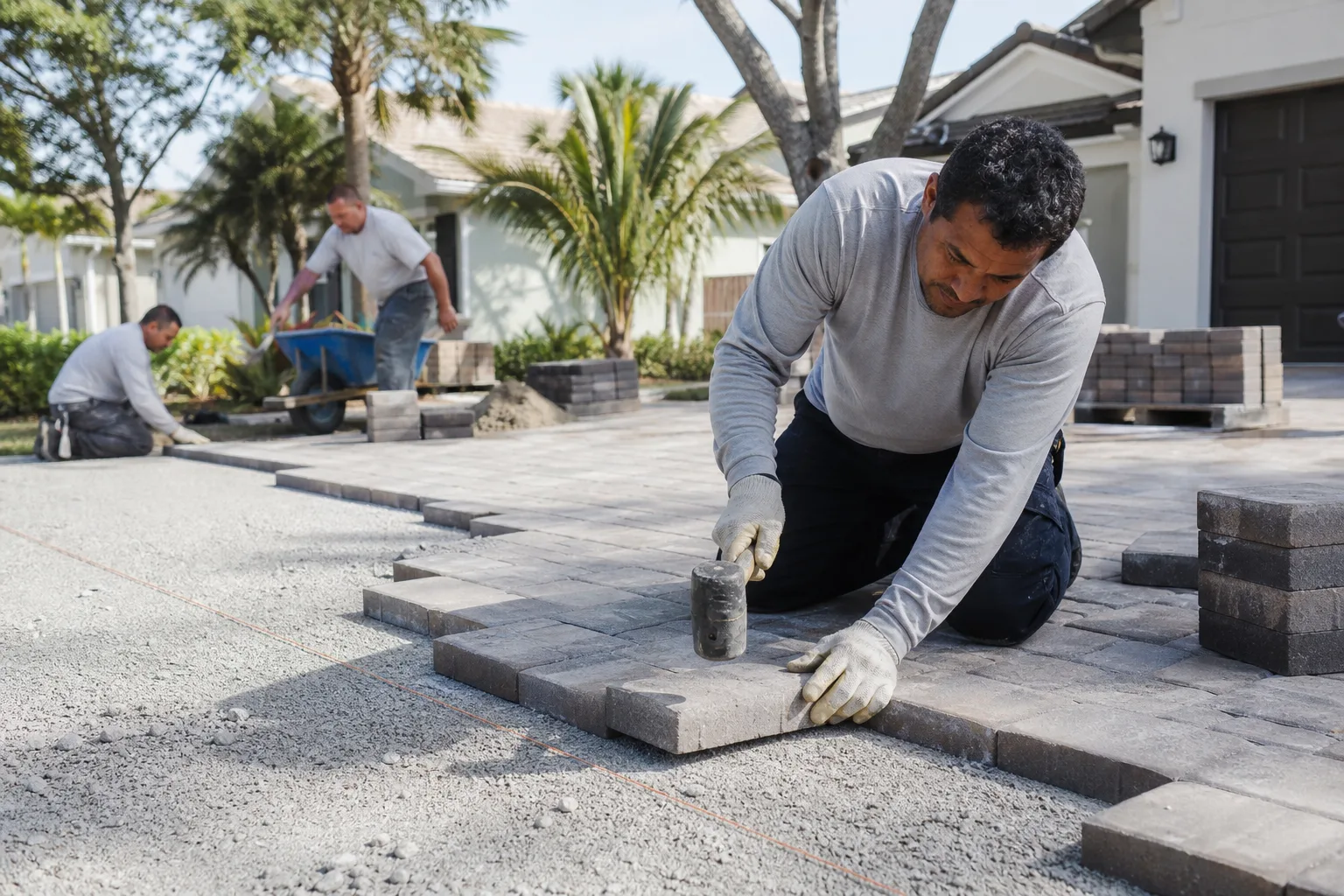
Plenty of paver problems resolve in an afternoon. Others need the base opened, the compaction redone, and sometimes a permit pulled for the regrade. Here’s the honest line.
Homeowner-doable in an afternoon:
- Replacing one cracked paver with a matching unit.
- Refilling joint sand in a dry, stable field.
- Cleaning efflorescence or hard-water staining with the correct cleaner.
- Re-securing a loose edge restraint that has just come loose.
Needs a pro, a dug-out base, or a permit:
- Any repair where the hose test shows water backing up or disappearing under the pavers.
- Rocking pavers across more than a few square feet.
- A spreading edge pattern with widened joints.
- Cracks running in a line across multiple pavers.
- Any change that alters drainage on the lot, which in Garden Grove means coordinating with the city on grade and stormwater requirements.
We pull permits and pass inspections on every eligible job, because the last contractor most homeowners used told them permits were optional. The permit inspector works for you, not for us. That’s the part that keeps a regrade honest.
What Garden Grove Weather Does to Pavers
Garden Grove sits in a mild coastal climate – dry summers, wet winters, and marine layer that keeps moisture against the driveway longer than most homeowners expect. That pattern causes two specific failures we see over and over.
First, the wet-season dry-out cycle pushes efflorescence. Pavers that saw heavy winter rain bloom white mineral haze in spring. That’s normal and treatable, but it means annual cleaning is a real maintenance item here, not an optional one.
Second, the long dry summer causes soil to shrink, and the first heavy rain sends water under a poorly compacted base. We regularly see spring base failures on Garden Grove drives where the original install never compacted the soil in lifts, and the first wet winter tells the truth. Driveways shaded by the marine layer and mature trees are the most likely to show it.
The climate also shapes materials. On our Barrett & Sons Construction Garden Grove home page you can see how we handle hardscape grading, and on our Home Additions & ADU in Garden Grove projects we tie drainage into the new footprint so an addition doesn’t send roof water onto the driveway.
The Seasonal Maintenance That Prevents Most Failures
Most paver failures we’re called to fix would have been prevented with about two hours of maintenance a year. Here’s the simple schedule we give Garden Grove homeowners:
- Walk the perimeter in spring. Check for spreading pavers and loose edge restraint before the wet season.
- Top up joint sand every two to three years. Sand is the pavers’ shock absorber – don’t let joints run empty.
- Check the downspouts each fall. Water that runs under the driveway is the number one cause of base failure.
- Clean efflorescence and mineral stains each spring with the correct cleaner for the type.
- Flag any new crack with chalk and check it in six months. If it returns, call.
If your driveway passes those checks, you’re likely to get decades out of the pavers. If it fails the hose test or the edge check, you need a base repair now, not more sand. If you’re planning a fence or landscaping at the same time, our Fence Installation in Garden Grove team can coordinate so drainage and grading are handled together.
Common Mistakes to Avoid
- Re-sanding a sunken section without testing the base. The sand hides the problem for a season and returns the following spring, usually worse.
- Pressure-washing at high psi. Over 1,200 psi strips the surface and creates a texture that traps stains, so the pavers look dirty faster.
- Using muriatic acid full-strength on efflorescence. It etches pavers and can permanently discolor them; always dilute per the cleaner label.
- Ignoring the edge restraint. Most spreading patterns start at the edge and were visible for two years before the homeowner noticed.
- Treating a hard-water stain with an acidic cleaner. It can drive the mineral deeper and turn a removable stain into a permanent one.
- Replacing cracked pavers without checking for a tree root. The new paver cracks within a season because the root is still moving the base.
- Adding soil against the driveway to “level” it. It redirects water under the pavers and speeds up base failure.
See the difference
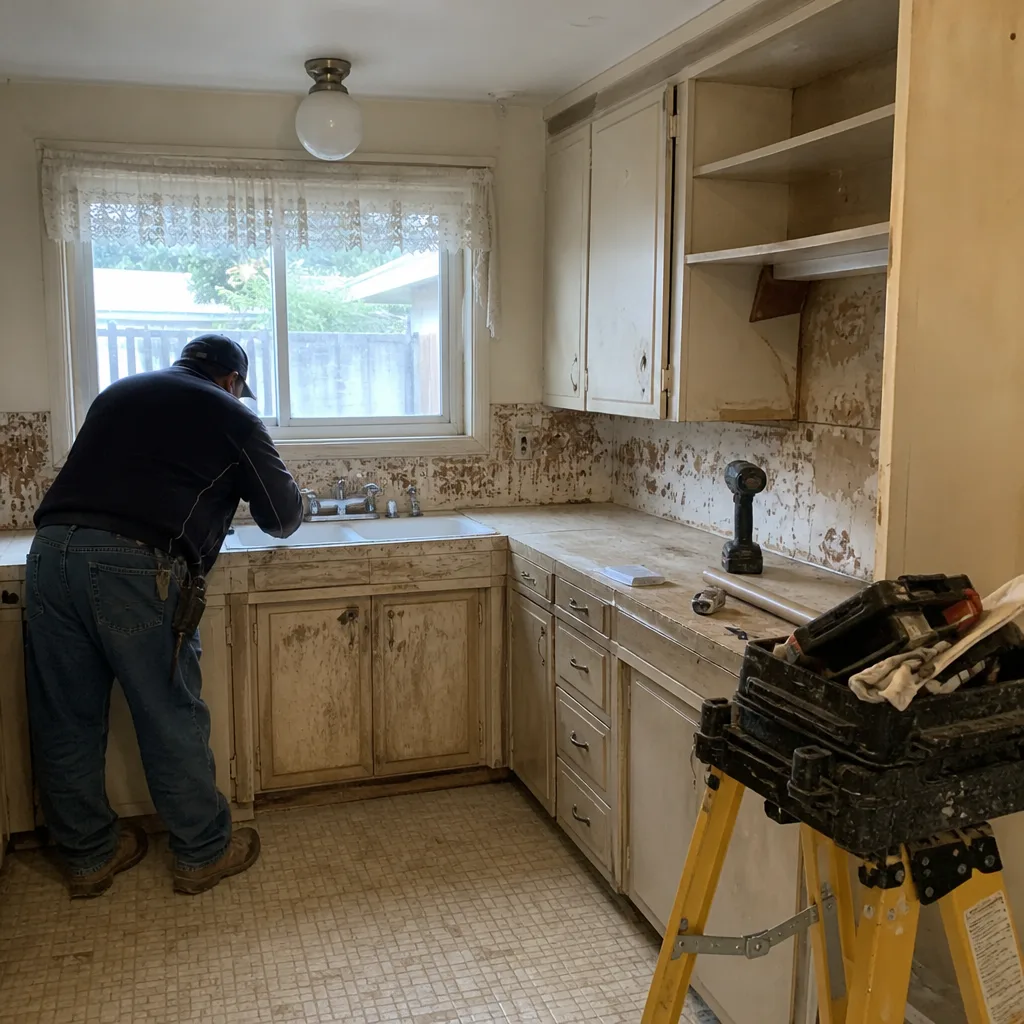 Before
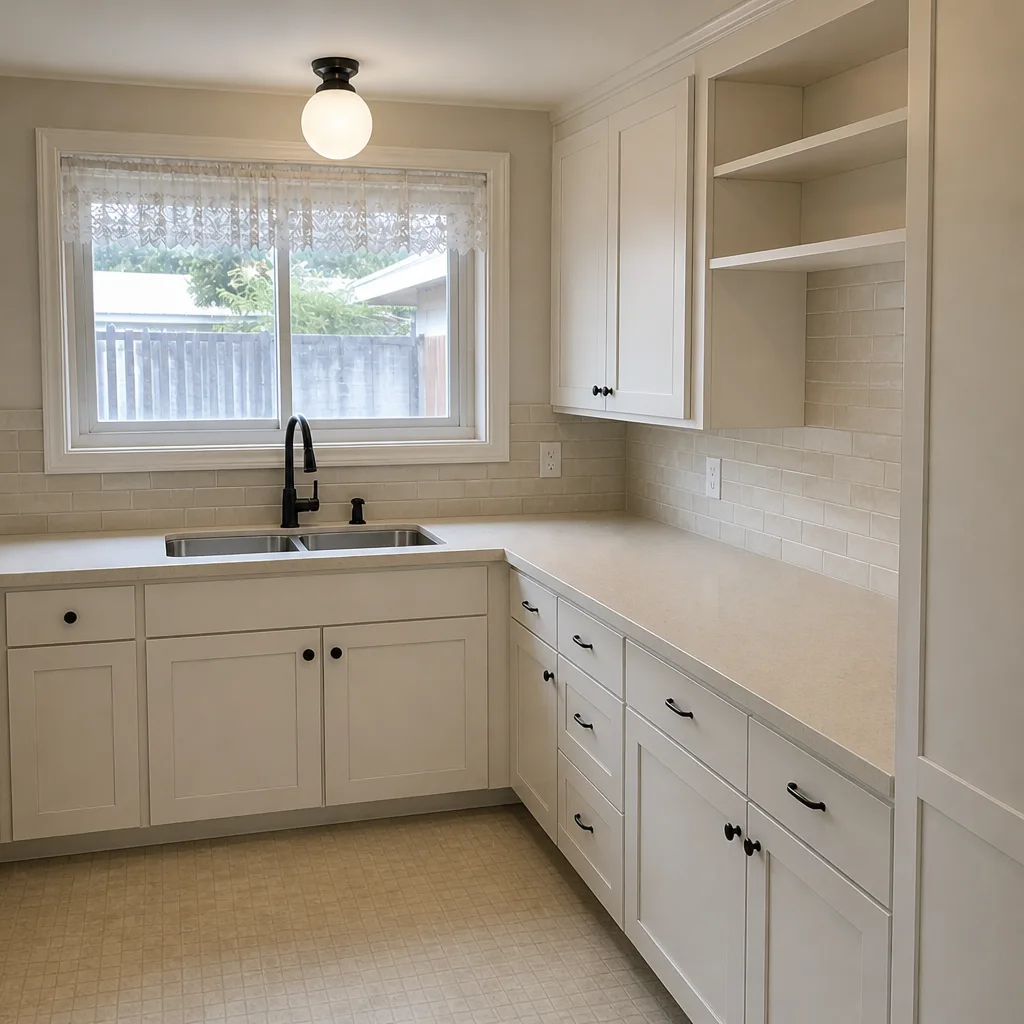 After
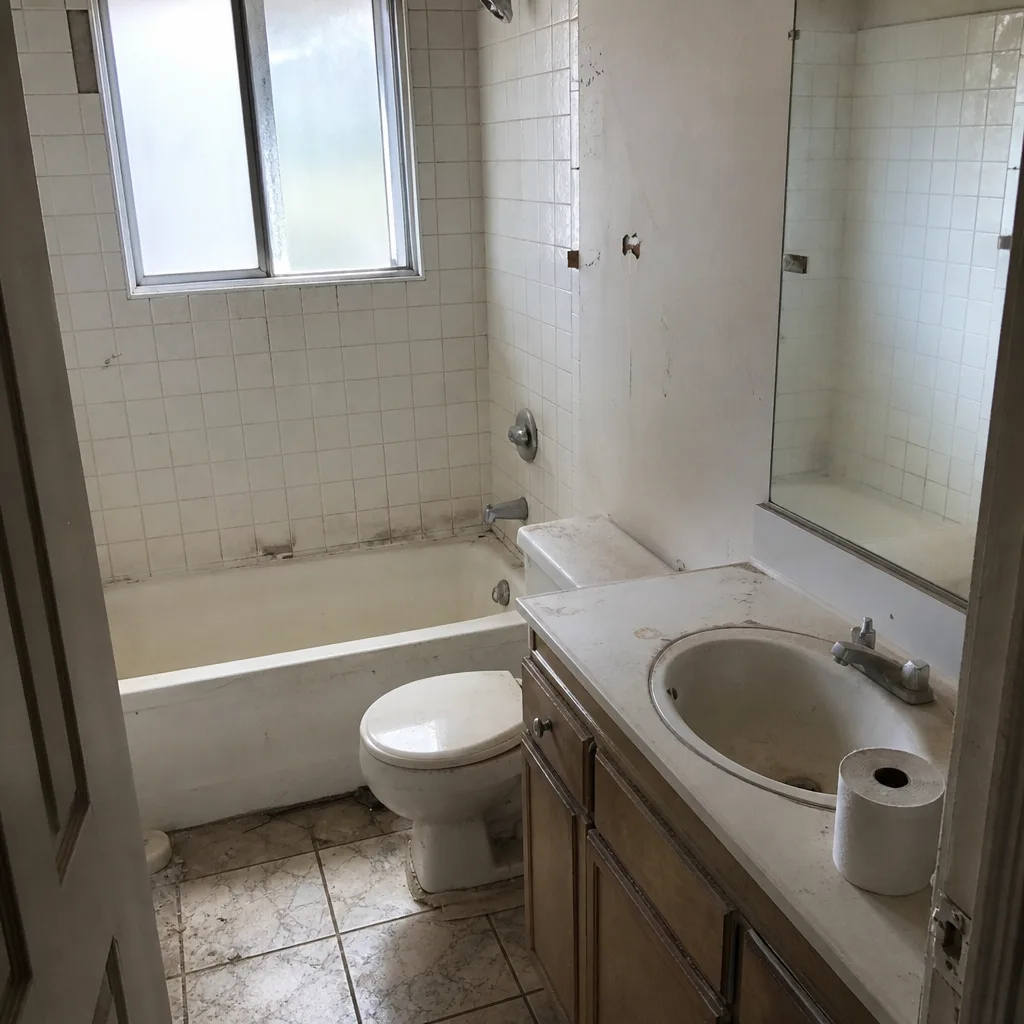 Before
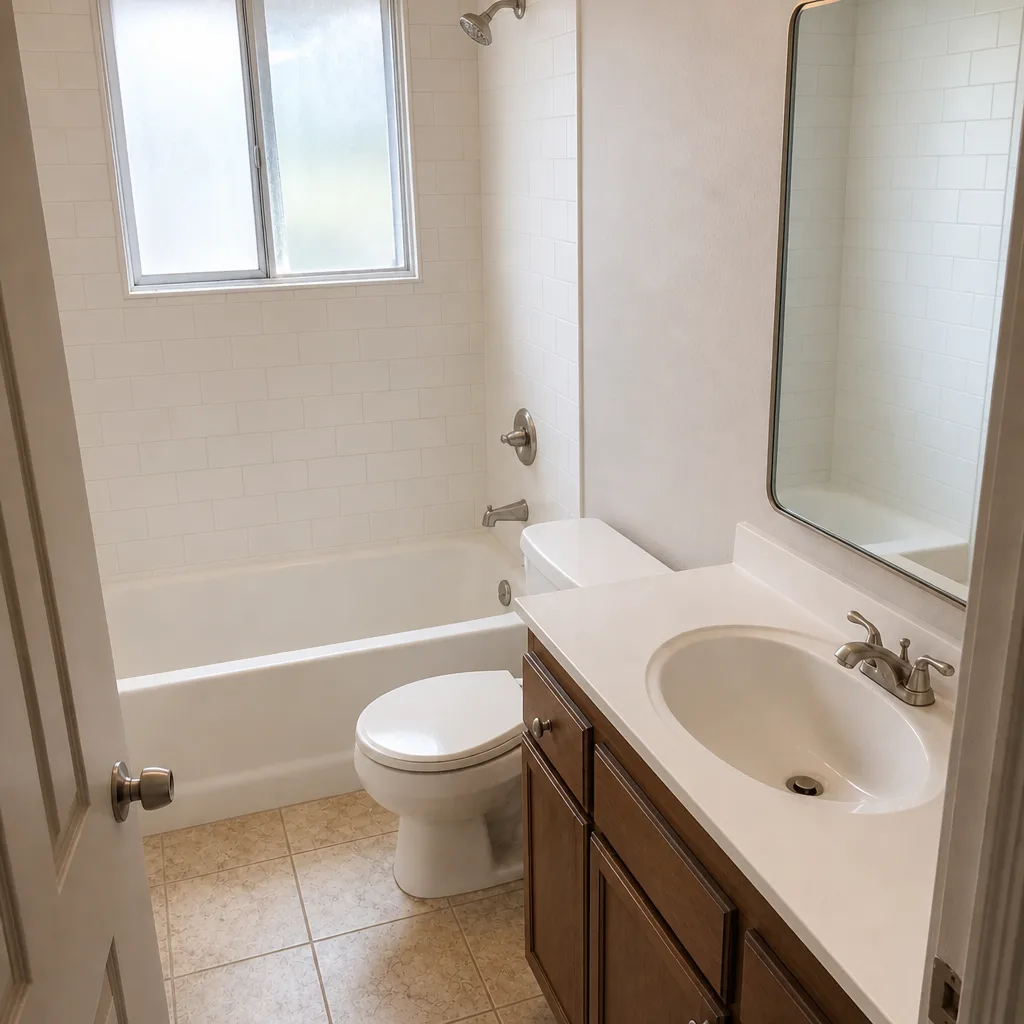 After
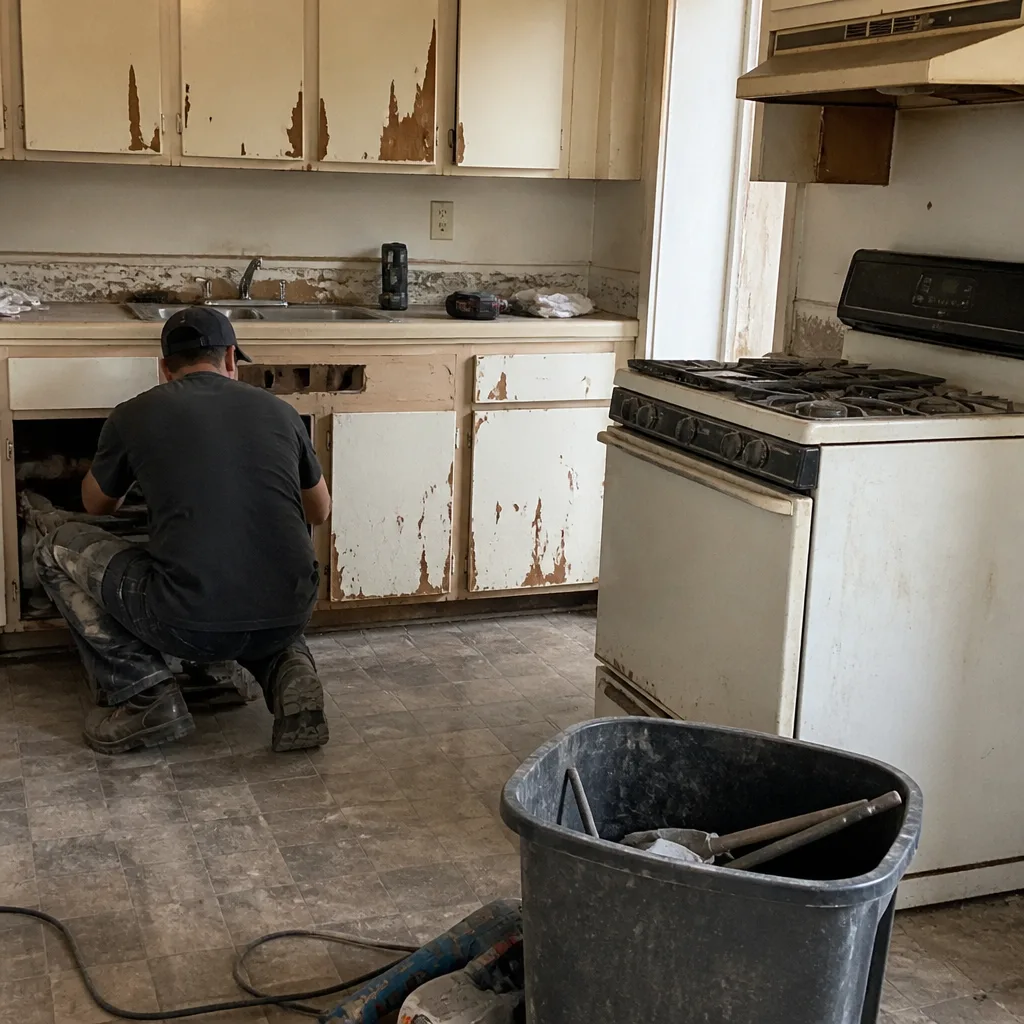 Before
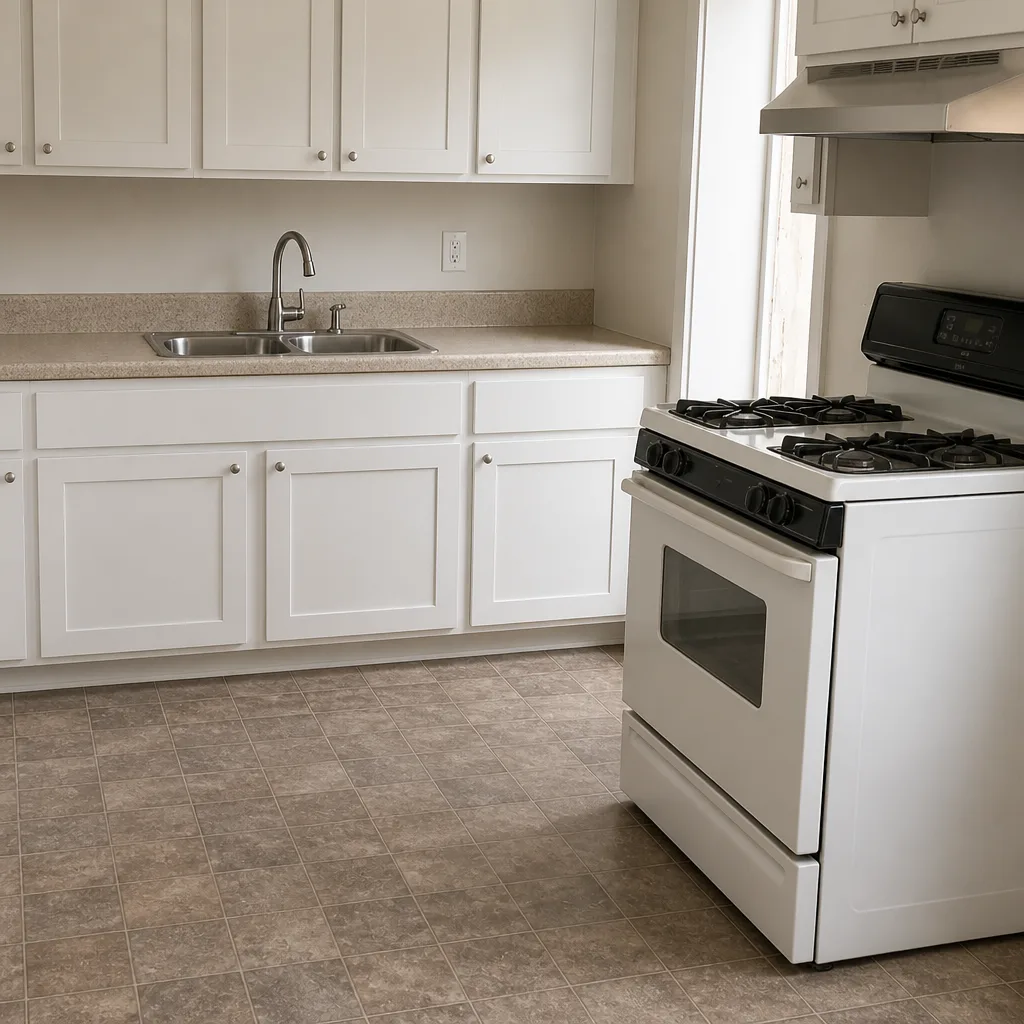 After
When to Call a Professional
Call us when the hose test shows water pooling or disappearing under the pavers, when rocking pavers cover more than a few square feet, when the edge has started to spread, or when a crack keeps returning after a replacement. Those are the four signs that the base has to be opened, re-compacted, and re-graded, and that’s work that needs a permit and a plan. Barrett & Sons Construction Garden Grove offers free estimates in Garden Grove – call (833) 703-5196 and a live person will answer, not a voicemail box. We’ll walk the driveway, run the hose test, and tell you honestly whether it’s an afternoon fix or a base repair. Our crew members have up to 28 years of experience, and every eligible job comes with permits pulled and a written 90-Day Done Right Promise.
Frequently Asked Questions
Most Garden Grove paver repairs run $300 to $900 for spot fixes like re-sanding, replacing a few cracked pavers, or re-securing a loose edge, while a base repair that involves lifting and re-compacting a section typically costs $1,200 to $3,500 depending on square footage. Call (833) 703-5196 for an exact quote – estimates are free.
Only if the hose test passes and the pavers are solid underfoot. If water backs up at the edge or the pavers rock, re-sanding just covers a base compaction failure, and the dip will return within a season. We’ll tell you which one you’re looking at on a free estimate.
Usually not. Standard homeowner policies cover sudden events like a burst pipe or a vehicle impact, but they generally exclude long-term settlement, soil movement, and lack of maintenance, which is what most base failures are. If a tree root caused the damage, some policies handle the removal portion – it’s worth a call to your agent before you commit to a repair.
For spot repairs and re-sanding, no. For any repair that changes the grading or drainage on the lot, you likely do, because Garden Grove requires it for stormwater and grade changes. We pull permits and pass inspections on every eligible job, so you don’t have to sort out the paperwork yourself.
First identify whether it’s efflorescence or hard-water staining, because the wrong cleaner makes each one worse. Efflorescence responds to a diluted acidic paver cleaner, hard-water deposits respond to a chelating cleaner, and neither responds to pressure-washing above about 1,200 psi. Call us if you’re not sure which you have – a photo is usually enough for us to tell.
A properly installed driveway on a well-compacted base typically goes 20 to 30 years before a base repair, and joint sand topped up every two to three years is what gets it there. If yours is failing within ten years, the original base or drainage was the problem, not the pavers.
The Bottom Line
Nine out of ten paver problems you’ll face in Garden Grove come down to three things: a base that wasn’t compacted, an edge that let the field spread, or drainage that sent water where it shouldn’t go. Run the hose test before you buy sand, check your edge restraint every spring, and match your cleaner to the stain. If the hose test fails or the pavers rock, that’s a base repair, not a surface fix. Barrett & Sons Construction Garden Grove has handled those repairs for homeowners across Garden Grove, and our technicians bring up to 28 years of experience to every job. Call (833) 703-5196 for your free estimate, and we’ll tell you exactly what’s happening under your driveway.
Written by the team at Barrett & Sons Construction Garden Grove.