Last updated November 18, 2026








Free written scope consultation - allowances, timeline, and change-order rules on paper before a single trade is scheduled
Bathroom Remodeling Maintenance Schedule: What to Do and When
Grout sealer applied before the grout has fully cured is one of the most common reasons a brand-new tile shower starts trapping moisture within a year. The remodel looked perfect on day one. The problem shows up months later, when the tile behind the wall is already damp. After a quarter century of bathroom remodels in Garden Grove, we’ve learned the truth: a remodel is only as good as what happens after the crew leaves. There’s a 90-day window right after installation where a handful of small checks prevent most long-term problems. This guide walks you through the 30/90/365 framework, the tissue test for your exhaust fan, fixture-specific care, and a one-page checklist you can tape inside a cabinet door.
Quick Answer
Inspect and re-caulk the tub-to-tile seams in the first 30 days, test your exhaust fan’s airflow at 30 and 90 days, and schedule annual checks of grout, caulk, drains, and shut-off valves every 365 days after the remodel. The first 30 days matter most because fresh grout and caulk are still curing and settling into a new moisture environment.
Styles & brands we work with
- Kitchen remodeling
- Bathroom remodeling
- Home additions & ADU
- Roofing
- Windows & doors
- Driveway & pavers
- Fence
Table of Contents
- The 30/90/365 Framework for a New Bathroom
- What to Inspect in the First 30 Days
- Testing That Your Exhaust Fan Actually Moves Moisture
- Maintaining Premium Fixtures vs. Builder-Grade
- Why Tub-to-Tile Caulk Is Maintenance, Not Warranty
- How Garden Grove Weather Affects Your Bathroom
- Your Annual Bathroom Maintenance Checklist
- A One-Page Seasonal Sheet for Your Cabinet Door
The 30/90/365 Framework for a New Bathroom
When we hand a homeowner the keys to a finished bathroom, the job isn’t over in our minds. It’s shifting into a new phase. The 30/90/365 framework gives you three checkpoints, each tied to how the materials in your bathroom actually behave over time.
30 days: This is the cure-and-settle window. Grout is hard but not fully done curing. Caulk at corners and seams is still flexing into its final shape against the tile, tub, and wall. Walking into a fresh shower daily without water pooling in a low corner takes a few weeks to reveal. Check grout joints for tiny cracks, look at the caulk line for any pull-away, and confirm water drains without standing.
90 days: By now, the room has been through a full seasonal shift in moisture and temperature. This is where you test the exhaust fan under real-world humidity. It’s also when you check that wall-mounted fixtures haven’t loosened from their anchors and that your shower valves are still delivering even pressure.
365 days: Year one tells you how the bathroom actually lives. Run a full annual inspection: grout condition, caulk, drain flow, shut-off valves under the sink, toilet supply line, and the exhaust fan’s blade and housing for dust buildup.
What separates this from a generic seasonal schedule is the timing. A new bathroom is settling. A five-year-old bathroom is aging. Both need the 365-day check, but the 30-day and 90-day checks apply hardest to the first year. If your remodel included a larger scope, like a bathroom added as part of a home addition or ADU in Garden Grove, budget more time at the 30-day mark. New construction means more settling.
What to Inspect in the First 30 Days
What should you check in a newly remodeled bathroom in the first month? Look at caulk seams, grout lines, water pooling, and fixture tightness. Do this with a flashlight around week three and again around week four. The point is to catch settling issues before they become moisture problems.
- Run your hands along the tub-to-tile seam. Any gap or pullback means the caulk isn’t fully bonded to the surface. Do not re-caulk over it. Remove the old bead, clean the seam, and reapply after the surface has fully dried (usually 24-48 hours).
- Check grout lines on the shower floor and walls. Hairline cracks in the corners are common as the framing settles. If a crack is wider than a credit card edge, it needs repacking and resealing.
- Look for water pooling. After a shower, water should drain to the drain without puddling low spots. A pool that sits for hours is a sign the shower floor pitch needs attention.
- Test the toilet valve and supply line. Run a paper towel around the base and the water supply connection. Any moisture means a loose fitting.
- Open and close the sink shut-off valves. They should turn smoothly. If they’re seized, that’s a valve issue worth noting while the remodel is still fresh.
- Inspect the caulk behind the toilet base. This is one of the most frequently missed seams in any new Garden Grove bathroom.
Write down what you find. A short note on the back of the contract is easier to act on than a memory six weeks later. If you’re working through a phased project, like a bathroom now and a kitchen next year, the same habit helps. Our Barrett & Sons Construction Garden Grove home page walks through how we hand over a finished job and what’s covered under the written guarantee.
Testing That Your Exhaust Fan Actually Moves Moisture
How do you know your exhaust fan is working? A fan that runs and makes noise isn’t proof. It has to actually pull moist air out of the room. The tissue test answers this in 30 seconds.
The tissue test: Turn the fan on. Hold a piece of toilet paper near the intake grille. If the fan pulls the tissue and holds it against the grille, you’re moving air. If the tissue falls, sags, or flaps loosely away from the grille, the fan isn’t pulling enough or is clogged.
How much air should move? A bathroom exhaust fan should pull roughly 1 CFM per square foot of bathroom floor. A 60-square-foot bathroom needs around 60 CFM. A 100-square-foot bathroom needs around 100 CFM. Most builder-grade fans installed in older Garden Grove homes before the last decade sit right around that 50-80 CFM mark, which is often borderline for a bathroom with a shower.
What to check when the tissue test fails:
- Dust on the blades and grille. A dust-clogged grille can drop airflow by 30% or more. Pull the cover and clean it in warm soapy water once a year.
- The duct run. A fan venting into the attic instead of outdoors will push moisture into the building. Check the exterior vent flap for movement while the fan is on.
- The blade spin. Listen for wobble or grinding. That means a failing motor, not just a dirty fan.
Run the fan for a minimum of 20 minutes after every shower. In a Garden Grove bathroom with an older fan and no timer, set a phone alarm. Humidity doesn’t clear itself.
Maintaining Premium Fixtures vs. Builder-Grade
Premium shower and sink fixtures are not maintenance-free. They’re built to be maintained, and the cleaning routine preserves them far longer than any builder-grade replacement.
For Kohler fixtures: Kohler finishes like Vibrant Brushed Nickel and Vibrant Titanium hold up to daily use, but abrasive cleaners dull them. Wipe down with a mild soap and warm water. Full chrome stays bright with a soft cloth and no acidic cleaners. If you have a Kohler showerhead with a rubber nozzle face, flex the nozzles weekly after a shower to break mineral deposits before they harden.
For Moen fixtures: Moen faucets generally use cartridge designs. A slow drip from the spout or a stiff handle usually points to a cartridge, not the whole valve body. Flush mineral buildup out of the cartridge once every two to three years, or sooner if you have hard water. In our experience across Garden Grove, water hardness runs moderate to high depending on the neighborhood. If your ice maker or coffee pot builds scale fast, your shower cartridge will too.
For Delta fixtures: Delta shower valves have replaceable cartridges under the handle cap. When you notice the hot and cold mixing poorly or the flow dropping in one mode, check the cartridge before calling for service. A new cartridge in a Delta valve typically restores flow, and the valve body itself usually lasts decades.
Builder-grade fixtures sit at the other end. The finishes are thinner, plastic internals are common, and the whole fixture often has to be replaced rather than rebuilt. That’s not a reason to replace them today. It’s a reason to know what you have. If your bathroom remodel went in with builder-grade fixtures, budget a full future replacement on a 10 to 15 year cycle, not just maintenance.
Why Tub-to-Tile Caulk Is Maintenance, Not Warranty
Should your contractor be responsible for caulk that pulls away from the tub three months after the job? No. Caulk at the tub-to-tile seam is a maintenance item, and here’s why. The seam between a tub and the tile wall is a moving joint. The tub flexes when it’s filled with water and when someone steps in. The tile wall doesn’t move. Caulk is the flexible buffer between them, and it wears out on a schedule driven by use and temperature.
In Garden Grove, the interior temperature of a bathroom swings 20 degrees or more between a cool morning and a warm afternoon, and much more in a bathroom with a west-facing window. Each swing expands and contracts the caulk line by a fraction of a millimeter. Multiply that across thousands of shower cycles a year and the bead will eventually pull away from the tub surface.
How often should you re-caulk? In our experience, most Garden Grove bathrooms need the tub-to-tile seam re-caulked every two to four years. Bathrooms with heavy daily use, kids, or a west-facing wall often need it every 18-24 months. A few rules keep it straightforward:
- Use 100% silicone caulk, not a latex-based caulk, at the wet seam.
- Never apply fresh caulk over a peeling bead. Cut it out and start clean with dry, ungreased surfaces.
- Give the new bead a full 24-48 hours to cure before the first shower.
- Check the bead every six months with the flashlight test.
If the caulk pulls away within a few weeks of a fresh install, that’s different. That’s an install check, not maintenance. The 90-Day Done Right Promise exists for exactly that reason. If something at the seam isn’t right, we come back and fix it, one call.
How Garden Grove Weather Affects Your Bathroom
Garden Grove doesn’t get the temperature extremes of Riverside, but the local climate still drives how a bathroom ages. Here’s what we watch for based on where in town a home sits.
Marine layer mornings and warm afternoons. The moisture off the coast moves inland most nights, especially west of Brookhurst and near the edges of Garden Grove Park. A bathroom on the west or northwest side of the house absorbs that cooler, damper air overnight. This strains caulk and grout differently than a home further inland where the air dries faster. If you’re in one of those cooler pockets, run the exhaust fan during the full 20 minutes after a shower, and consider adding a small dehumidifier to the cabinet if you notice condensation on the mirror after you leave.
Santa Ana wind season. When the dry offshore winds kick in, humidity in the house can drop to 15% or below, and interior caulk and wood trim shrink. This is the time of year to look for new cracks in the caulk and grout, and the time to expect them. It’s not a remodel failure. It’s the building adjusting to the season.
Summer heat and window placement. A Garden Grove bathroom with west-facing glass sees afternoon temperatures near the tile that can push 85-90 degrees even with the fan running. That heat accelerates how fast silicone caulk loses flexibility. If your bathroom has that setup, re-caulk on the shorter end of the schedule, not the longer one.
If your project involves an exterior change, like a new bathroom vented through an exterior wall, our fence installation in Garden Grove page covers another part of the property that reacts to the same wind and sunlight – useful to schedule side by side.
Your Annual Bathroom Maintenance Checklist
Once a year, set aside an hour with a flashlight and a notepad. This is the check that catches the 10% of problems the 30-day and 90-day checks miss.
- Walk the caulk lines. Tub seam, sink backsplash, base of the toilet, and around the shower door frame. Mark anything that’s pulled away or discolored.
- Inspect grout. Check shower floor, shower walls, and floor tile. Note any joint wider than a hairline, and reseal grout every 12-18 months in wet areas.
- Test the exhaust fan. Run the tissue test again. Clean the grille and blades if you haven’t since last year.
- Flush or check fixture cartridges. For Moen and Delta, test hot and cold mixing. For Kohler, clear the showerhead nozzles.
- Inspect the toilet. Check the flapper, supply line, and the wax seal at the floor for moisture. A weeping seal shows up as a stain or softness in the flooring around the base.
- Check the sink shut-off valves. Turn each one off and back on again. If one is seized, get it replaced before you need to turn it off in a hurry.
- Look at the drain flow. Slow shower drains in Garden Grove often point to hair and soap buildup, not a damaged drain line. Clear it and re-test.
- Open the medicine cabinet and confirm the schedule is still taped inside. A checklist you can’t find doesn’t get followed.
A One-Page Seasonal Sheet for Your Cabinet Door
Here’s the sheet we recommend taping inside the sink cabinet or the linen closet door. It’s split into four seasons so the work spreads across the year instead of piling into one weekend.
Spring (March-May): Do the annual caulk and grout walk-through. Run the tissue test. Clean the exhaust fan grille. Check that window screens are clear if your bathroom has a window.
Summer (June-August): Clear mineral buildup from showerheads and faucet aerators. Check the shower door track for mold and clean it. Inspect the toilet for leaks before heavy seasonal use.
Fall (September-November): Flush fixture cartridges if not already done. Turn the sink shut-off valves on and off. Watch for new cracks in caulk as the air dries with the Santa Ana winds. Prep a repair kit for January.
Winter (December-February): The 90-day and 365-day checkpoints often land here for a recent remodel. Inspect for condensation on walls and mirrors after showers, and consider a dehumidifier if the fog stays past 30 minutes.
Add a fifth row at the bottom of the sheet: “Any new leak, drip, or stain – call Barrett & Sons. (833) 703-5196.” That’s the line that matters most. If you’re planning a bathroom next to a full home addition, our driveway and pavers in Garden Grove page helps you coordinate the outside work with the inside schedule.
Common Mistakes to Avoid
- Re-caulking over old caulk. Fresh caulk won’t bond to a surface that’s still oily or peeling. Cut the old bead out, clean it, dry it, then apply. A shortcut here costs a redo within a year.
- Skipping the 30-day check because “the contractor just finished.” Forty percent of seam failures we see could have been caught in the first month. Building settling is invisible until you look.
- Trusting a fan because it’s loud. Noise isn’t airflow. Test with the tissue method every year. A noisy fan that doesn’t hold tissue isn’t doing its job.
- Using bleach-based or abrasive cleaners on premium finishes. Kohler and Moen finishes dull with harsh cleaners. Warm soap and water is the routine, not a monthly chemical scrub.
- Ignoring the toilet base. A wax seal that’s weeping onto the floor shows up first as a soft spot in the subfloor. Garden Grove homes have enough moisture variance that a soft spot in month six can turn into a rot repair by year three.
- Treating a starting drip as a warranty item. A cartridge that wears out after four years isn’t a warranty repair. It’s the maintenance interval. Note it and schedule the service.
- Not putting the checklist on paper. A schedule that lives in your head gets forgotten by the second season. Tape it to the cabinet door.
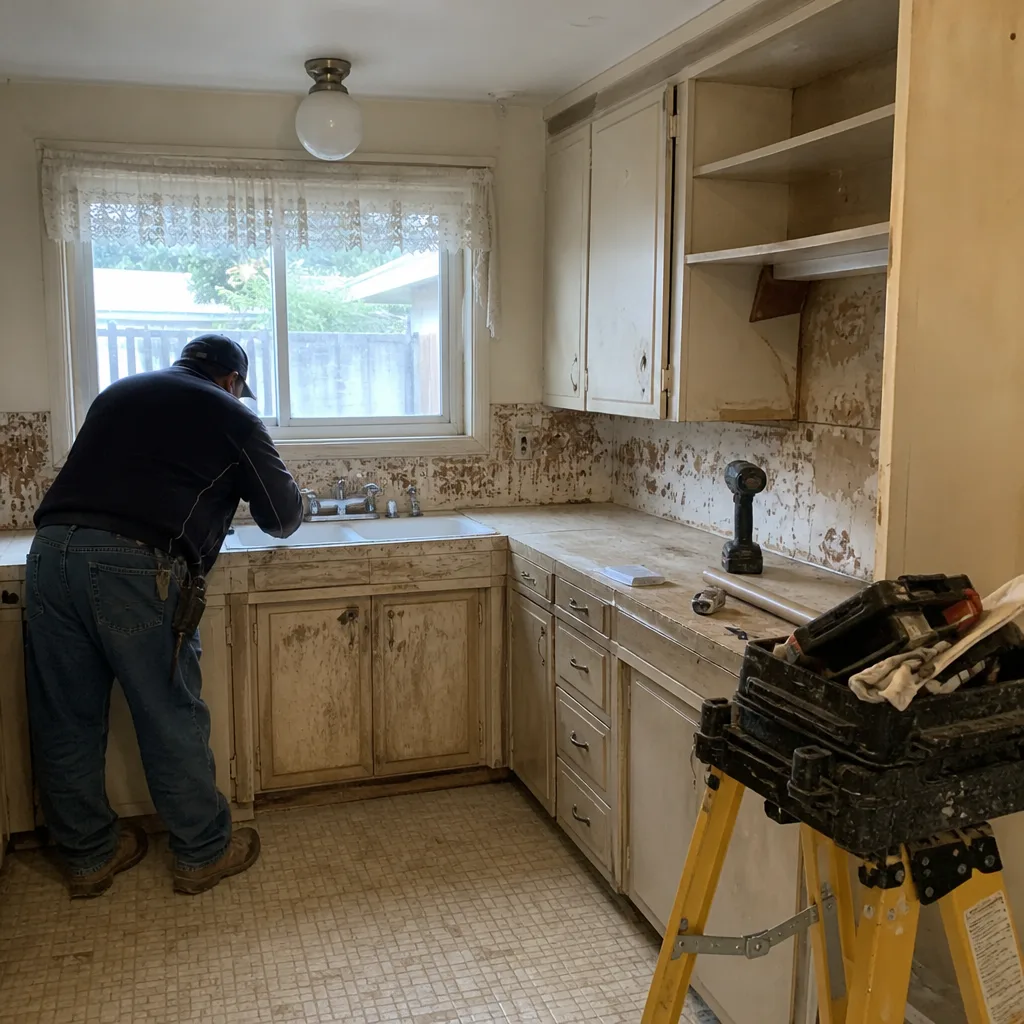
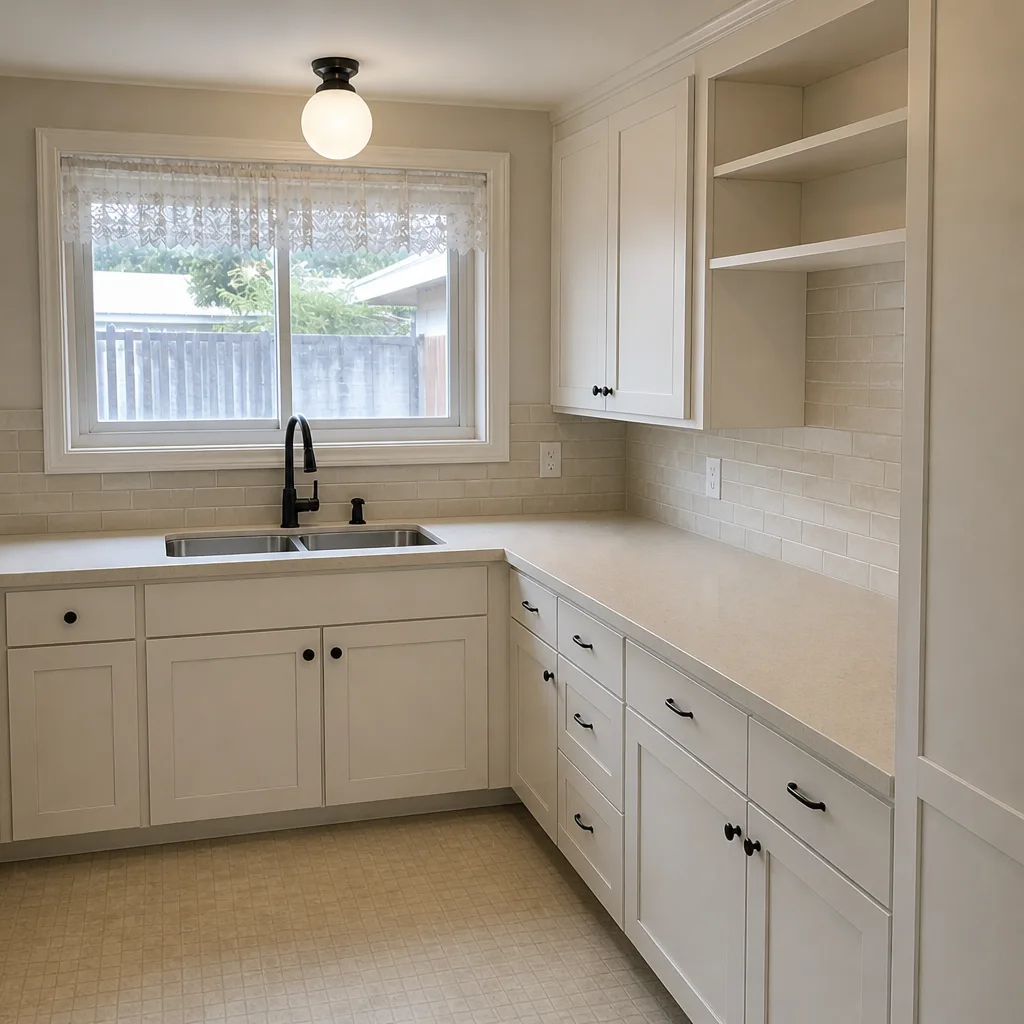
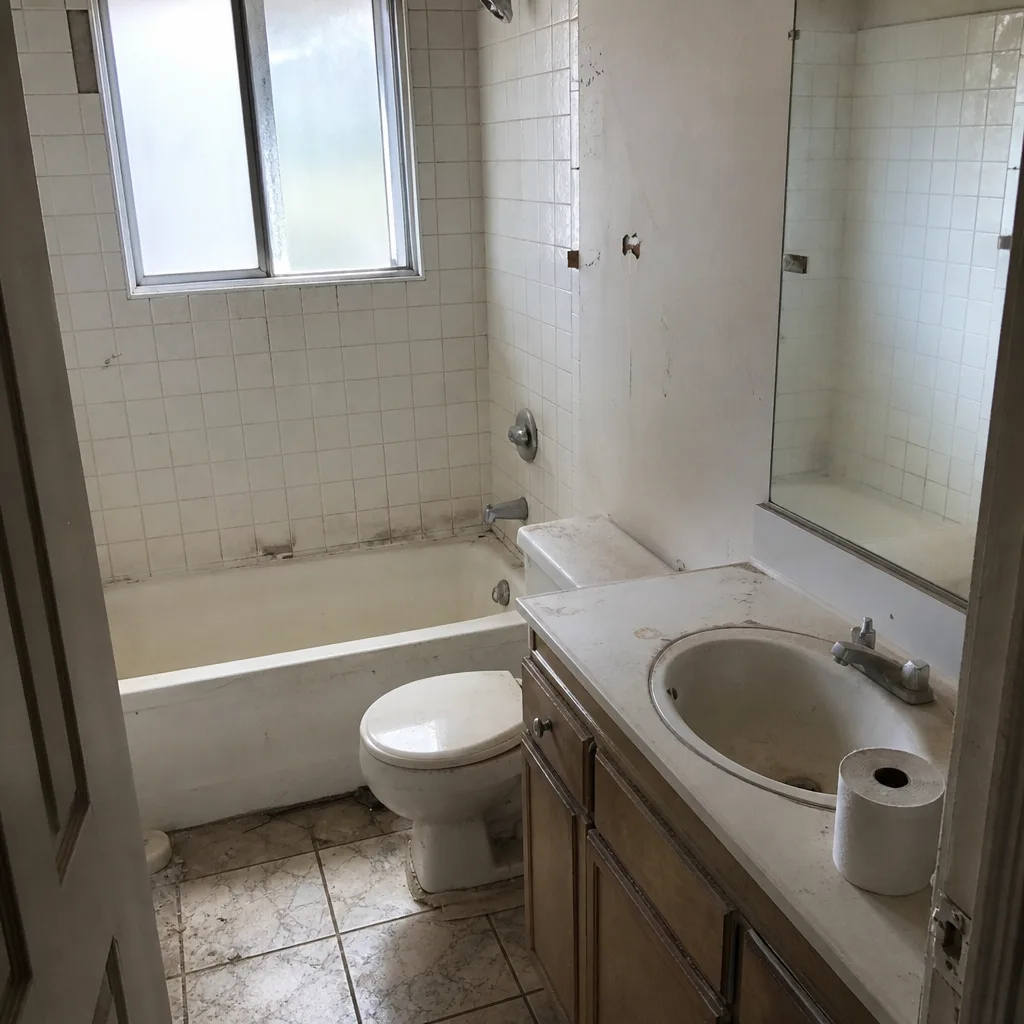
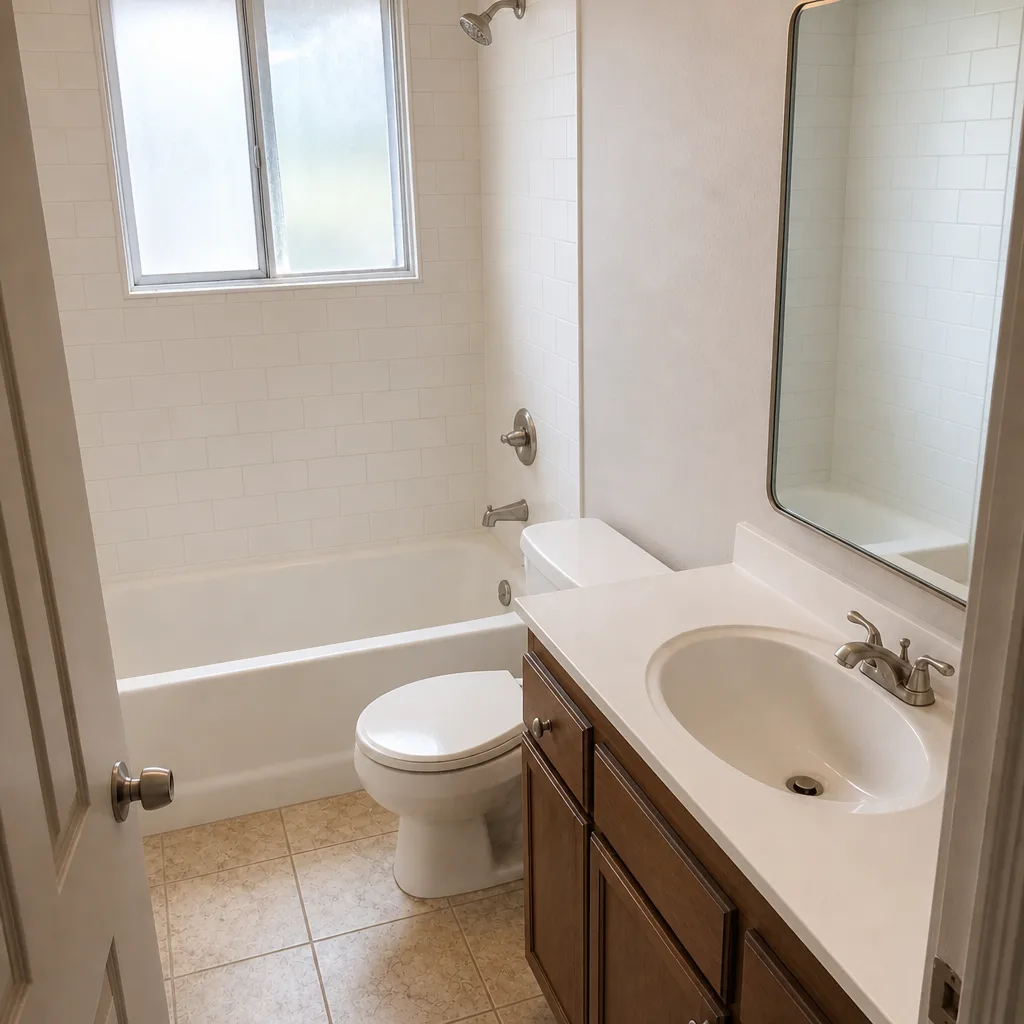
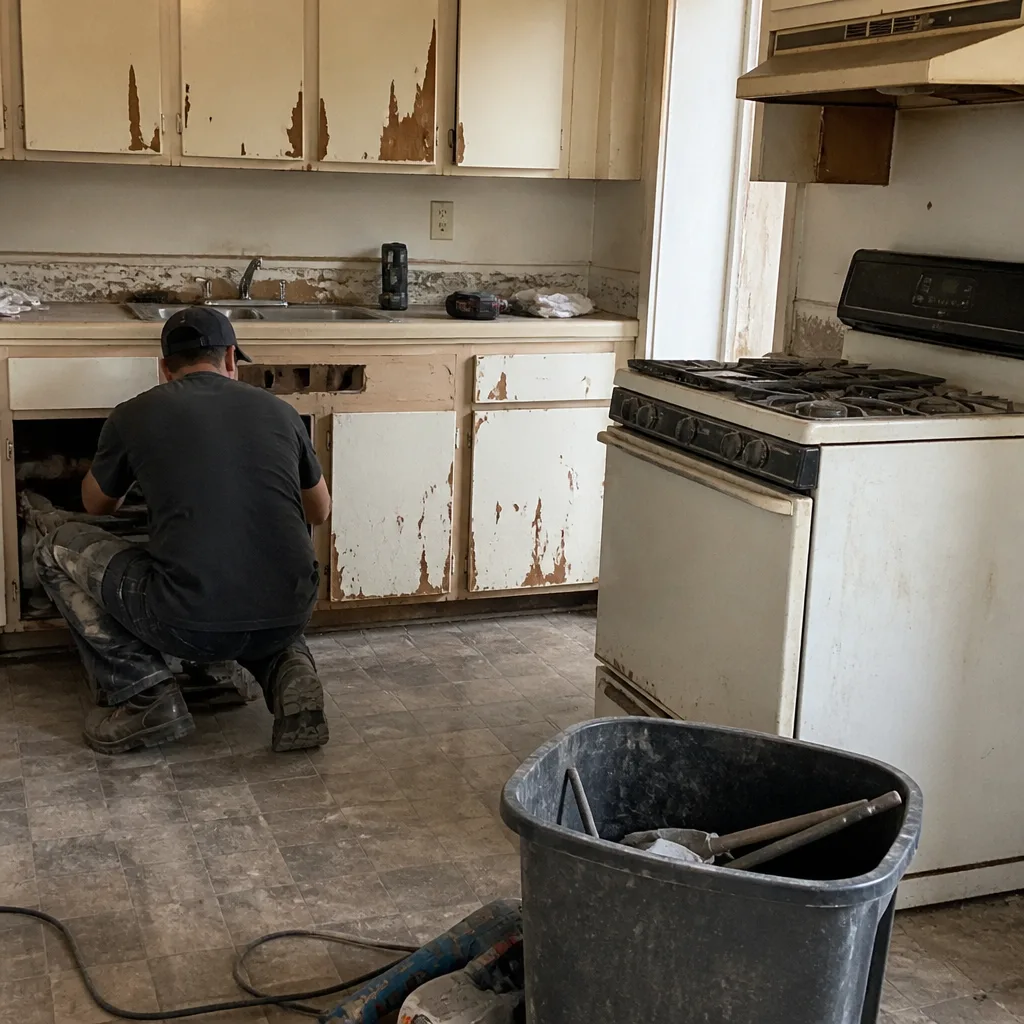
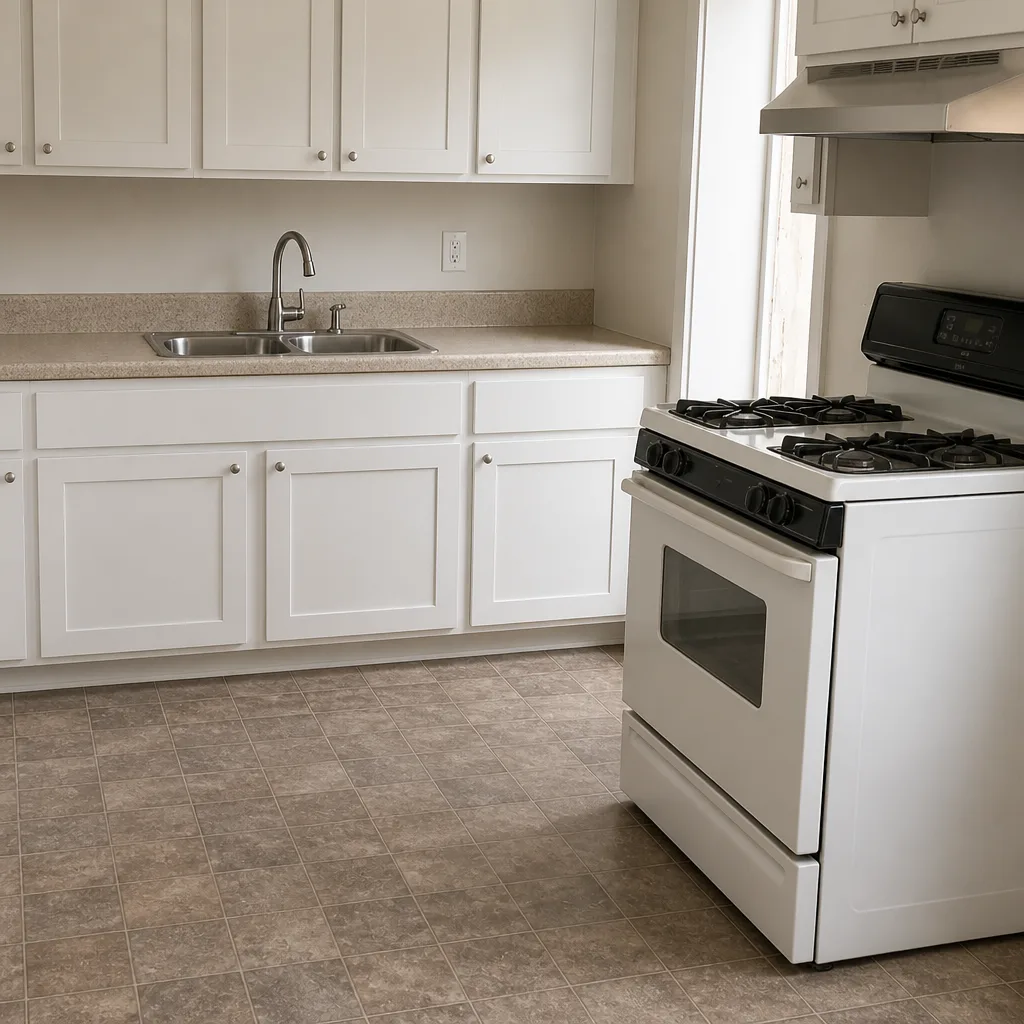
See the difference
 Before
 After
 Before
 After
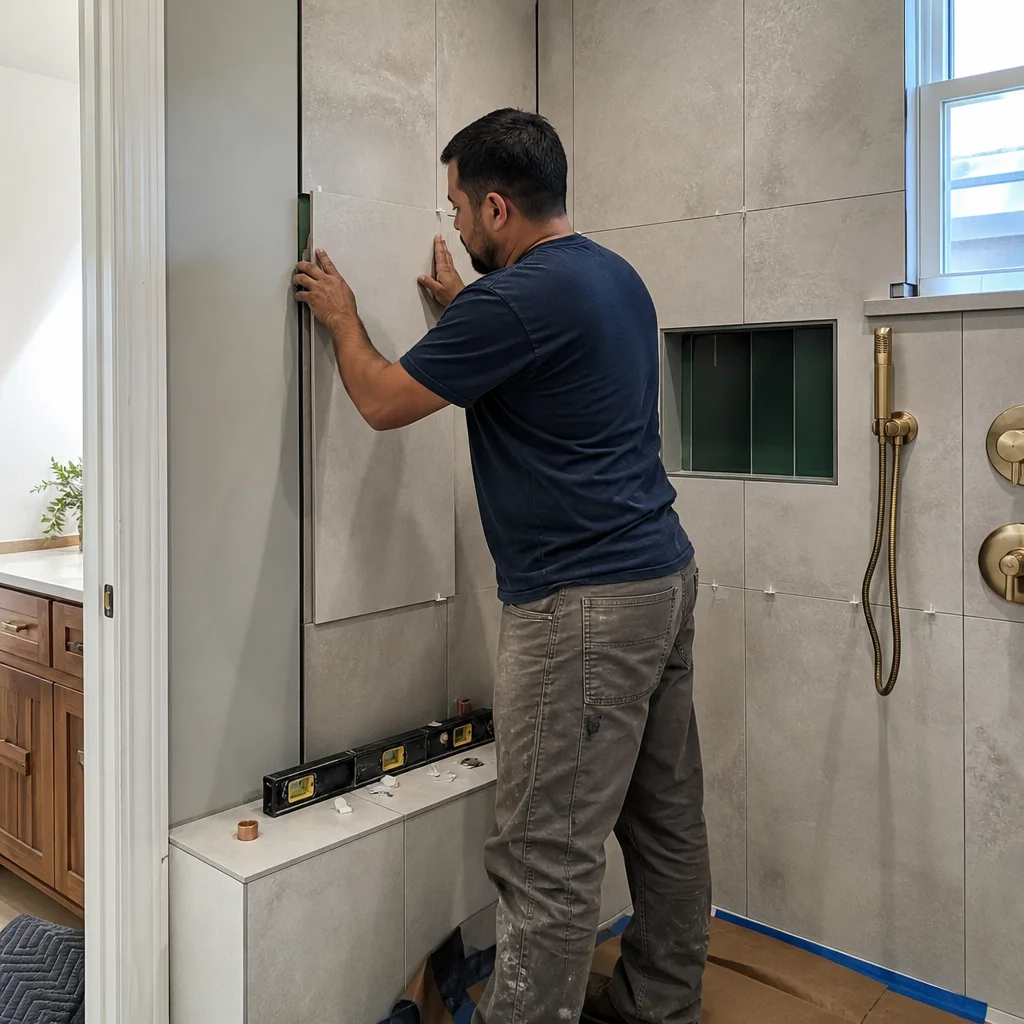
 Before
 After
When to Call a Professional
Some things are homeowner maintenance. Others are beyond it. Call us when the tile behind a shower wall feels soft or gives a hollow sound, when water stains appear on the ceiling below a second-floor bathroom, when a shut-off valve won’t turn, or when a wall behind the shower has visible mold across more than a small corner. Do not open a wall to “take a look.” The moisture path behind tile is the hardest part of any bathroom to diagnose, and it’s the easiest place to make things worse.
Barrett & Sons Construction Garden Grove offers free estimates in Garden Grove with the same written change order process we use on every job. Call (833) 703-5196 to schedule a walk-through and a written line-item quote. If it turns out to be a maintenance item, we’ll tell you. If it needs a real repair, you’ll have the full scope in writing before any work begins. We also do full driveway and paver work in Garden Grove and porch upgrades, which pair well with a bathroom project if you’re already having us on-site.
Frequently Asked Questions
Wait at least 24-72 hours after the grout has fully set, and check the manufacturer’s recommendation for the specific grout. Sealing too early traps moisture in the grout instead of pushing it out. For most tile showers, we recommend a penetrating sealer at the 30-day mark, then every 12-18 months. Call (833) 703-5196 if you’re not sure what type of sealer your grout needs.
It’s usually one of three things: the seam wasn’t fully dry before the caulk went on, a latex caulk was used instead of 100% silicone, or the tub is flexing more than the caulk can absorb. In Garden Grove, the seasonal humidity swing speeds up the pull-away, especially in bathrooms with west-facing windows. Call us at (833) 703-5196 for a re-caulk estimate; it’s a fast visit.
Do the tissue test. If tissue sticks to the grille and holds, the fan is pulling air. If it sags or falls, the fan is too weak or clogged. A 100-square-foot bathroom should have a fan rated around 100 CFM. Call (833) 703-5196 if you need a fan upgrade estimate – we can recommend the right CFM for your bathroom size.
Every two to four years on average, and every 18-24 months for bathrooms with heavy use or a west-facing wall. Check it with a flashlight at every annual review. If the bead has pulled away before the two-year mark, call us for an inspection – we want to see it. (833) 703-5196.
Yes. A window helps with air exchange, but it doesn’t replace a mechanical exhaust fan. The fan pulls moist air at the source, before it spreads to the ceiling and walls. Crack the window too if you like, and run the fan for 20 minutes after every shower. Call (833) 703-5196 if you want a fan check or replacement estimate.
Failing tub-to-tile caulk and slow shower drains are the two most common. Caulk fails from seasonal expansion and contraction, and drains slow from hair and soap buildup. Both are maintenance items, and both are far cheaper to fix on the annual schedule than after a leak has reached the subfloor. Call (833) 703-5196 to schedule a free inspection.
The Bottom Line
A bathroom remodel needs three things from you after the last tile goes in: attention in the first 30 days, a tissue test at 90 days, and a full walk-through once a year. Catch the caulk, grout, exhaust fan, and fixture cartridges on the way through, and most bathrooms in Garden Grove age without surprises. The one-page seasonal sheet taped inside the cabinet door is the difference between a schedule that gets followed and a memory that doesn’t. If a problem slips past you, that’s what we’re here for. Call Barrett & Sons Construction Garden Grove at (833) 703-5196 for a free estimate and a written line-item quote.
Written by the team at Barrett & Sons Construction Garden Grove.