Last updated November 18, 2026

Free written scope consultation - allowances, timeline, and change-order rules on paper before a single trade is scheduled
DIY vs Professional Bathroom Remodeling: What’s Safe to Do Yourself
Swapping a vanity yourself is legal and reasonable. Moving a drain six inches without a permit is a code violation in Garden Grove that can surface during a home sale years later, even if the work looks perfect. That gap between “I can swing a hammer” and “I can pull this permit” is the whole conversation. Most homeowners ask the DIY question as a skill question. The honest answer is a liability question, and behind your walls in a Southern California house built before 1985, it’s also a materials question. Here’s where we’ve seen the line actually land after years of opening Garden Grove bathroom walls.
Quick Answer
You can legally and safely handle demolition, painting, and accessory installation yourself. In California, anything involving new rough plumbing, new electrical circuits, or structural changes needs a licensed contractor and a permit. Bathroom remodels go wrong in the waterproofing and hidden-conditions stage, not in the tile layout – and those failures cost more to fix than the DIY savings ever covered.
Styles & brands we work with
- Kitchen remodeling
- Bathroom remodeling
- Home additions & ADU
- Roofing
- Windows & doors
- Driveway & pavers
- Fence
Table of Contents
- The Legal Line: What California Lets You Do Yourself
- What “Opening the Wall” Really Reveals in Garden Grove
- The Three Waterproofing Steps Amateurs Get Wrong
- An Honest Cost Comparison: DIY Tile vs Professional Install
- How to Split a Bathroom Remodel Sensibly
- Permits, Inspections, and the Home-Sale Reckoning
- Common Mistakes to Avoid
- When to Call a Professional
The Legal Line: What California Lets You Do Yourself
California law doesn’t stop you from doing cosmetic work in your own home. No license is required to paint a bathroom, remove a vanity, install a mirror, or hang a light fixture on an existing circuit. What the law does require is that any work requiring a permit be pulled by a licensed contractor or by the homeowner directly, and that certain trades – plumbing, electrical, and structural – be performed by license-holders. This is where the confusion starts. Homeowners can pull owner-builder permits for work they live with themselves, but that permit makes them responsible for code compliance, inspections, and the disclosure when they eventually sell.
This matters more in Orange County than people realize, because the local building department reviews the scope carefully. In our experience, a Garden Grove homeowner who pulls an owner-builder permit for a shower pan replacement will be inspected on the same slope, liner, and weep hole standards a licensed plumber or tile contractor gets held to. If the inspection fails, the fix is on your dime and your time. We have walked into Garden Grove houses where an owner-builder permit stalled for months because the inspection kept failing on waterproofing details that were visible only once the pan was opened up. The permit inspector works for you, not for us – that’s why we like him, and why we always pull permits on eligible jobs and get every inspection signed.
Here’s the simplest way to think about the line: cosmetic surface = yours; anything behind the surface or inside a wall or running a new utility = licensed. That single rule covers 90% of the decisions you’ll make during a bathroom remodel.
What “Opening the Wall” Really Reveals in Garden Grove
Every bathroom project starts with a wall. What’s behind that wall in a Garden Grove house depends heavily on when it was built, and the answers are not what most Pinterest tutorials assume.
1960s to mid-1970s construction. Homes from this era in Garden Grove commonly have galvanized steel supply lines that are now 50+ years old and often only months from a pinhole leak. They typically have cast-iron drains that have been slowing for decades. Some have drywall with asbestos-containing joint compound on the bathroom side, which is legal to leave in place but must be handled carefully if you cut, sand, or demo. That is a licensed abatement job, not a Saturday-afternoon demo job.
Mid-1970s to 1980s construction. You’ll often find copper supply lines that are fine, single-layer vinyl flooring over plywood, and the original builder-grade shower surround screwed straight into drywall with no waterproof membrane behind it. That last detail is the one that ruins DIY budgets. The moment you pull that surround down to replace tile, you discover the wall cavity has been damp for a decade. You aren’t installing a new tile shower – you’re rebuilding a wall cavity first.
1990s construction. Typically solid copper, PVC or ABS drains, and builders who at least used cement board in wet areas. Better odds, but this is also the era when fast-built subdivisions used thinner studs and tighter framing that make moving a drain or adding a niche harder than you’d expect once you open up.
None of this is meant to scare you off. It’s meant to say the honest thing: in a Garden Grove bathroom older than about 40 years, the visible remodel is often 60% of the actual project. If a contractor gives you a price without opening the wall, either they’ve looked at a lot of houses in that neighborhood (fair) or they’re guessing (not fair). We’ve been inside enough Garden Grove bathrooms to know which streets hide which problems – and we still write change orders before any surprise costs a homeowner money.
The Three Waterproofing Steps Amateurs Get Wrong
We’ve seen dozens of tile showers fail in Garden Grove, and almost none of them fail at the tile. The tile is the visible layer; the failure always lives one or two layers down. Here are the three places amateurs consistently get it wrong, and what fixing them costs after the fact.
1. Shower pan liner laps
The PVC pan liner must overlap the curb by at least 2 inches and drape over the pre-slope with the weep holes at the drain left clear. Amateurs routinely cut the liner flush with the curb, seal the weep holes with mortar, or skip the pre-slope entirely. The result is a shower that pools a half-inch of water for months before the ceiling below starts to show it. Fixing it means demoing the entire shower floor and starting over – usually $1,800 to $3,500 to redo what should have been done right the first time.
2. Cement board gaps at the corners and penetrations
Cement board has to be installed with gaps at the corners and a flexible sealant, not butted tight, and every screw hole and valve cutout has to be filled and taped with an alkali-resistant mesh. Most DIY installs skip the tape and skip the sealant, which means water wicks straight into the framing every time someone showers. That failure takes two to five years to show, and by then there’s soft framing to replace.
3. Mixing valve depth and access
This is the one that catches even experienced DIYers. The rough-in valve has to sit at the correct depth relative to the finished tile surface, and it has to be removable through the trim plate for future service. Set it too deep and the trim doesn’t cover; set it too shallow and the shower head threads can’t seal. Fixing a valve set wrong almost always means opening the wall from the other side – which means the bathroom on the other side of that wall, too. We’ve seen this cost a Garden Grove homeowner a $900 repair in a hallway bathroom that was fine before the remodel started.
The theme here is that all three failures are invisible until they aren’t. Waterproofing is the reason we don’t recommend DIY shower work, even to capable homeowners. The tile layout, in contrast, is a skill you can absolutely learn.
An Honest Cost Comparison: DIY Tile vs Professional Install
Here’s the math most DIY guides skip. A “DIY tile job” on a 50-square-foot bathroom floor, in Garden Grove market prices as of this writing, runs roughly like this when you’re honest about tooling and waste:
- Tile material (mid-grade porcelain, 10% waste allowance): $450 to $900
- Thinset, grout, sealant, spacers, mixing tools: $90 to $140
- Wet saw rental (three weekends, because you’ll need it longer than you think): $180 to $280
- Notched trowel, leveling clips, margin trowel, sponge, buckets: $120 to $180
- Waste disposal and extra trips to the hardware store: $60 to $120
- Time: 30 to 50 hours across three to five weekends for a first-timer
A professional tile install on the same floor runs $1,400 to $2,600 for labor and material in the Garden Grove market, including waste disposal and cleanup. The gap looks like it’s $800 to $1,200, but that’s before you price in the two Saturdays you took off work, the tools you rented twice, and the slip you’ll eventually fix. If a DIY install has a bad first row, a bowed subfloor, or a cupped tile, the redo cost easily wipes the savings out entirely.
Now the same math for the shower: professional waterproofing and tile on a simple 3’x5′ shower runs $4,500 to $7,800 in this market. The DIY version – tile, membrane, cement board, tools, and a reasonable budget for the one thing you’ll do twice – lands around $1,800 to $2,600 in materials, plus the risk that a failed waterproofing job costs $3,000+ later. The honest answer: DIY is worth doing for tile if you’re patient and detail-oriented, and not worth doing for the shower pan if you’ve never set one before. For the wider work around the bathroom (perimeter, exterior elements, and additions), the math shifts in similar ways – the same reasoning we walk through for Driveway & Pavers in Garden Grove and Fence Installation in Garden Grove applies to any project with hidden-condition risk.
How to Split a Bathroom Remodel Sensibly
This is where the DIY question becomes practical. If you want to save money on a Garden Grove bathroom remodel without creating problems down the road, here’s where we’d draw the split.
Reasonable DIY
- Demolition of finish materials. Pulling old tile, removing the vanity, taking down a mirror, removing a toilet (with the water shut off and the flange capped). Wear a good respirator – most Garden Grove bathrooms from before 1985 hide at least a little asbestos-containing material in the drywall compound or old vinyl sheet flooring, and if you’re not sure, get it tested before you swing a hammer.
- Painting. Primer plus two coats on prepped drywall is a genuinely good DIY job. The finish work is where most of the visible quality lives, and homeowners usually do it more carefully than a subcontractor would.
- Accessory installation. Towel bars, mirrors, light fixtures on existing junctions, freestanding shelving, vanity hardware swap, faucet swap on existing rough-in.
- Flooring on a level concrete slab. If the subfloor is flat and dry, luxury vinyl plank or simple porcelain tile can go down by a careful homeowner.
Not worth doing yourself
- Rough plumbing. Moving a drain, relocating a supply line, changing a shower valve – any of this requires a permit in Garden Grove and a licensed plumber to sign off.
- Electrical. New circuits, adding a GFCI, moving a switch – all permit-pulled, all licensed.
- Waterproofing the shower. Even if you tile the shower yourself, hire a waterproofing step from someone who does it every week. The labor difference is small compared to the cost of a failed pan.
- Anything behind a wall you don’t understand yet. The first 30 minutes of demo tells you whether the project is what you thought it was. Wait until you’ve seen that before you commit to a DIY scope.
If your project starts pushing into adding square footage, changing the footprint, or tying the bathroom into a larger renovation, that’s a different conversation entirely – the same kind of conversation we have on Home Additions & ADU in Garden Grove projects, where the permit and inspection chain is the whole ballgame.
Permits, Inspections, and the Home-Sale Reckoning
An unpermitted remodel in Garden Grove doesn’t hurt you today. It hurts you at the point of sale, when a buyer’s inspector writes it up, or when a title company flags it, or when you sell to a buyer using a conventional loan and the appraiser notes that the bathroom square footage doesn’t match the county record. At that point, the buyer asks for a credit, or the deal falls through, or you pay for a retroactive permit – which is more expensive and more invasive than pulling the permit the first time.
We’ve seen this on Garden Grove homes built in the 1970s where a bathroom was clearly re-tiled at some point with no record of a permit. That’s not always a problem, because cosmetic re-tiling doesn’t require a permit if nothing behind the wall moves. But the moment a drain was moved, a wall was opened, or a new circuit was installed, it does. The county keeps the record. If there’s no record, the buyer notices.
The permit inspector is not your enemy. He is your witness, on paper, in the county file. Every eligible job we take on gets permits pulled and inspections signed, and the paperwork is part of what you’re buying. This applies whether you’re remodeling a bathroom, replacing a roof, or working through any part of the Barrett & Sons Construction Garden Grove home service list.
Common Mistakes to Avoid
- Pulling the shower surround before you’ve tested for asbestos or lead. Garden Grove houses from before 1985 can carry asbestos in the joint compound and vinyl flooring, and lead in painted surfaces. A simple test kit or licensed inspection before demo costs under $200 – skip it and the abatement bill starts around $1,200.
- Trusting the “no permit needed for a bathroom” line. Cosmetic work often doesn’t need a permit. Anything that moves plumbing, electrical, structure, or the wet-wall system does. The last contractor who told you permits were optional was probably quoting by phone and hoping you wouldn’t ask.
- Setting the shower valve before the tile thickness is chosen. The trim plate has a very narrow tolerance window, and getting it wrong means opening the wall from the room behind it. Confirm the tile thickness before the valve is set.
- Skipping the pre-slope on the shower pan. A flat subfloor under a PVC liner traps water at the drain, even if the top layer looks perfect. The pre-slope is not a suggestion. The pan will fail in two to five years.
- Cutting the pan liner flush with the curb. The liner must climb the curb and tuck behind the cement board on the outside. Flush cuts leak silently into the framing.
- Buying schluter or membrane kits without reading the slope spec. A genuinely good product installed at the wrong slope still fails the inspection. Read the spec sheet before you buy.
- Underestimating Garden Grove humidity swings. Bathrooms here move moisture all day and dry out hard overnight – that cycle punishes failures in sealant and grout faster than most of the country. Use mold-resistant sealant everywhere the spec calls for it.
When to Call a Professional
If your project involves moving a drain, adding an electrical circuit, relocating a shower valve, or rebuilding a shower pan, call a professional. If it involves anything behind the wall in a Garden Grove home built before about 1985, call a professional before you demo. If the project has already been quoted by one of the big national companies and the price changed on the invoice, call a professional who publishes a name and license number – Barrett & Sons Construction Garden Grove offers free estimates in Garden Grove, with written scope, written allowances, and a written change order before any work touches the job. We pull permits, we get inspections signed, and every completed job is backed by our 90-Day Done Right Promise. Our crew members are background-checked and bring up to 28 years of experience to the work. Ask us for a second opinion on any written estimate you’ve received – that’s a standing free offer, and we mean it. Call (833) 703-5196 to schedule yours.
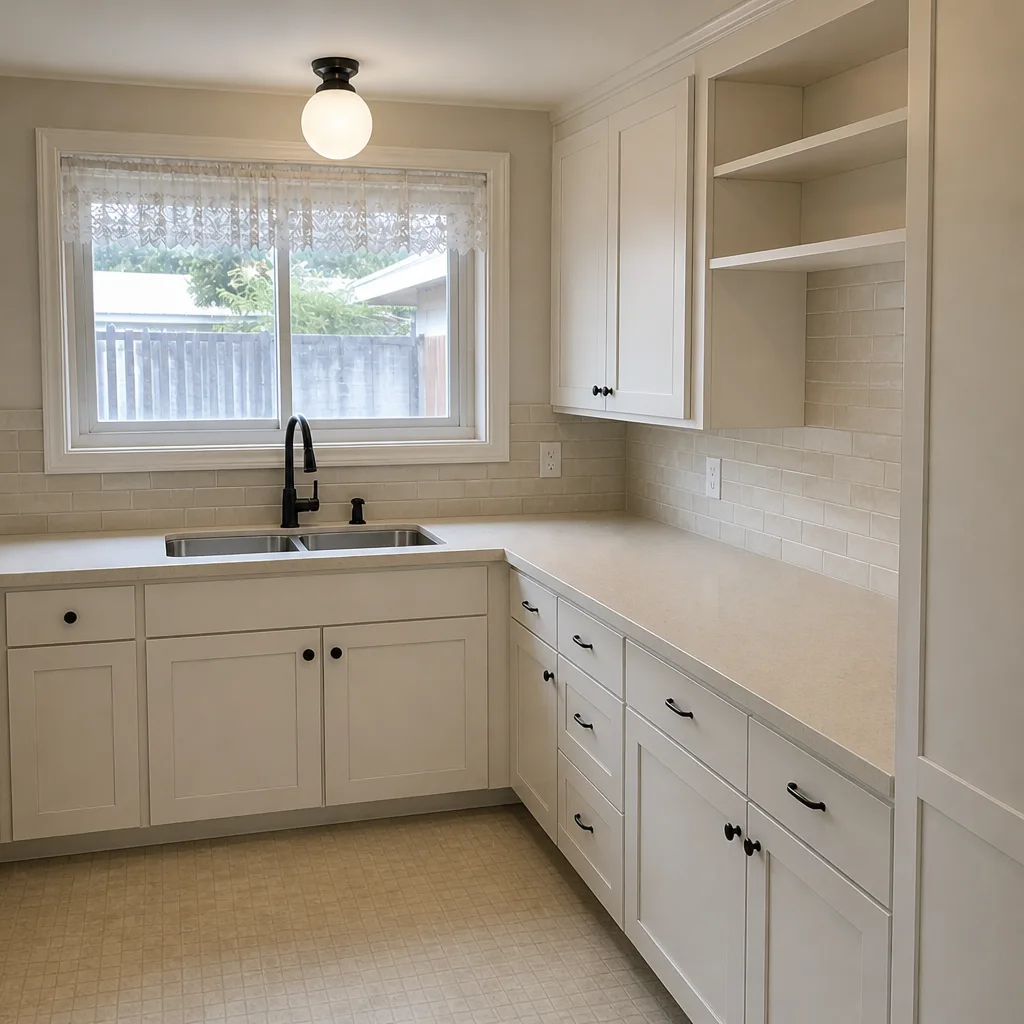
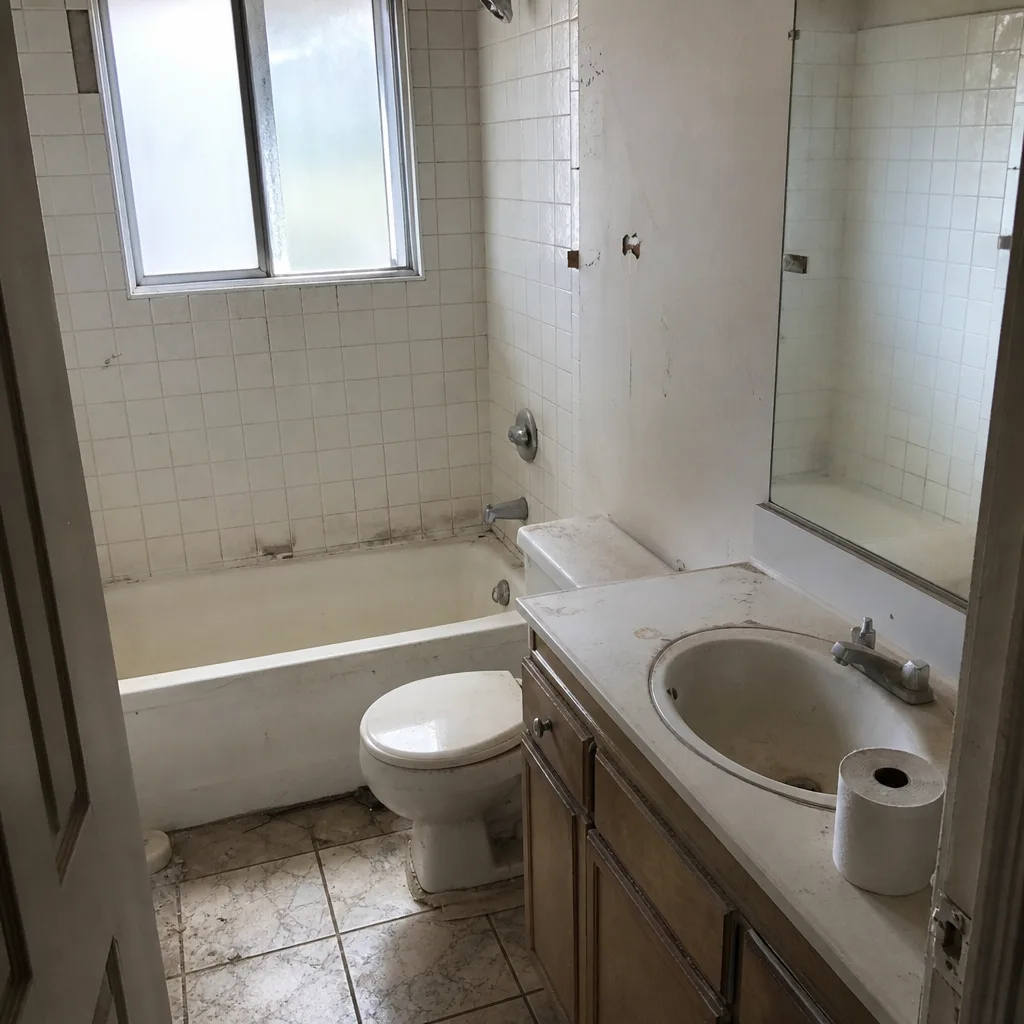
See the difference
 Before
 After
 Before
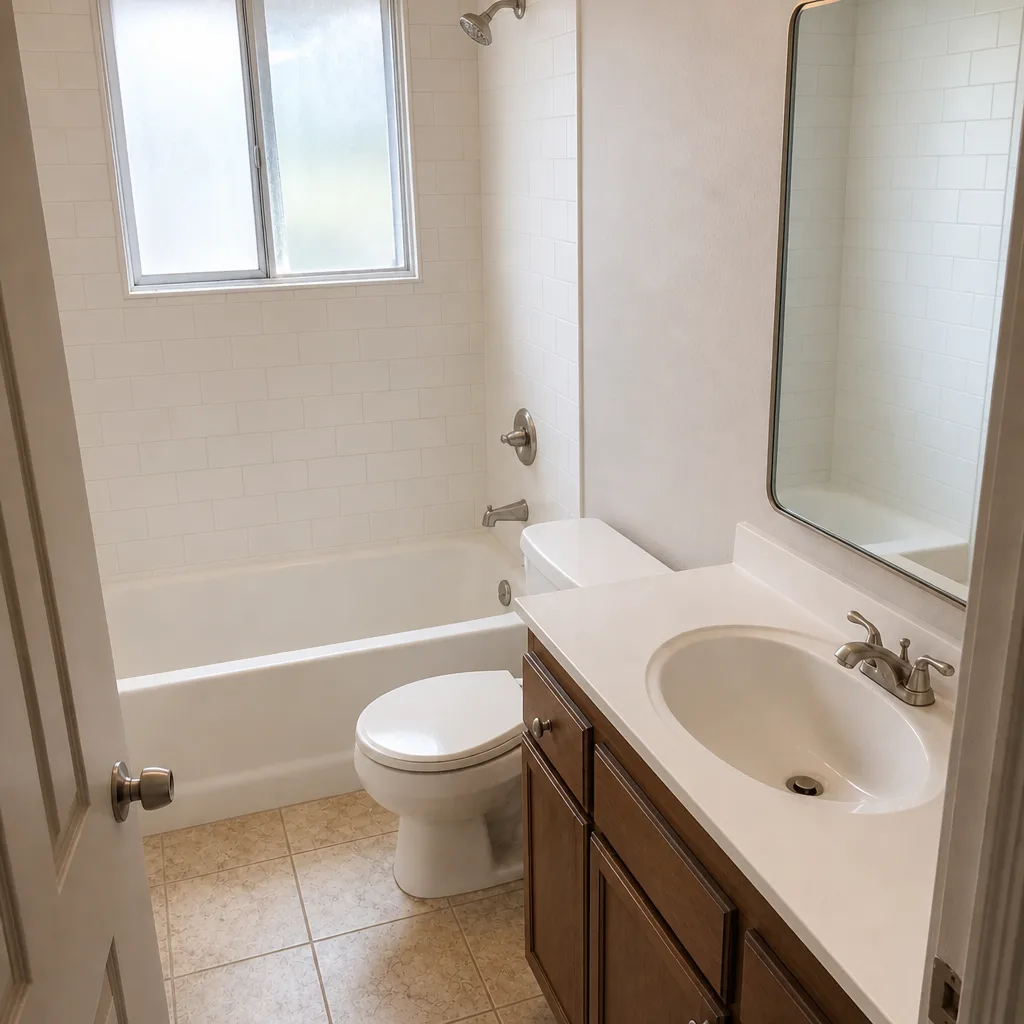 After
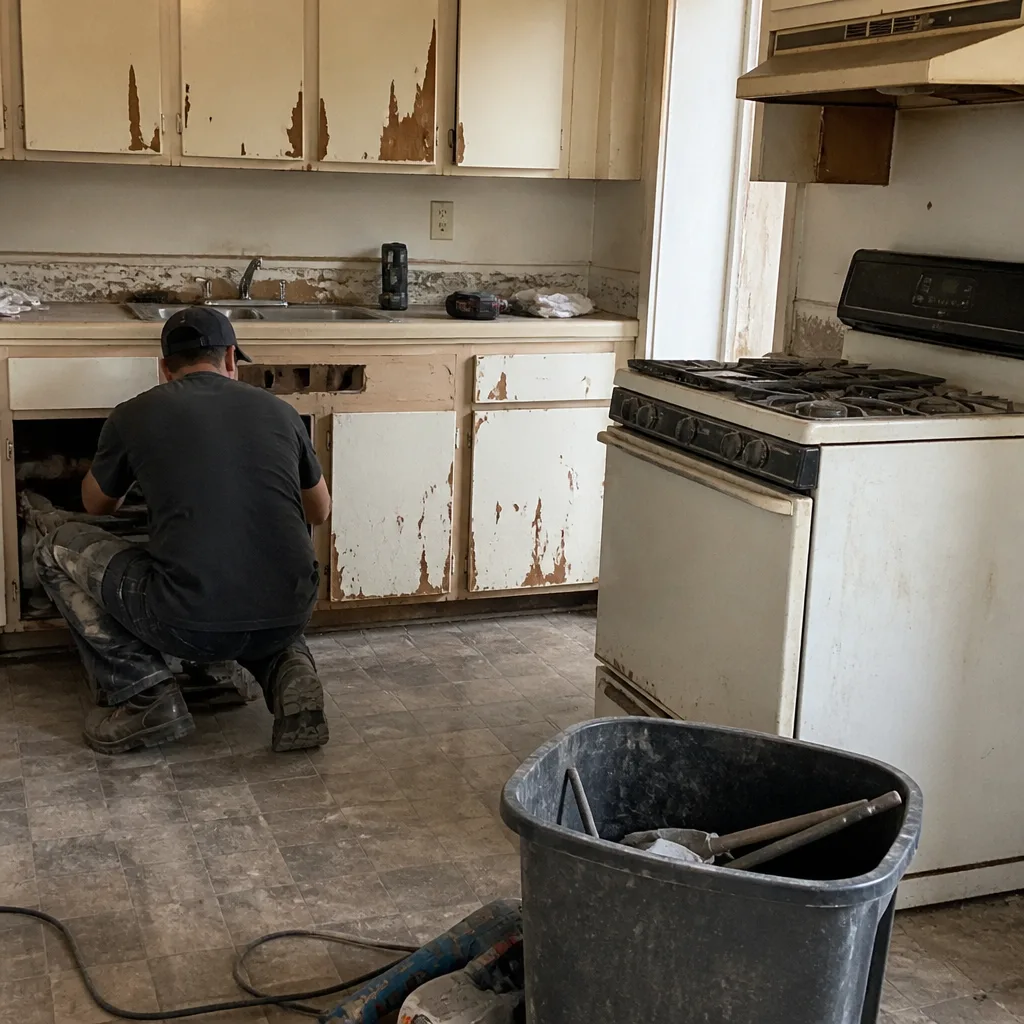 Before
 After
Frequently Asked Questions
Yes for cosmetic work: painting, tile, vanity removal, and accessory installation on existing plumbing and electrical don’t require a license. No for anything that moves plumbing, electrical, structure, or waterproofing – those require a permit pulled by a licensed contractor or by way of an owner-builder permit. Call (833) 703-5196 if you’re unsure which side of that line a specific task falls on – estimates are free.
Yes. Replacing a shower pan and valve is permitted work in Garden Grove, even if you leave the tile footprint exactly the same. The permit covers the waterproofing, the slope, and the mixing valve depth, all of which get inspected. Skipping the permit doesn’t make the work invisible – it makes it undisclosed at sale. Call (833) 703-5196 for an exact quote on a permitted shower replacement.
A cosmetic refresh (new vanity, faucet, paint, mirror, light fixtures) runs $3,500 to $8,000 in this market. A full remodel with new tile, new shower pan, and updated plumbing and electrical runs $18,000 to $42,000 depending on size and whether the walls hide surprises. Call (833) 703-5196 for an exact quote – estimates are free.
Only if the scope changes, and only in writing before the change happens. Every allowance is on paper from day one, and every price change is a written change order before a single nail moves. An allowance that isn’t on paper is a surprise waiting for a date – we don’t write surprises. Call (833) 703-5196 for a free estimate with everything itemized.
In homes from the 1960s to mid-1970s: galvanized supply lines, cast-iron drains, and possibly asbestos in the joint compound. Mid-1970s to 1980s homes often have drywall shower surrounds with no waterproof membrane behind the tile – which means a wet wall cavity the moment you demo. 1990s homes are usually better, but tighter framing limits moving fixtures. We’ve opened enough Garden Grove bathroom walls to know which streets hide which problems. Call (833) 703-5196 to talk through yours.
Yes for a floor on a level, dry subfloor if you’re patient and detail-oriented, and no for the shower pan or wall waterproofing. The math on DIY floor tile saves roughly $800 to $1,200 after accounting for tools, waste, and time – assuming no redo. A failed shower pan costs $1,800 to $3,500 to redo, which is why we don’t recommend DIY shower work.
The Bottom Line
The real DIY question in a Garden Grove bathroom is not whether you can do it – it’s whether you can do it without creating a code violation, a hidden-condition surprise, or a waterproofing failure that costs more than the savings. Handle the demo, the paint, and the accessories yourself. Hire licensed, permitted help for anything behind a wall, inside a wall, or tied to a utility. Keep every allowance, scope, and change order in writing when you do hire someone. If your project is already climbing past what you expected, or you’ve received a bid you’re not sure about, that free second opinion offer is real – call (833) 703-5196 and we’ll walk through it with you. Free estimates, no trip charge inside the county, and a 10% Senior & Veteran discount standing on every eligible job.
Written by the team at Barrett & Sons Construction Garden Grove.