
Last updated November 18, 2026








Free written scope consultation - allowances, timeline, and change-order rules on paper before a single trade is scheduled
Construction Warning Signs: A Garden Grove Homeowner’s Reference Guide
A door that starts sticking in January and unsticks by April isn’t a door problem. It’s a foundation or framing problem that happens to show up in the door, and by the time most Garden Grove homeowners figure that out, the underlying movement has been doing its work for two or three seasonal cycles. The expensive crack you see is almost never the first sign. The cheap-to-fix signal came years earlier, quiet and easy to wave off. This guide covers the early signals: how 1960s tract-home settlement differs from active movement, which stucco crack shapes matter, what late-winter moisture is telling you, how to read a roofline from the curb, and the drainage clues that show up before anything cracks at all.
Quick Answer
In Garden Grove, the earliest construction warning signs are usually seasonal, not catastrophic: doors and windows that stick only part of the year, hairline stucco cracks that keep reopening in the same spot, moisture stains that appear in late winter, and soil that stays soggy against the foundation long after the rain stops. Each one means something is moving or trapping water. Caught in that first year or two, most of these are repairs. Left through several wet-and-dry cycles, they turn into foundation work, reframing, or full replacement.
Styles & brands we work with
- Kitchen remodeling
- Bathroom remodeling
- Home additions & ADU
- Roofing
- Windows & doors
- Driveway & pavers
- Fence
Table of Contents
- Normal Settlement or Active Movement? Reading a 1960s Garden Grove Tract Home
- The Stucco Crack Patterns That Matter (and the Ones That Don’t)
- Late-Winter Moisture Signals and What Each One Traces Back To
- How to Read a Roofline From the Curb
- Drainage and Grading: The Warning That Comes First
- Interior Clues: Floors, Trim, and Doors That Tell the Story
- A 30-Minute Walkthrough You Can Do Yourself
Normal Settlement or Active Movement? Reading a 1960s Garden Grove Tract Home
Almost every home built in Garden Grove between 1955 and 1970 has settled. That’s normal, and it’s not a defect. The soil under those neighborhoods is a mix of sandy loam and adobe clay, and clay shrinks in a dry summer and swells after winter rain. A house that has been sitting on that soil for sixty years has moved some. The question is whether it’s done moving, or still moving now.
Here’s the distinction that matters:
- Settled: a crack that appeared decades ago, hasn’t widened, and shows paint or patching from an old repair that’s still intact.
- Active: a crack that reopens after patching, is wider at one end than the other, or runs diagonally across a wall.
- Settled: a door that rubs slightly in humid weather and frees up when it dries.
- Active: a door that stuck last winter, still sticks this winter, and sticks a little more than it did before.
The tell is repetition with progression. One stuck door in a wet January is weather. The same door sticking worse every January for three years is movement, and the movement is happening somewhere other than the door. In the older tracts off Chapman Avenue and around the Garden Grove Boulevard corridor, we see this pattern most in homes that were built slab-on-grade with shallow footings, where the clay under one corner dries out faster than the rest because of a downspout or a slope.
Don’t guess at the cause from inside the house. The evidence is usually outside: a downspout dumping water at the same corner, a planter bed holding moisture against the stem wall, or a patio that was poured flat against the siding with no fall away from the house. Fix the water first, then watch whether the crack keeps moving. That order saves a lot of money.
The Stucco Crack Patterns That Matter (and the Ones That Don’t)
Stucco cracks. That’s the short version. In a Southern California climate with dry summers and wet winters, a stucco skin on a wood-frame house is going to develop hairline cracks, and most of them are cosmetic. The shape, direction, and location separate the cosmetic from the structural, and it’s worth learning the difference before you call anyone.
Usually cosmetic:
- Hairline cracks under a sixteenth of an inch, in a random web or map pattern, especially on a large flat wall section.
- Cracks that follow the seams where stucco was patched around a hose bib, an electrical box, or a window frame.
- Shrinkage cracks on a newer stucco job that appear in the first year and then stop.
- Spiderweb cracking radiating from a corner of a window opening, which is usually stress at the framing intersection, not foundation movement.
Worth investigating:
- Diagonal cracks running from the corner of a door or window opening out toward the roofline or the foundation, wider than an eighth of an inch.
- Stair-step cracks, where the crack moves sideways, then up, then sideways again, like a staircase.
- Any crack that’s wider at one end. That taper means one side of the wall is moving relative to the other.
- Cracks that align with cracks on the interior drywall in roughly the same location. Two sides of the same wall telling the same story is a strong signal.
- Horizontal cracks in the stucco at the same height as the floor line, especially on a raised foundation.
When we look at a Garden Grove home, the first thing we do is walk the exterior and map every crack with chalk and a tape measure. Then we come back in six months and measure again. If the number hasn’t changed, you have a cosmetic repair and a stucco patch. If it has, you have a foundation question, and it’s much cheaper to answer it now than after a corner of the house has dropped.
Late-Winter Moisture Signals and What Each One Traces Back To
Garden Grove gets most of its rain between December and March, and that’s when the moisture clues show up. A stain on the ceiling isn’t just a stain. Where it appears tells you what’s above it, and in our experience the location points to the cause before anyone opens a wall.
- Stain on the ceiling near an exterior wall: almost always a roof detail or a flashing failure at a wall-to-roof intersection. Check the roof above that spot before you assume plumbing.
- Stain in the middle of a ceiling, especially on a single-story home: often a plumbing vent boot or a nail pop that has opened a pinhole in the shingle. Cheap fix if caught the first winter.
- Damp drywall at the base of a wall, near the floor: water coming in at the foundation line, either from grading that slopes toward the house or from a downspout discharging against the stem wall.
- Moisture at the bottom corners of a window frame: window flashing, not the window itself. The frame is usually fine; the way the water gets behind it isn’t.
- White, chalky residue on a stucco wall near the ground: efflorescence, which means moisture is pushing through the wall from behind and evaporating on the surface. It’s a sign the wall is staying wet, and it usually traces back to soil contact or a planter holding water.
- Musty smell in a room with no visible stain: water is getting in and not drying out, often behind a cabinet or along a wall that faces the weather. Worth opening up a small section of drywall to find it.
The pattern to watch is repetition. A stain that appears once and never grows is a small leak you can fix. A stain that comes back at the same spot every February, or one that’s slightly larger than it was last year, is a leak that never actually got fixed. In Garden Grove, we see more of these on the north and west-facing walls, simply because those sides dry out more slowly after a storm.
How to Read a Roofline From the Curb
You can learn a lot about a roof without climbing on it, and we’d rather you didn’t climb on it. Stand across the street with the sun behind you and look along the ridge and the eaves. What you’re looking for is straightness, because a roof that has held up is a roof that lines up.
- A dip in the ridge line: the ridge is the peak. If it sags in the middle or dips near one end, the rafters or the ridge beam underneath have lost support, or a connector has failed.
- A wavy eave line: the bottom edge of the roof should be level. A wave or a dip means the sheathing or the fascia has softened, often from an old leak that was patched on top but never dried underneath.
- Rippling or a visible wave in the shingle field: shingles should lie flat. A wave or a “hungry” look where the shingles seem to lift can mean the sheathing is delaminating or a deck board has lost its nailing.
- Ridge cap shingles separating: the caps along the peak should be tight and overlapping. Gaps mean the roof is moving or the fasteners have backed out.
- Sagging at a valley or a dormer: valleys and dormers are the heaviest-loaded points on a roof. A dip there concentrates water and shortens the life of everything around it.
On a Garden Grove home with an older built-up or shingle roof, one small sag is usually a repair. Two or more sags, or a sag that grows visibly worse over one wet season, means the framing is asking for attention, not just the shingles. A roofer who tells you a new layer of shingles will fix a sagging deck is telling you to spend money on the wrong thing. When it’s time to look at a full replacement, our Barrett & Sons Construction Garden Grove home page lays out how we handle the deck inspection and the written scope before any tear-off.
Drainage and Grading: The Warning That Comes First
Almost every foundation problem we’ve been called out to look at in Garden Grove had a drainage problem sitting right in front of it, years before the foundation moved. If you learn to spot the water, you’ll catch most of these at the cheap stage.
The soil around a house should slope away from the wall at roughly a quarter inch per foot for the first six feet. That doesn’t sound like much. It’s the difference between water running away from the house and water pooling against it. Here’s what to look for:
- A visible low spot against the foundation: after a rain, does water sit against the wall for more than a day? That’s the problem, right there.
- Downspouts that drop at the wall: if the downspout ends within a foot of the house, all the roof water for that section is going straight into the soil next to the footing. Extend it four to six feet out.
- A concrete patio or walkway that’s higher than the dirt next to the house: the patio drains somewhere, and if the yard slopes back toward the wall, it drains into the foundation.
- A planter bed built against the stucco: the soil in the bed holds moisture against the wall year-round, and it also hides cracks that would tell you something’s moving.
- Mulch piled above the weep screed: the weep screed is the metal lip at the bottom of the stucco that lets moisture out. If it’s buried, water has nowhere to go but into the wall.
- An old tree close to the house: roots pull moisture out of the clay and can shrink it, especially on the side of the house the tree sits on. A citrus tree planted seven feet from the wall a decade ago is a real factor.
Fixing grading is the cheapest work on this list, and it’s the one most likely to stop a problem that’s already started. If you’re also planning to redo the hardscape, a paver install with the right fall away from the house is a chance to solve two problems at once. You can see how that works on our page for Driveway & Pavers in Garden Grove.
Interior Clues: Floors, Trim, and Doors That Tell the Story
The inside of a house tells you what the outside is doing, if you look at the right things. Most homeowners notice a sticking door. Very few notice a baseboard that’s pulled away from the wall by an eighth of an inch, or a floor that’s suddenly sloping two degrees in a room that used to be flat.
- Doors and windows that bind seasonally: revisit the hook at the top of this guide. A door that swells and sticks in the wet months is normal. A door that sticks all year and is getting worse is not.
- Gaps at the baseboard: walk the perimeter of any room and look for a shadow line between the baseboard and the drywall. New gaps mean the wall or the floor has moved.
- Cracks at the corners of rooms: diagonal cracks running from the corner of a room where the ceiling meets two walls are common in older homes and usually cosmetic. Cracks that keep reopening after patching are not.
- Cracks at the corners of doors and windows: on the drywall side, these tend to mimic the stucco cracks outside. If they line up in the same place, treat it as movement.
- Floors that feel out of level: drop a marble in a hallway. If it rolls toward one end of the house consistently, the floor is out of level, and it’s worth checking whether that’s always been true or is new.
- Tile cracks in a bathroom or kitchen: tile is rigid. A grout line that cracks and re-cracks, or a tile that pops loose, means the substrate under it is moving.
One caveat: interior clues show up after the movement, not before. If you’re seeing interior signs, the exterior signs have been there for a while. That’s why we always walk the outside first, then come in. A kitchen with Silestone or Caesarstone counters is a good example, because stone counters are unforgiving: they don’t flex, and a substrate that moves will show up as a hairline crack at a seam before a wall does.
A 30-Minute Walkthrough You Can Do Yourself
You don’t need a contractor to spot most of these. You need thirty minutes, a tape measure, a notepad, and a camera. Do this walkthrough every spring, and date the photos. Comparing this year to last year is how you catch a slow-moving problem while it’s still a repair.
- Walk the exterior with a camera. Photograph every stucco crack with a tape measure held against it. Write the date on the photo. Do this once a year, same time of year, so the comparison is fair.
- Check the grade. At each corner and at the middle of each wall, lay a straight board on the ground and check the fall away from the house. Look for ponding marks in the soil after a rain.
- Trace every downspout. Follow each one to where it ends. If it ends within a foot of the wall, note it. Extend it.
- Look up. Stand across the street and sight along the ridge and the eave line. Note any dip, wave, or sag. Look for shingles that are lifting, curling, or missing at the ridge.
- Walk the interior with a flashlight and a marble. Check baseboards for gaps, corners for cracks, and every door and window for binding. Roll the marble in two or three rooms and note which way it goes.
- Check the attic after a storm. Look for stains on the roof sheathing, water marks around vents and chimneys, and any daylight coming through. Get a photo of anything you find.
- Write it down. A one-page list with dates and photos is the single most useful document you can hand a contractor. It tells them what’s new and what’s been there for years, which saves you money before anyone quotes anything.
Common Mistakes to Avoid
- Patching a crack before you know why it’s there. Patch it, paint it, and if it reopens in the same spot, you’ve just paid for a diagnostic you could have had for free. Photograph, then patch, then watch.
- Burying the weep screed with mulch or soil. It’s the cheapest repair on the house and one of the most common mistakes in Garden Grove front yards. Pull the soil back down below the metal lip and keep it there.
- Letting a downspout discharge at the wall. It’s a five-dollar extension and a ten-minute fix. Skip it and you’re watering the footing on purpose, every time it rains.
- Assuming a 1960s house is “supposed to crack.” Old houses settle. They don’t keep moving. If a crack has changed in a year, it isn’t settling.
- Calling a roofer before you know what’s under the roof. A new layer of shingles on a sagging deck is money thrown away. Fix the framing question first.
- Ignoring the second stain. One stain might be an old leak. A stain that comes back at the same spot two winters in a row is an active leak, and the damage is compounding inside the wall where you can’t see it.
- Skipping the annual photo walk. The single biggest advantage you have as a homeowner is a dated record. Without it, you’re guessing whether a crack is new.
See the difference
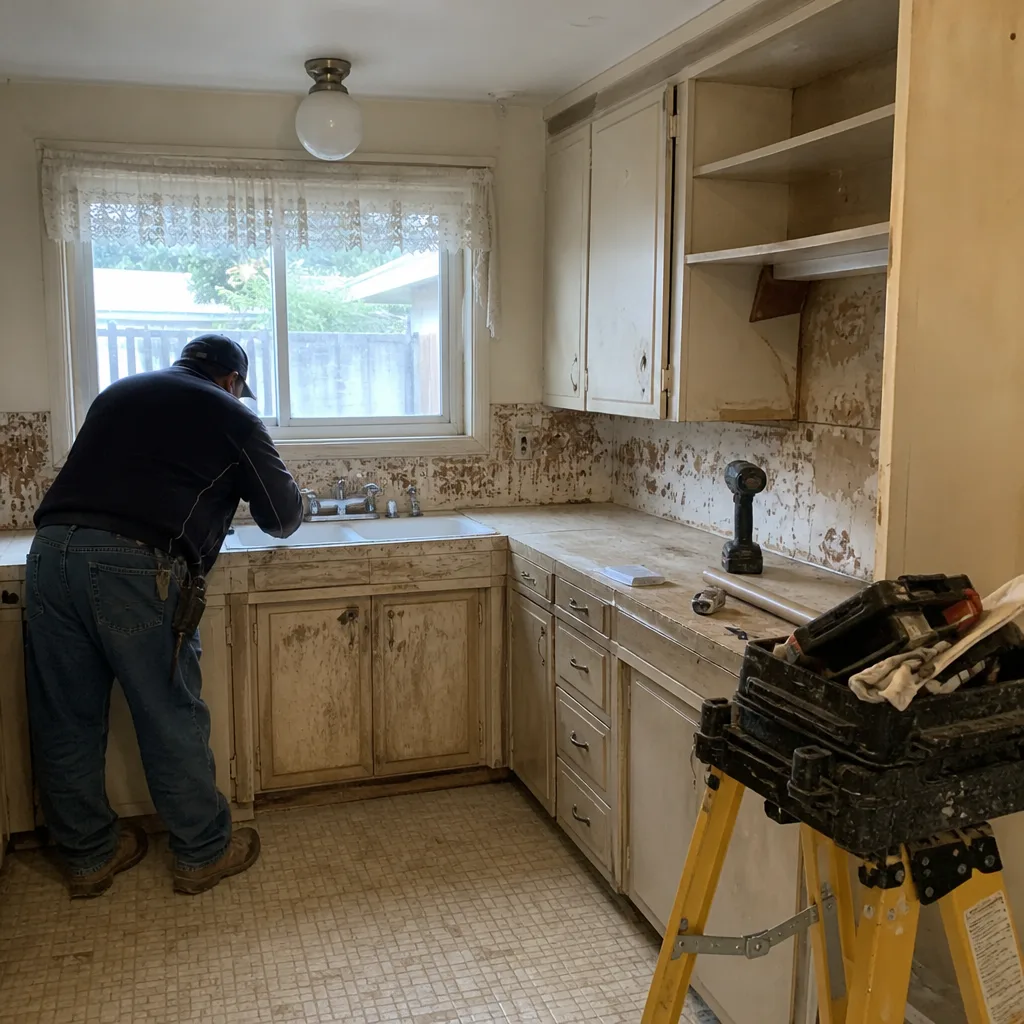 Before
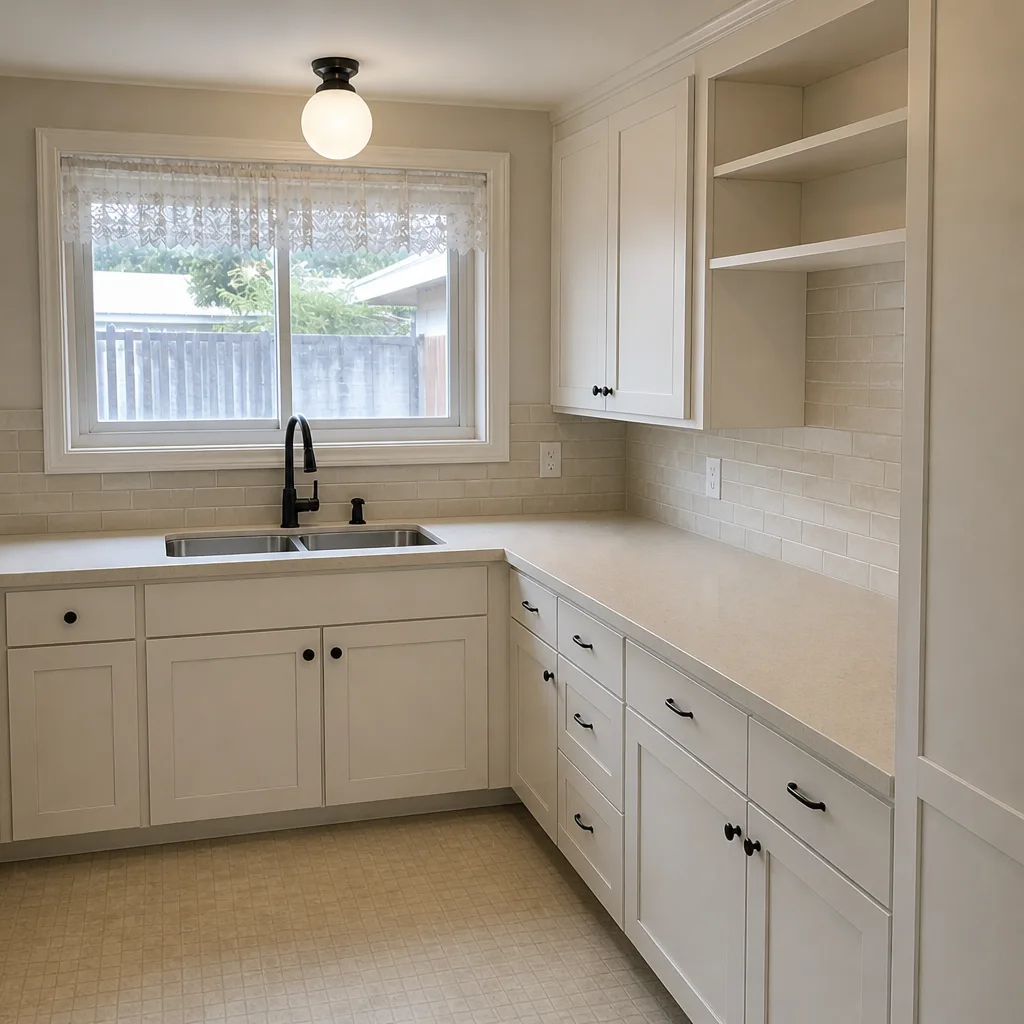 After
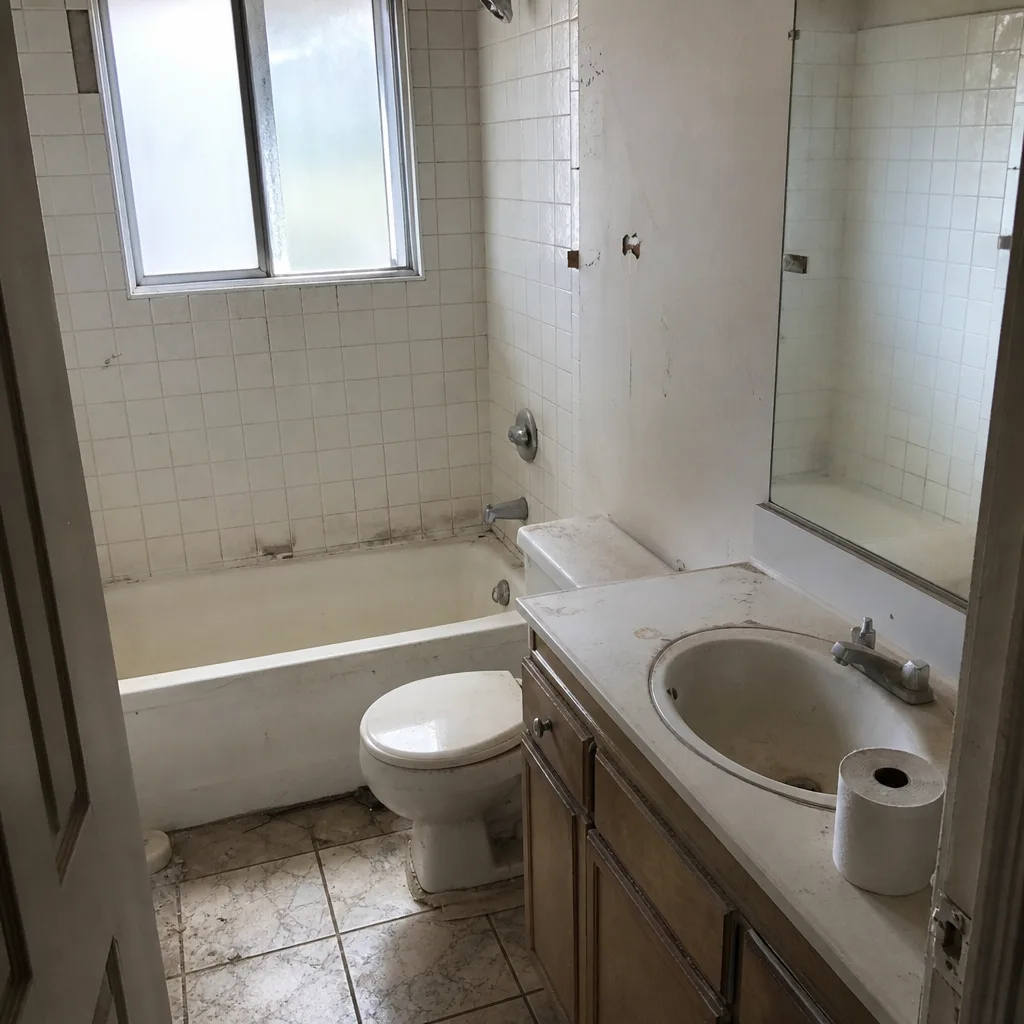 Before
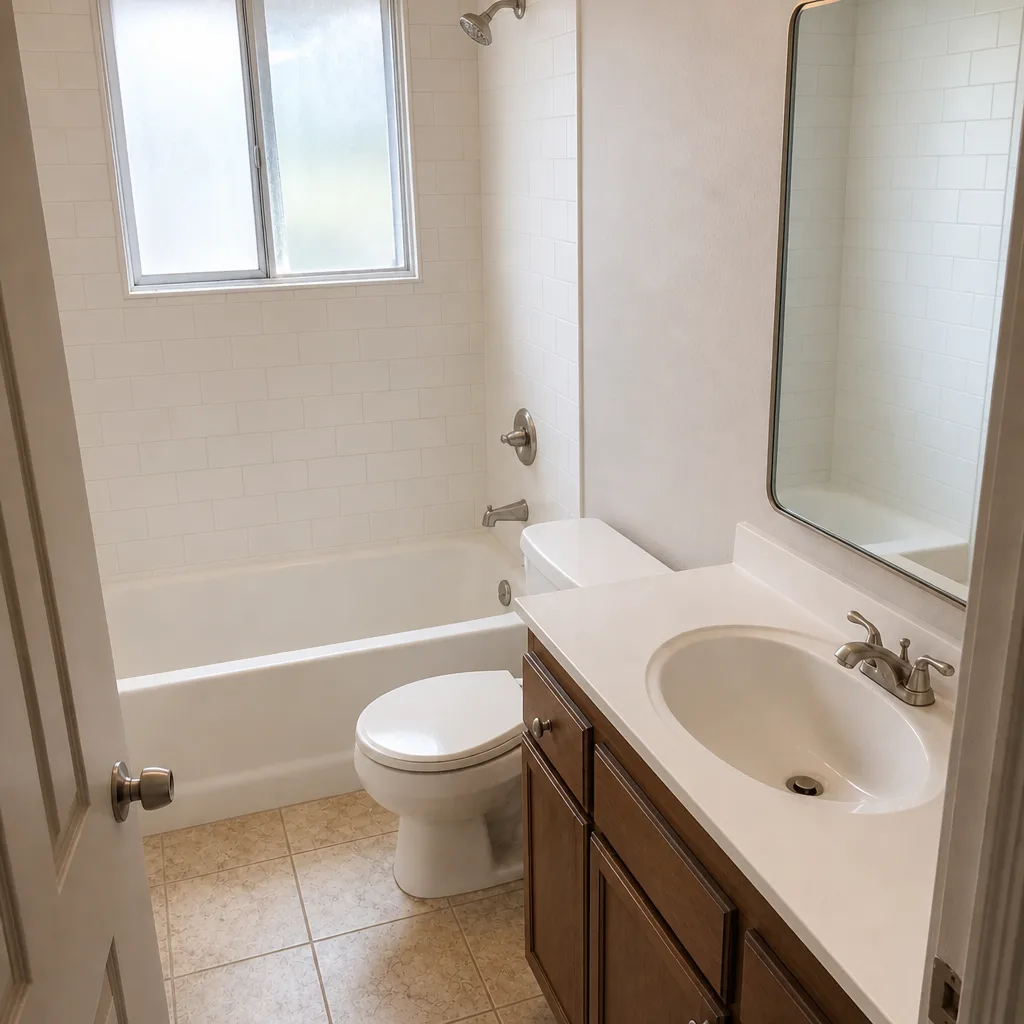 After
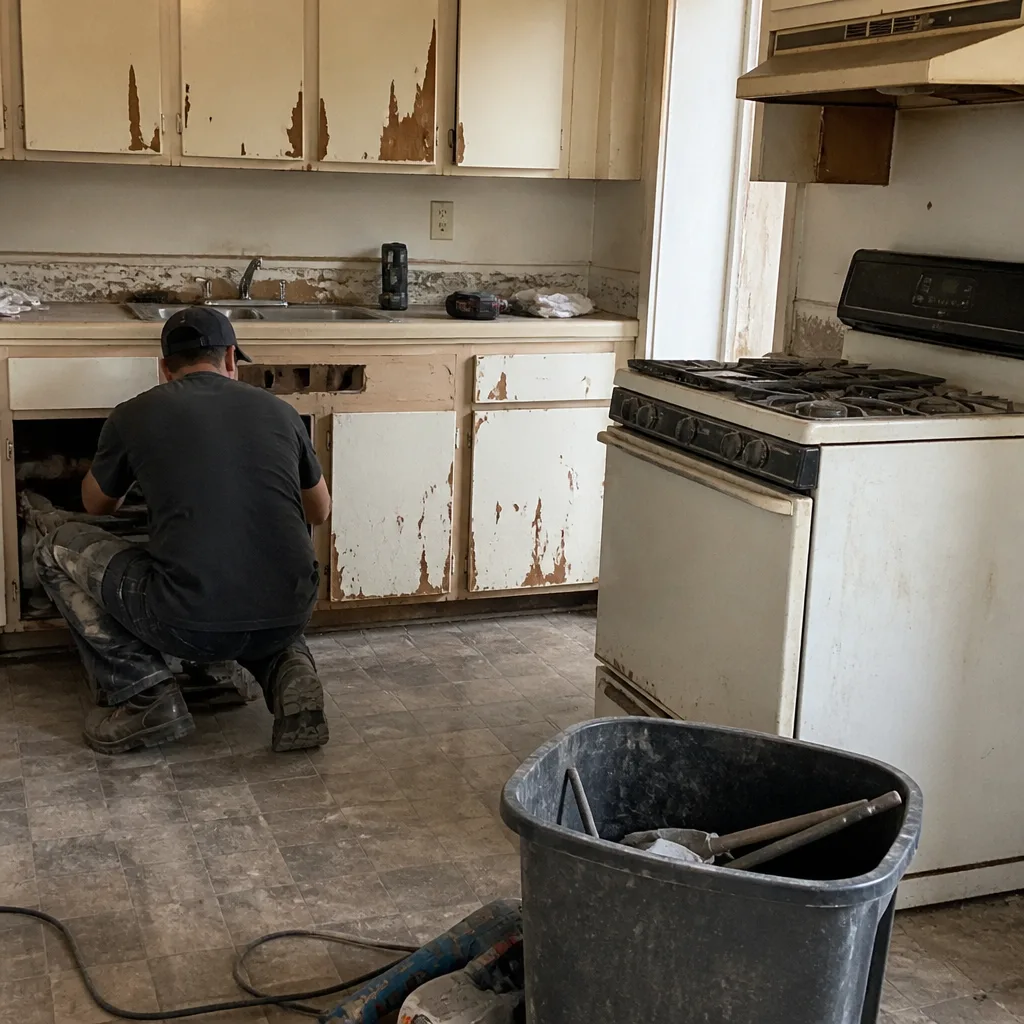 Before
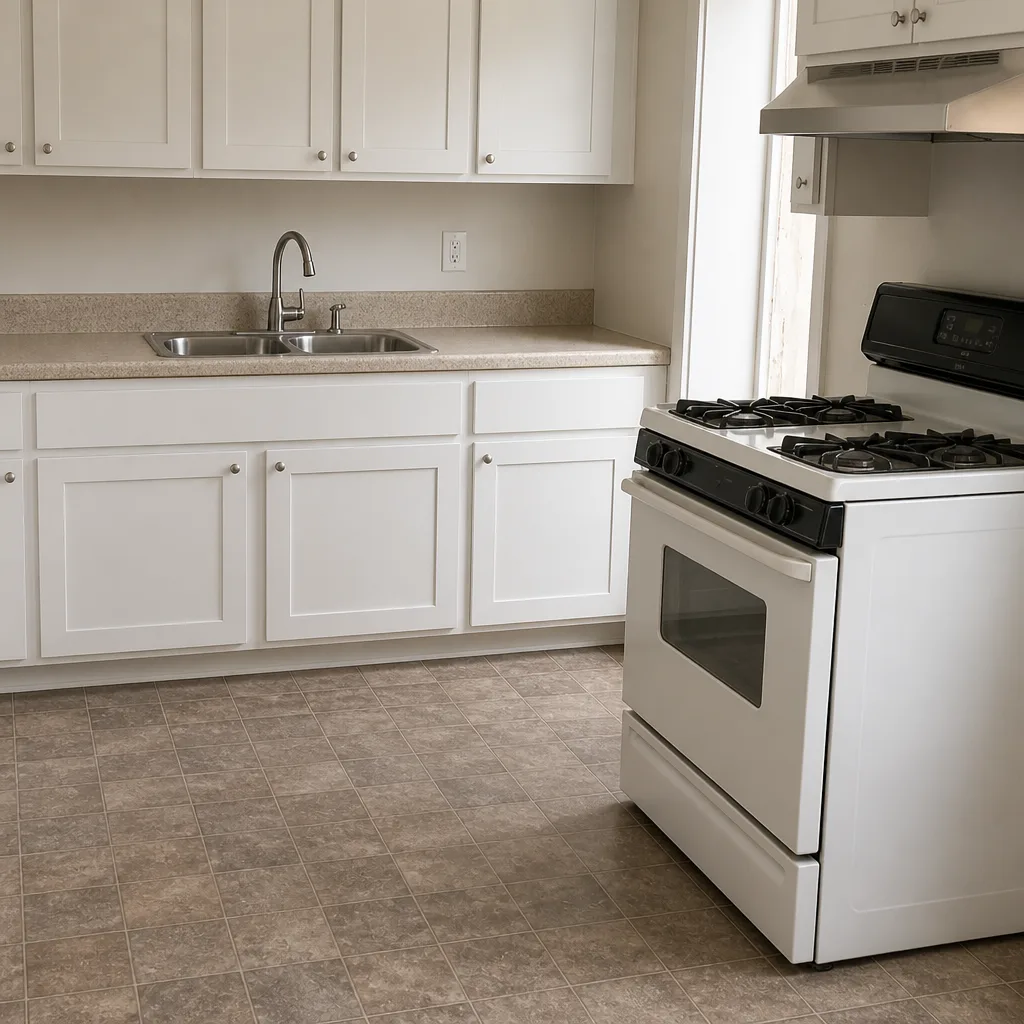 After
When to Call a Professional
Call someone when a signal repeats, when it progresses, or when you can’t tell which one you’re looking at. A door that sticks one January is weather. A door that sticks worse every year, a stucco crack that reopens after patching, a stain that comes back at the same spot, or a ridge that’s visibly sagging are all situations where a trained eye will save you money in the next twelve months. Structural framing, foundation work, and anything involving a roofline or a load-bearing wall are not homeowner repairs. The risk of getting it wrong is physical, and it’s not worth it.
Barrett & Sons Construction Garden Grove offers free estimates in Garden Grove, with written line-item pricing, permits pulled on every eligible job, and a written change order before any scope change. Call (833) 703-5196 to schedule your free estimate.
Frequently Asked Questions

The reliable test is time. Settlement that happened decades ago leaves cracks that haven’t changed, and old repairs that are still intact. Active movement leaves cracks that reopen after patching, doors that stick worse each year, or a crack that’s wider at one end than the other. Measure and photograph the spot once a year; if the number is unchanged, it’s settled. If it’s moved, get it looked at. Call (833) 703-5196 for a free estimate if you’re not sure which you have.
Usually not. Stucco in a dry-summer, wet-winter climate develops hairline cracks from normal thermal movement, and cracks under a sixteenth of an inch in a random web pattern are cosmetic. The ones that matter are diagonal cracks running out from door and window corners, stair-step cracks, and any crack that’s wider at one end. Those mean something is moving, and they deserve a look. Estimates are free if you want a second opinion.
Because Garden Grove gets nearly all of its rain between December and March, and a small roof or flashing leak takes weeks of wet weather to soak through enough to show on a ceiling. Most late-winter stains trace back to a plumbing vent boot, a chimney flashing, or a wall-to-roof intersection, not a plumbing leak. Photograph the spot and note the date; if it comes back next winter, it’s an active leak. Call (833) 703-5196 for an exact quote on the repair, and the estimate is free.
It depends on scope, and anyone who quotes a number over the phone is guessing. What we do instead is walk the exterior, map the cracks, check the grading and the drainage, look at the roofline, and then hand you a written line-item estimate that separates the drainage work from any structural work. Some homes need only grading and a stucco patch; those are inexpensive. Some need piering. The written estimate tells you which, and it’s free: call (833) 703-5196.
It depends on how much it’s sagging and whether it’s changing. A small sag that’s been stable for years is a repair that can be scheduled. A sag that’s visibly worsening, or more than one sag on the same roof, should be looked at before the next rainy season, because water concentrates at low points and the damage grows. Get it inspected before you buy shingles, not after. Estimates are free.
Yes, if the drainage is obviously wrong. Water against the foundation is often the cause, and fixing the grading, extending the downspouts, and clearing the weep screed costs very little compared to structural work. Once the water is handled, watch the crack for a season. If it holds steady, you may be done. If it keeps moving, that’s when a structural look is worth the call. Call (833) 703-5196 with questions either way. Free second opinion on any written estimate you’ve already got.
The Bottom Line
The expensive problems in Garden Grove homes almost always announce themselves early, in ways that are cheap to fix and easy to ignore: a sticking door, a crack that reopens, a stain that comes back every February, a low spot against the wall, a dip in the ridge line. Settling is normal. Movement that repeats and progresses is not. Do a dated photo walk once a year, keep water away from the foundation, and call someone when a signal repeats or grows. The difference between a repair and a replacement is usually a couple of seasons, and it’s the homeowner who gets to choose. If you’re seeing the later signals, our teams handle Fence Installation in Garden Grove and Home Additions & ADU in Garden Grove with the same written scope, pulled permits, and inspection discipline we bring to every job, backed by our 90-Day Done Right Promise.
Call (833) 703-5196 for a free estimate. A live person answers, day or night, and you’ll get a written, line-item scope before any work begins. If you’ve already got a written estimate from someone else, bring it: a second opinion is free.
Written by the team at Barrett & Sons Construction Garden Grove.